
How to Ground Yourself During an Anxiety Attack (With Examples)
Practical Grounding Techniques to Regain Control and Calm Your Mind During an Anxiety Attack — With Real-Life Examples That Work Fast

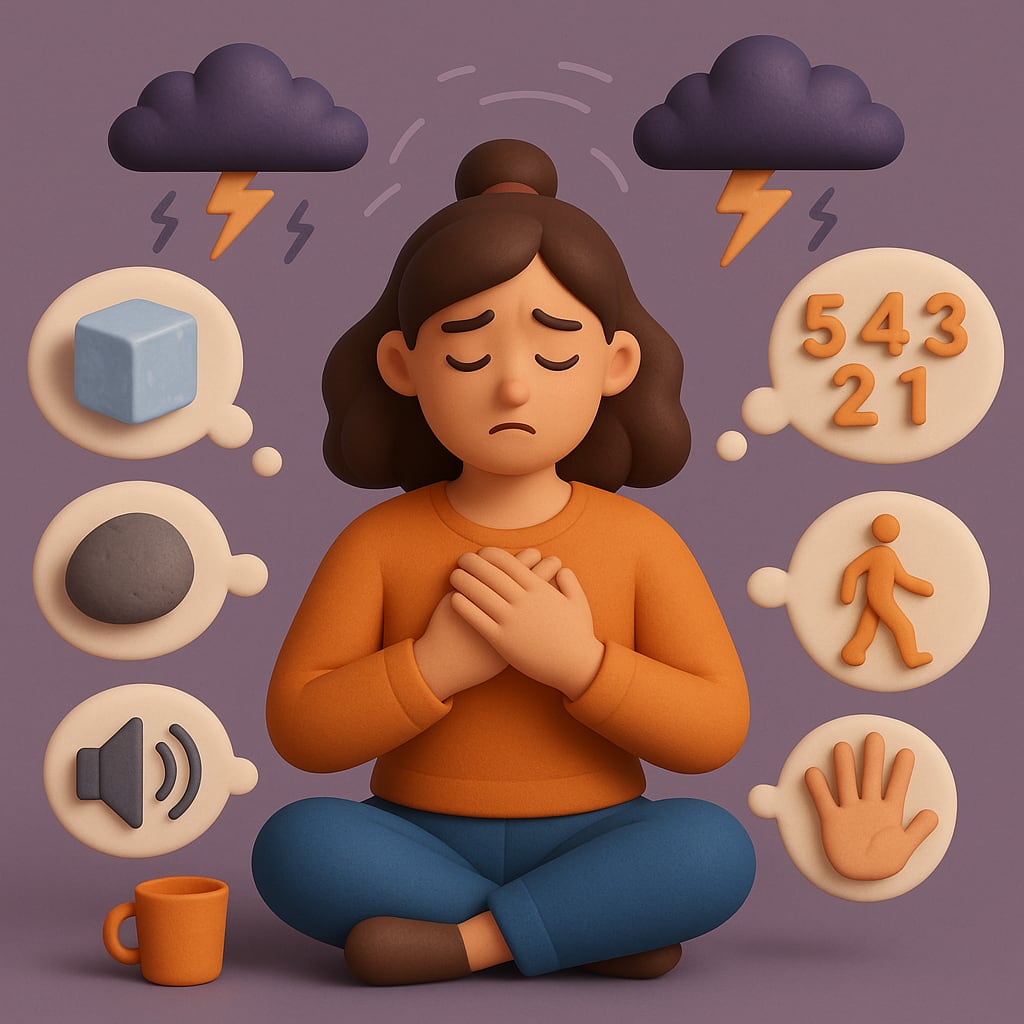
Anxiety attacks can come on fast. One moment, everything seems okay. The next, your heart races, your breath shortens, and your thoughts spiral out of control. You might feel detached from reality or even believe you're dying.
These sensations can be overwhelming. But you don’t have to be powerless against them.
Grounding techniques, simple, practical methods to reconnect with the present moment, can help interrupt the chaos. When practiced consistently, they allow you to regain control, soothe your nervous system, and slow down that flood of anxious energy.
This article explores in-depth how grounding works, which methods are most effective, and real-life examples of how to apply them when anxiety strikes.
Understanding Grounding: Why It Works
Grounding is the process of pulling yourself out of your head and back into your body.
During an anxiety attack, your brain enters a hyper-alert state. You become consumed by thoughts that aren’t rooted in the present: fears about the future, flashbacks from the past, or overwhelming physical sensations that feel larger than life. Grounding short-circuits this process.
These techniques stimulate your senses, sight, sound, touch, taste, and smell. When you tune into your body and your environment, you disrupt the anxious thought cycle. This calms the fight-or-flight response and brings your awareness back to what's real and immediate.
Step-by-Step Grounding Techniques (With Real Examples)
1. The 5-4-3-2-1 Technique
This classic grounding exercise is simple, fast, and surprisingly effective.
How to do it:
5 things you can see: Look around. Name five objects you see. Don’t rush. Notice details. “I see a blue mug. I see the texture on the curtain. I see a pen on the floor…”
4 things you can feel: Shift your attention to touch. “I feel the chair under me. I feel my feet in socks. I feel the cool air on my face…”
3 things you can hear: Notice surrounding sounds. “I hear the hum of the fridge. I hear a dog barking. I hear the wind against the window…”
2 things you can smell: If you can’t smell anything, find something like a piece of fruit or your shirt sleeve. “I smell detergent. I smell coffee.”
1 thing you can taste: Chew gum, sip tea, or simply focus on the taste in your mouth.
Example:
Maya was in line at the grocery store when her chest tightened, and her vision blurred. She felt like she might faint. Rather than panic, she focused on grounding. She stared at the magazine covers in front of her, named the items on the conveyor belt, and rubbed her fingers together to feel texture. Within two minutes, the attack began to subside.
2. Cold Sensation Reset
Applying cold to your skin activates the mammalian dive reflex—a biological response that can help slow your heart rate and calm the nervous system.
What to do:
Splash cold water on your face.
Hold an ice cube in your palm.
Run cold water over your wrists.
Place a damp, cool cloth on your neck or forehead.
Example:
Jay often experienced panic while working from home. One afternoon, overwhelmed by a deadline and racing thoughts, he grabbed a soda can from the fridge and held it to his forehead. The cold snap gave him something to focus on—an anchor in the middle of the storm.
3. Grounding Through Movement
Physical movement helps burn off anxious energy. It also shifts your focus away from fearful thoughts and into the rhythm of your body.
Options include:
- Marching in place
- Stretching or yoga
- Taking a brisk walk
- Doing pushups or jumping jacks
Example:
At a work conference, Priya began to feel lightheaded and shaky. Instead of sitting frozen, she quietly walked to the hallway, paced slowly, and practiced deep breathing. After five minutes, her symptoms faded, and she returned to the event.
4. Verbal Grounding: Speak It Out Loud
Sometimes, hearing your own voice can remind you that you’re present and safe.
Try these prompts:
- “My name is ___. I am safe. I am here.”
- “Today is Tuesday, July 8th. I am in my living room. The couch is brown. The air smells like lavender.”
- Count backward from 100 by sevens, or say the alphabet slowly in reverse.
Example:
Jason felt a panic attack coming on during his commute. Stuck in traffic, he quietly whispered, “I’m okay. I’m just sitting in my car. I’ve done this drive a hundred times. There’s no danger here.” Speaking out loud helped pull him back from the brink.
5. Anchoring Objects
Having something tangible in your pocket, bag, or desk drawer can serve as a physical reminder that you are safe and present.
Useful items:
- A smooth stone
- A worry ring
- A textured piece of fabric
- A favorite bracelet
Example:
Rosa kept a small piece of sea glass in her coat pocket. When she felt anxiety rising, she gripped it tightly, focusing on its edges, weight, and cool temperature. The ritual gave her something predictable and calming when everything else felt unstable.
6. Deep Breathing with Sensory Focus
While breathing exercises are commonly recommended, many people find them ineffective when anxiety is high. The key is pairing breath with sensory focus.
Try this approach:
- Inhale for four counts while touching your fingertips together.
- Hold for four as you press palms together.
- Exhale for six while you trace the outline of your hand with your finger.
Example:
When Ahmed felt a panic attack rising in the elevator, he pressed his thumb to each fingertip as he inhaled and exhaled. The tactile sensation, paired with rhythmic breathing, grounded him before he reached his floor.
What to Do After the Attack
Grounding doesn't just help during anxiety attacks—it can also ease the aftershocks. Once the immediate fear passes, you're often left feeling drained, disoriented, or ashamed. This is when self-compassion matters most.
Here’s what you can do:
Reflect without judgment: “What helped me get through this? What triggered it? What can I try next time?”
Journal the experience: Writing things down helps make sense of what just happened.
Hydrate and eat something: Nourishment helps reset your body.
Rest if needed: Anxiety burns energy. Allow yourself to recharge.
Practice self-soothing: Soft music, a warm shower, a phone call with someone you trust.
When to Seek Additional Help
Grounding is a powerful tool, but it's not a substitute for long-term care. If you’re experiencing anxiety attacks regularly, it may be time to speak with a mental health professional. Therapy, particularly cognitive behavioral therapy (CBT), can help you identify thought patterns that lead to anxiety and learn deeper coping skills.
Anchoring Yourself in the Storm
Anxiety attacks feel like being caught in a whirlwind. Your body tenses, your thoughts race, and the world distorts. But grounding gives you something real to hold onto. It’s not about making the fear disappear completely; it’s about reminding yourself you are not powerless.
You are still here. You are still in control.
And with practice, you can ride the wave without getting lost in it.
About the Creator
Richard Bailey
I am currently working on expanding my writing topics and exploring different areas and topics of writing. I have a personal history with a very severe form of treatment-resistant major depressive disorder.
Keep reading
More stories from Richard Bailey and writers in Psyche and other communities.
Anxiety vs. Overthinking: What’s the Real Difference?
In everyday conversations, the terms "anxiety" and "overthinking" are often used interchangeably. You might hear someone say, “I’m just overthinking,” when they’re actually feeling anxious. Or, “I’m having anxiety,” when their mind is simply running in circles about a particular issue. But despite the overlap, anxiety and overthinking are not the same thing.
By Richard Bailey8 months ago in Psyche
Top tipple tricks
Been thinking a lot about drinking, lately. Not least because of a recent episode of over-indulgence and the inevitable after effects. Some readers may recall the earlier articles I wrote about beating the booze. Here I set out an experiment in techniques for cutting down on my alcohol intake. The experiment was successful, the techniques worked, and I have armed myself with an arsenal of weapons in the war against the demon drink. I have yet to fire the first round however. It's all a question of timing (perhaps procrastination).
By Raymond G. Taylor6 days ago in Psyche
The 6 Hardest Life Truths You Already Know But Refuse to Face
Life has a strange way of teaching lessons we wish were not true. Deep down, most people already know some uncomfortable truths about life. Yet, instead of facing them directly, we distract ourselves with routines, entertainment, or false hopes. These truths are not meant to discourage you. In fact, accepting them can be incredibly freeing. When you stop denying reality, you gain clarity, resilience, and control over your life. Here are six of the hardest life truths most people already know—but often refuse to face.
By Shahid Zaman6 days ago in Psyche




Comments
There are no comments for this story
Be the first to respond and start the conversation.