
Home Is Not a Place—It’s a Nervous System
Where safety lives in the body, not the address
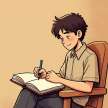

I carry home in my shoulders.
In the way they tighten when voices rise.
In how my breath shortens before my mind can name the danger.
Home, for me, has never been a place you could pin on a map. It has never been an address that stayed long enough to memorize the cracks in the walls. Home learned to move when I did. It adapted. It folded itself into muscle and memory, into reflexes I didn’t choose but inherited from moments that taught me how to survive.
As a child, I thought home was where you returned at night. A door. A bed. A familiar ceiling. But even then, my body knew better. It knew that walls don’t promise safety. Silence doesn’t always mean peace. And love, when inconsistent, teaches vigilance faster than trust.
So my nervous system became the house.
It learned the language of footsteps. It memorized tone shifts. It developed an instinct for reading rooms before my eyes fully entered them. While others were taught to relax at home, my body learned to stay alert everywhere. This wasn’t anxiety at first. It was intelligence. It was adaptation. It was the quiet brilliance of a system that decided, without consulting me, that it would never be caught unprepared again.
Modern identity doesn’t begin with who we are. It begins with what our nervous systems learned when no one was explaining things. Long before we chose values or careers or aesthetics, our bodies made decisions. About closeness. About conflict. About rest.
Some people carry home in their chests — expansive, warm, forgiving. Others, like me, carry it in our shoulders, lifted slightly as if bracing for impact. Not dramatic enough to be noticed. Not relaxed enough to forget.
This is what psychologists call regulation. Or dysregulation. Or trauma, depending on who is speaking and how clinical the room feels. But in lived reality, it’s simpler and more intimate than terminology allows. It’s the difference between entering a space and feeling your breath drop into your belly — or hovering somewhere near your throat, unsure.
I used to think I was bad at settling down. Bad at belonging. Bad at staying. But the truth is more precise: my body never learned that staying was safe.
So it learned movement instead.
It learned how to pack quickly, emotionally. How not to leave fingerprints on relationships. How to be present without being exposed. It learned to treat even good moments as temporary — not out of pessimism, but out of habit.
This is where modern psychology meets identity. Not in labels, but in patterns. In the way we mistake survival strategies for personality traits. We say we are “independent,” when really, we learned early that asking for help did not always end well. We say we are “low-maintenance,” when in truth, we learned not to need too much out loud.
And somewhere along the way, we start believing these adaptations are who we are — not what happened to us.
Home, then, becomes something we try to build externally. A relationship. A city. A routine. We move apartments hoping the next set of windows will finally teach our bodies to exhale. We curate spaces with plants and soft lighting, hoping comfort will arrive through design.
Sometimes it does. Briefly.
But the body remembers faster than the mind forgets.
It remembers raised voices, even when none are present. It remembers abandonment, even in crowded rooms. It remembers inconsistency like a native language. And until it is taught something new — gently, repeatedly — it will continue to act as if danger is just around the corner.
Healing, I’ve learned, is not about finding the right place to live. It’s about retraining the nervous system to believe that safety can exist without conditions.
This is slow work.
It looks like learning to unclench your jaw without being prompted.
Like noticing when your shoulders rise — and choosing to lower them, even if nothing obvious is wrong.
Like letting good moments stay good, instead of scanning them for exit signs.
It is the quiet revolution of teaching your body that rest does not require permission.
I am still learning this language. Still negotiating with a system that kept me alive when it had to, and doesn’t yet trust that it can stand down. I thank it now, instead of resenting it. I tell it we are no longer where we once were. I tell it, sometimes out loud, that this moment is safe.
Home, I am discovering, is not a destination.
It is a sensation.
It is the moment your breath deepens without effort.
The moment your shoulders drop without instruction.
The moment your body stops asking, “What’s about to happen?” and starts saying, “I am here.”
And maybe one day, I won’t have to carry home in my shoulders anymore.
But until then, I hold them gently.
Because they’ve been holding me for a very long time.
About the Creator
Jhon smith
Welcome to my little corner of the internet, where words come alive
Keep reading
More stories from Jhon smith and writers in Psyche and other communities.
I Was Productive Successful and Quietly Miserable
I built a life that looked finished before it was ever lived. My days were stacked with achievements like trophies placed carefully on a shelf. I woke early not because I wanted to but because discipline had replaced desire. I answered emails before sunrise and told myself this was ambition. I measured my worth in deadlines met and tasks completed. I was productive in ways that impressed everyone except me.
By Jhon smith2 months ago in Psyche


Comments
There are no comments for this story
Be the first to respond and start the conversation.