
Grief and Loss
Navigating the Emotional Landscape

Grief and loss aren't solely tied to the passing of a loved one. They can manifest in many forms and arise from various circumstances. For example, the loss of identity, self, a job, a pet, opportunities, or the feeling that your hard work has been in vain can all evoke profound grief.
Understanding the different types of grief can help you navigate these challenging emotions and recognize that your feelings are valid, no matter their source.
Understanding The 13 Different Types of Grief
Normal Grief
Normal grief is the natural response to loss, involving a range of emotional, physical, behavioral, and social reactions. Emotional responses include anger, denial, and loneliness; physical symptoms may include fatigue, nausea, and tearfulness. Behavioral signs include forgetfulness and absent-mindedness, while socially, people may withdraw or face relationship difficulties. Though intense and varied, these reactions are temporary and part of a healthy process towards acceptance and healing.
Anticipatory Grief
Anticipatory grief occurs when you start grieving a loss before it happens, such as when a loved one is diagnosed with a terminal illness or plans a significant departure. This grief involves envisioning life without them, often accompanied by feelings of sadness, fear, or anxiety. While it can make enjoying the remaining time difficult, it also provides opportunities to prepare emotionally, say goodbye, and address unresolved matters, which may ease the grieving process after the actual loss.
Disenfranchised Grief
Disenfranchised grief arises when others do not acknowledge or validate a loss, such as the death of an estranged relative, ex-partner, or someone who passed from a stigmatized cause, like suicide or overdose. Society/your surroundings may dismiss the grief, leaving the individual feeling unseen and unsupported. It can also occur in non-death losses, such as traumatic events, a relationship change due to mental illness or addiction. Recognizing and validating your grief is essential, regardless of others’ perceptions.
Chronic Grief
Chronic grief involves prolonged, intense reactions to a loss that does not improve over time and may even worsen. It can hinder healing and lead to severe emotional distress, potentially causing depression, substance abuse, or self-harming thoughts. Professional counseling is often necessary to address and manage chronic grief effectively.
Abbreviated Grief
Abbreviated grief is a brief grieving period, often due to quick acceptance of the loss, prior processing through anticipatory grief, or a weaker attachment to the deceased. It may also occur when the lost connection is soon replaced by someone or something new, helping the individual move on more rapidly.
Traumatic Grief
Traumatic grief arises from a sudden, violent, or horrifying loss, combining intense grief with trauma. It can severely disrupt daily functioning and often requires professional support to process the emotions and recover.
Absent Grief
Absent grief occurs when a person shows no outward signs of grieving, often due to shock, denial, or being preoccupied with responsibilities after a sudden loss. While it can be normal initially, prolonged absence of grief may need attention to ensure healthy emotional processing.
Delayed Grief
Delayed grief occurs when intense feelings of sorrow and longing surface long after a loss. It often results from emotional disassociation, where the mind temporarily blocks the pain until the person is ready to process it. This grief can persist for years if unresolved.
Distorted Grief
Distorted grief involves extreme or intense reactions to a loss, often accompanied by noticeable behavioral changes and self-destructive tendencies. Anger, lashing out at oneself or others, and other heightened emotional responses are common characteristics.
Exaggerated Grief
Exaggerated grief involves heightened emotional and behavioral reactions that are more intense than typical grief. It may include self-destructive behavior, substance abuse, suicidal thoughts, nightmares, or irrational fears. In some cases, it can lead to the development of a psychiatric disorder.
Cumulative Grief
Cumulative grief occurs when multiple losses happen in close succession, making it harder to recover from each one. This type of grief can lead to trigger stacking and feelings of being overwhelmed. But with the right support and therapy, individuals can navigate and heal from compounded losses.
Secondary Loss
Secondary loss grief happens when the primary loss leads to additional losses in other areas of life, such as relationships, routines, or financial stability. These ripple effects can compound the original grief, creating multiple layers of loss to process.
Masked Grief
Masked grief occurs when the emotional pain of loss is expressed through physical symptoms or behaviors that disrupt daily life, but the person may not recognize these issues as being connected to their grief. It can make the grieving process harder to identify and address.
Reference for where I got most of the information: talkspace/blog/types-of-grief/
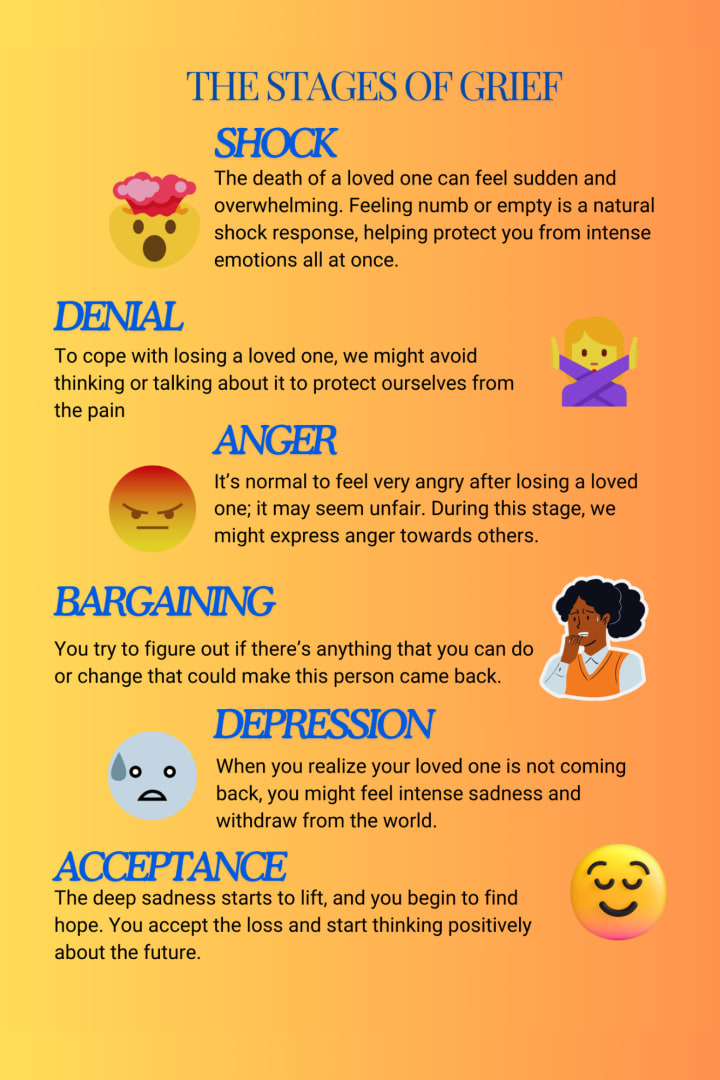
Some of the Different Stages of Grief
Reminder: Research has found that each individual experiences grief differently. While the stages outlined below are the most common ones, some other stages might apply to you personally. Please research more if the below does not fully apply to you.
Practical Ways to Cope with Grief
Acknowledge and Validate Your Feelings
Allow yourself to feel whatever comes naturally without judgment. Recognize your emotions as a natural part of grieving.
Reach Out for Support
Whether it’s friends, family, support groups, or professional counselors, connecting with others can provide much-needed comfort and perspective.
Engage in Creative Expression
Writing, painting, or any creative outlet can help express and process your emotions productively.
Practice Mindfulness and Meditation
Techniques that promote relaxation and awareness can help manage grief by keeping you grounded.
Set Small, Achievable Goals
Focusing on manageable tasks can foster a sense of accomplishment and progress.
Honor Memories
Create rituals or keep a tribute journal to celebrate happy memories, keeping the bond alive in a healthy way.
Seek Professional Help
If grief becomes overwhelming or doesn’t improve, a therapist specializing in grief can offer guidance and support.
By recognizing the unique facets of grief and employing practical coping strategies, you can navigate your path toward healing and renewal, supported by understanding and compassion for yourself.
If you're seeking a comforting companion on your healing journey, consider purchasing our grief journal, thoughtfully designed with prompts to explore your grief, uplifting daily quotes, gratitude exercises, and dedicated spaces for reflective writing and memento placement, like cherished pictures.
Found on https://laviniadasani.com/books/
Or Buy directly on Amazon: https://www.amazon.com/dp/B0DPZBVXRP?ref_=pe_93986420_774957520
About the Creator
Lady Lavinia Dasani
Entrepreneur and small business owner.
Founder/CEO of Plumitif Press, LLC & Plumitif Empowerment Academy
I have a passion for writing, reading and helping others. I like sharing what I learn along the whirlwind adventure that we call life.
Keep reading
More stories from Lady Lavinia Dasani and writers in Psyche and other communities.
Mastering Adaptability: Strategies for Enhancing Emotional Agility & Building Resilience.
Mental flexibility is the cornerstone of improving mental health. But what exactly does it entail? In the complex landscape of mental health, one trait stands out as a fundamental cornerstone — Flexibility. The theory posits that at the core of mental health lies flexibility. A healthy individual who possesses flexibility in the psyche allows for growth and resilience. Many factors contribute to flexibility in the psyche. However, adaptability stands out as a key component of flexibility in the psyche. It’s the secret sauce for navigating life’s twists and turns with grace.
By Lady Lavinia Dasani2 years ago in Psyche
Top tipple tricks
Been thinking a lot about drinking, lately. Not least because of a recent episode of over-indulgence and the inevitable after effects. Some readers may recall the earlier articles I wrote about beating the booze. Here I set out an experiment in techniques for cutting down on my alcohol intake. The experiment was successful, the techniques worked, and I have armed myself with an arsenal of weapons in the war against the demon drink. I have yet to fire the first round however. It's all a question of timing (perhaps procrastination).
By Raymond G. Taylor5 days ago in Psyche




Comments (1)
The idea was superb.