
Fromm’s Legacy in 2025: Freedom, Anxiety, and the Modern Soul
"In a world torn by anxiety and division, his call for human connection and ethical responsibility feels urgent once again."
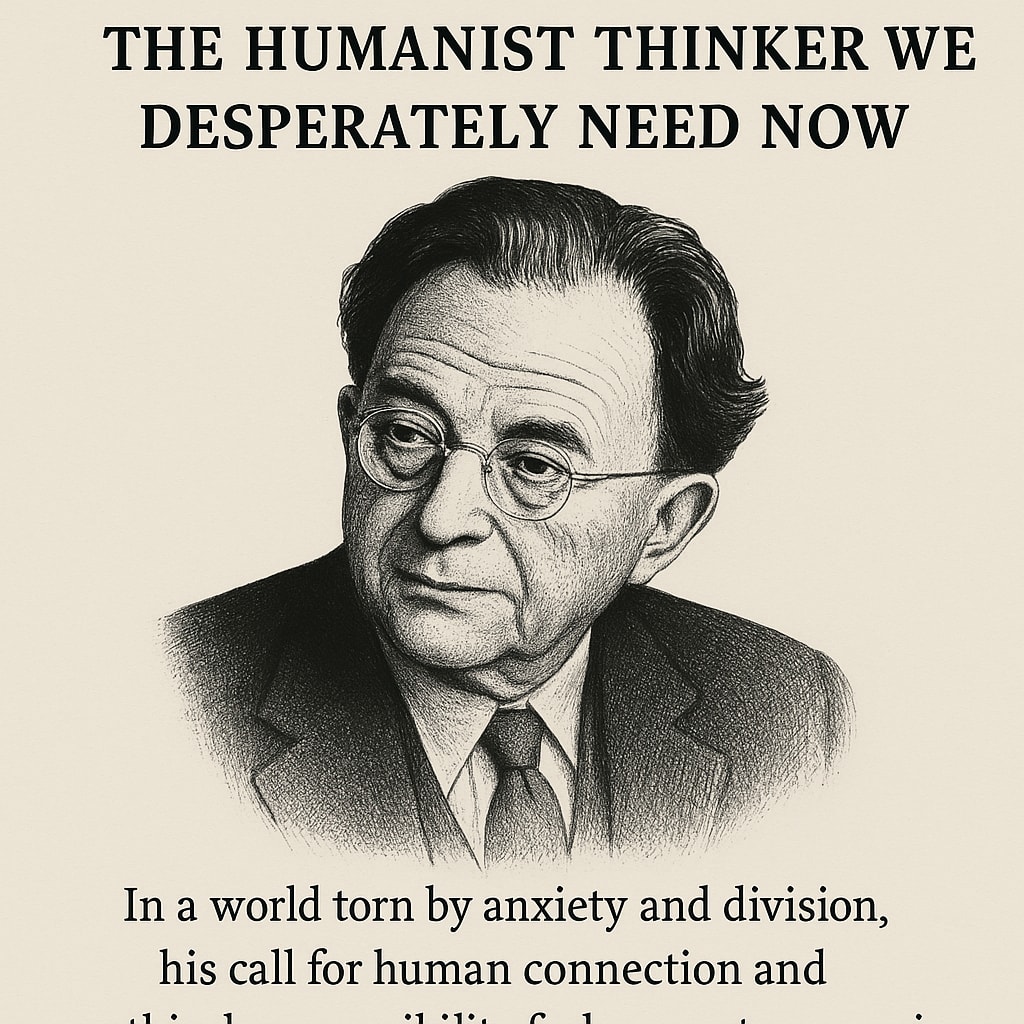
Back to Fromm: The Humanist Thinker We Desperately Need Now
In a world torn by anxiety and division, his call for human connection and ethical responsibility feels urgent once again.
In an era overwhelmed by political disillusionment, technological overload, and emotional numbness, revisiting the ideas of Erich Fromm feels not only relevant—it feels necessary. A psychoanalyst and philosopher who lived through the rise of fascism and the trauma of world wars, Fromm saw more clearly than most how the modern world strips individuals of connection, meaning, and moral clarity. What he offered wasn’t just critique—it was a deeply human vision for how we might live better, fuller, more connected lives.
Alienation in the Age of Connection
Fromm warned that modern societies create “automatons” rather than fully alive individuals. We are taught to conform, to compete, to consume—but rarely to feel deeply or think independently. In The Sane Society, he argued that the emotional alienation produced by capitalism and bureaucracy leads to a dangerous form of apathy. People become disconnected not only from one another but from themselves.
Fast forward to 2025, and this warning reads like a description of our daily lives. Despite an endless stream of digital communication, we’re lonelier than ever. Social media amplifies division while masquerading as community. Mental health crises surge globally, particularly among youth. Even in the face of global challenges like climate change and war, many people retreat into numbness, distraction, or polarized ideologies. Fromm's diagnosis: we’ve lost the ability to live authentically, and in doing so, we've surrendered our capacity to love, to reason, and to act with moral courage.
The Ethical Act of Being Human
What sets Fromm apart from many modern commentators is that he believed in human potential—not as a given, but as a responsibility. He saw freedom not simply as the absence of restraint, but as the ability to choose one's own path with awareness and care. Freedom, in Fromm’s view, required maturity, ethical development, and the courage to stand apart from the herd.
In Man for Himself, he argued that we must create an ethical framework rooted in human needs and values, rather than in obedience to authority or pursuit of profit. “The task we must set for ourselves is not to feel secure, but to be able to tolerate insecurity,” he wrote. In a world increasingly shaped by fear—fear of others, of economic instability, of cultural change—Fromm’s message is a counterbalance: grow up, look inward, and choose love over fear.
At the core of his thinking was the conviction that love, responsibility, and self-awareness are acts of will and discipline. They are practices we must learn, nurture, and defend—not just for ourselves, but for the health of society as a whole. In that sense, Fromm offers not just an analysis of what’s wrong, but a roadmap for how we might begin to heal.
Why We Need Fromm Now
Erich Fromm’s ideas help explain why we see rising authoritarianism, growing extremism, and widespread social withdrawal in many parts of the world today. When people feel isolated, powerless, and afraid, they don’t often respond with compassion—they seek security in the form of rigid belief systems, charismatic leaders, or the deadening comfort of distraction. Fromm understood that well before the internet, smartphones, or the rise of populist politics.
What he offers us now is a challenge: to rehumanize our world. That means fostering relationships that are built on real understanding, not transactional gain. It means rethinking education to cultivate empathy and ethical reflection, not just technical skills. And it means holding our political systems accountable not just for results, but for their effect on the soul of society.
In many ways, Fromm’s legacy is one of hope—but not an easy or naïve one. It is a hope grounded in work: the work of becoming fully human in a world that constantly tempts us to become less.
About the Creator
Keep reading
More stories from Kaleem Ullah and writers in Psyche and other communities.
When Saying “No” Feels Strange
He did not plan to smoke that day. He was standing outside his school gate, bag on his back, waiting for the van. A boy from his class took out a vape. Another smiled and asked him to try. He refused at first. Everyone laughed, not loudly, not cruelly just enough to make him feel small.
By Muhammad Ayaan about an hour ago in Psyche


Comments
There are no comments for this story
Be the first to respond and start the conversation.