
Ethical Leadership Across the Health Professions: Building Trust and Accountability
Why Trust Matters in Patient Care
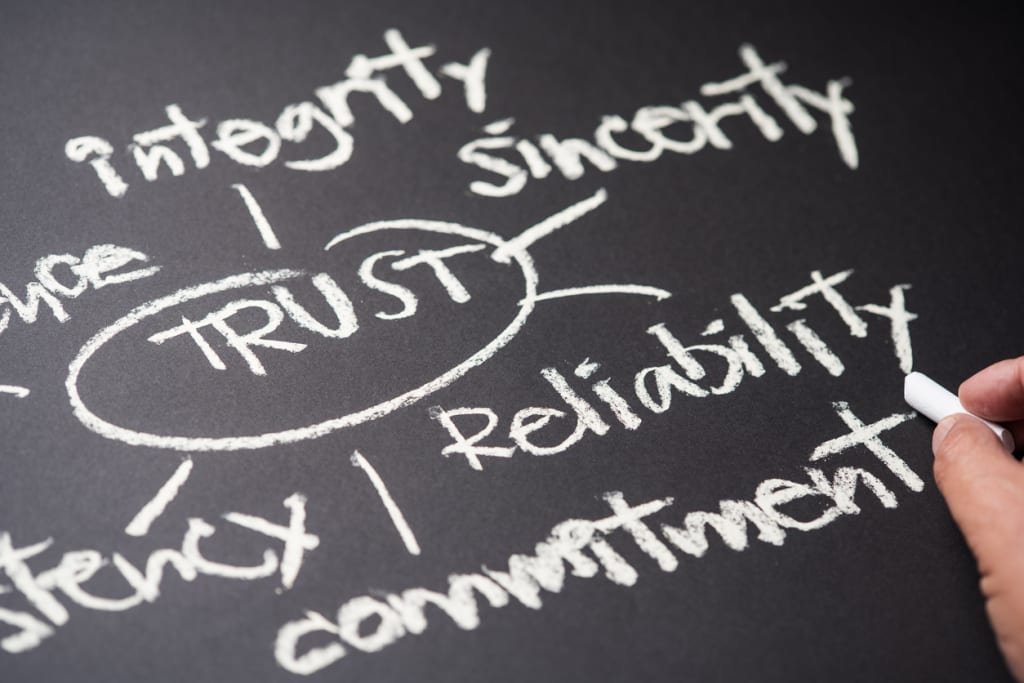
In an era when healthcare systems face both public scrutiny and internal strain, the need for ethical leadership has increased tenfold and has become very urgent. Trust is the key to building a good caregiving institution.
While clinical skills and technological advancement are critical, the foundation of any effective healthcare system lies in the success of its ethical leadership.
Accountability and Trust Building in Healthcare
Accountability is a trait in which one is responsible for their own actions and words, as well as the consequences that follow. It plays a crucial part in a professional or leadership role.
It is not just about taking the blame or facing punishment for a certain situation. It is about effectively ensuring that people and institutions act in ethical ways, just, and are consistent with their responsibilities, and that they’re willing to face the consequences if the decisions they make turn out negatively.
Accountability in health professions would include:
Taking responsibility for outcomes, whether good or bad
For example, instead of attempting to deflect blame, the leadership should take ownership of their decisions and commit to improving their risk mitigation policies and protocols.
Being transparent about decisions and explaining the reasoning behind them
For example, holding a meeting with affected clients and staff to explain a decision, share the data that informed it, and discuss alternatives.
Correcting mistakes and making efforts to prevent future harm
For example, if there has been some sort of mistake that has jeopardized a patient’s safety or privacy, the organization or health professional will need to inform that individual immediately, apologize, update internal communication policies to eliminate the risk of the mistake occurring again, and if necessary, make staff training on confidentiality mandatory.
Creating systems that ensure fairness, ethics, and build trust
For example, introducing a formal grievance process, anonymous patient feedback forms, and an internal ethics board to review difficult cases, thus ensuring that ethical accountability becomes part of the organizational structure and not just a personal expectation to check off.
Without accountability, trust can lead to complacency, while in the absence of trust, accountability can create a feeling of fear. When balanced, they create a leadership style that safeguards patients and fortifies institutions.
Features like empathy, open communication, and teamwork are all made possible by trust. Accountability guarantees that power is used responsibly and that actions are consistent with values.
How to practice ethical leadership?
To sum it up, ethical leadership is not just personal integrity; it is systemic thinking. While personal integrity, like honesty, compassion, and moral courage, is essential, ethical leadership in healthcare goes far beyond individual behavior.
It requires understanding and shaping the systems, structures, and cultures within which care is delivered.
Some key practices include:
Transparency: It is important to share the thinking behind policies, and admit flaws when they occur so as to instill psychological safety and show you are credible.
A willingness to listen: Staff and patients, as well as the community at large, may raise concerns about certain practices, and leaders must listen and respond meaningfully, not just defensively.
Justice-oriented decision-making: Equity should be front-of-mind, not an afterthought; leaders must grapple with and carry forward inherent disparities related to access, treatment, and opportunity.
Moral mastery: Ethical decisions often involve some degree of risk, like reputational, institutional, or personal. Ethical leaders must accept and sit with uncertainty, and act regardless.
A New Standard for Leadership
Trust and accountability are not conceptual ideals; they are a way of organizing. Ethical leadership across the health professions means always matching intentions with actions, values with policy, and rhetoric with reality. It means holding oneself and their institution accountable to the people and communities they serve.
Healthcare, especially mental health care, will constantly face crises, from pandemics to political polarization, and while the way forward includes an increasing amount of disruptive innovation, it will not succeed unless it is grounded in ethical leadership, with a commitment to trust and accountability.
About the Creator
Keep reading
More stories from Ankita Dey and writers in Psyche and other communities.
Fair Trade without robberies
Fair Trade without robberies Chapter 1 of Dark Memoirs There are at least two types of people in the world: those who write this half-assed introduction to a story that tries to distinguish the unusual from the common, and those who are aware that it is an overused framing device but choose not to use it. I tend to be in the latter camp, not the former. In case you were curious. if you asked the question in your head as if you were praying to God, Santa, or that person who was with you for the first two decades of your existence. You are aware of it. the man who went to bed with your mother that night. Looking back, I believe I was always troubled. No, I am aware of it. issues with being disconnected and detached. I really like people, but they are full of cliches, like they can't be trusted and are always wrong. Because the world is cruel and people have hearts, people are cruel. Their hearts are erratic and dishonest. You are already familiar with the kind of cliches I'm referring to. I rarely look in the mirror. Concerned about what I might see? No. I already know what I'll see, and it's not something I like. It is a waste of time to look through a looking glass for every second. Self-loathing is my full-time job, and I'm good at it without looking at that horrible jerk. As the last person so many people see before they expire, I do feel they're relieved by death's imminent arrival. As a result of the darkened realization that dances across their face as I call time, there will be no robberies. I'd say that it gives me a sense of purpose and even joy, but I'm much more than just driven by basic human needs. Glib. That is a word that is rarely used. It feels appropriate, even in my memoirs, which are heavy on erudition and grandiosity. According to the Collins Dictionary, the term "glib" refers to something that is simple and effortless, but frequently in a deceptive, superficial, or insincere manner. Perfect.
By Silent Truth 7 days ago in Psyche



Comments
There are no comments for this story
Be the first to respond and start the conversation.