
Dopamine Nation – Living in a Culture That Rewards Overstimulation
How modern life hijacks your brain’s reward system—and what you can do to break free from the endless cycle of digital distraction, burnout, and dopamine overload.

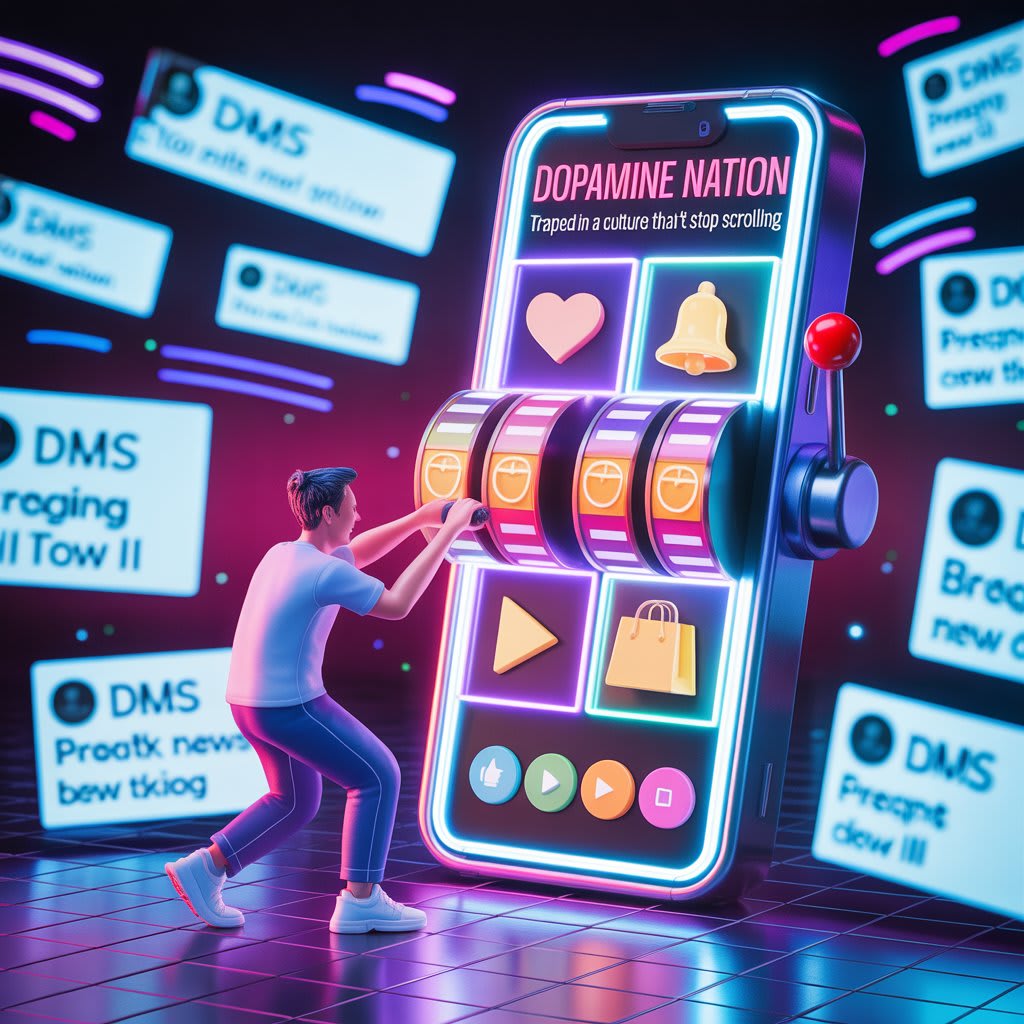
Dopamine Nation – Living in a Culture That Rewards Overstimulation
In today’s fast-paced digital world, it’s easy to feel like you’re constantly chasing something—more likes, more notifications, more excitement. But have you ever wondered why it's so hard to put your phone down or why silence feels uncomfortable? The answer lies in one powerful chemical: dopamine.
Welcome to Dopamine Nation—a culture driven by overstimulation, where instant gratification is not only normal but expected.
What Is Dopamine and Why Does It Matter?
Dopamine is often labeled the “feel-good” chemical, but that’s not entirely accurate. More precisely, dopamine is the brain's motivation and reward messenger. It fuels our desire to seek pleasure, rewards, and achievement. It’s what pushes us to check our phones obsessively or binge-watch an entire series in one night.
This mechanism helped our ancestors survive. They needed motivation to hunt, gather, and form social bonds. But in the 21st century, that same system is being hijacked—not by nature, but by algorithms, apps, and hyper-consumable content.
The Modern Dopamine Dilemma: Overstimulated and Under fulfilled
In Dopamine Nation, everything around us is designed to stimulate. Just think about it:
Social media delivers endless likes, shares, and quick feedback.
Streaming platforms auto-play the next episode before we can blink.
Fast food is engineered for addictive taste and instant satisfaction.
Online shopping offers the thrill of a purchase without leaving home.
These things aren’t bad in moderation. The problem is constant exposure. Our brains aren't built to handle a 24/7 flow of digital rewards. Over time, this can desensitize the dopamine system, making everyday pleasures—like reading a book or having a real conversation—feel bland by comparison.
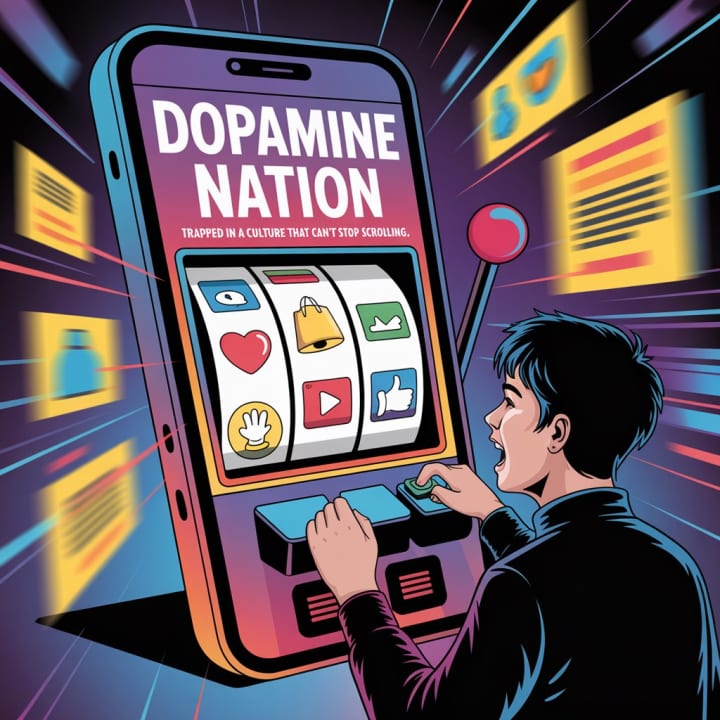
Symptoms of Dopamine Overload
You might not even realize you’re affected, but here are some signs you’re stuck in the cycle:
You feel anxious or restless during downtime.
You check your phone impulsively, even with no notifications.
You struggle to focus on tasks without background noise or entertainment.
You often need “something on” to relax—even if you’re not watching it.
Sound familiar? You’re not alone. In fact, this is becoming the new normal in many people’s lives.
The Hidden Impact: Mental Health, Focus, and Fulfillment
Constant dopamine stimulation doesn’t just affect your mood—it can impact your long-term well-being:
Reduced attention span and mental clarity.
Increased anxiety and irritability when deprived of stimulation.
Emotional numbness, where things that used to bring joy now feel dull.
Dependence on quick rewards, making long-term goals feel harder to pursue.
The truth is, your brain is trying to keep up in a world that never slows down. But it doesn’t have to be this way.
How to Reset: A Real-World “Dopamine Detox”
You’ve probably heard of the term dopamine detox—but it’s not about cutting everything out forever. It’s about creating intentional breaks from constant stimulation so your brain can recalibrate.
Here’s how to start:
1. Schedule Unplugged Time
Pick one hour a day with no screens, notifications, or multitasking. Just be present.
2. Relearn Boredom
Allow yourself to feel bored. That discomfort is actually your brain rewiring itself.
3. Replace, Don’t Remove
Swap mindless scrolling with mindful habits—reading, walking, journaling, or just sitting in nature.
4. Delay Gratification
Train your brain to wait. Don’t immediately check your phone or respond to every buzz.
5. Be Mindful of Media
Curate your feed. Follow accounts that inspire you, not ones that fuel comparison or chaos.
These aren’t drastic life changes—they’re small, sustainable shifts that can help restore balance.
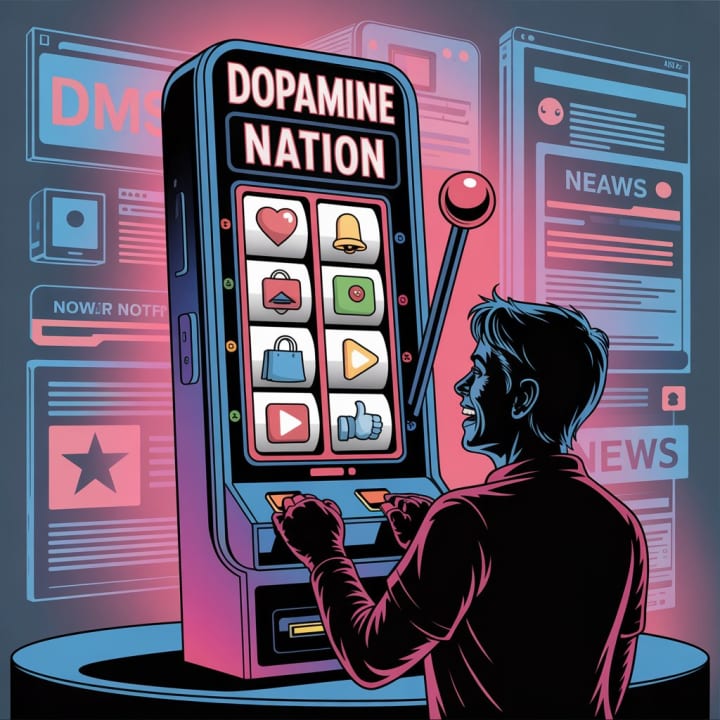
The Bigger Picture: Redefining Joy in a Fast-Paced World
We’ve been led to believe that happiness lies in having more—more excitement, more success, more “stuff.” But maybe the true path to joy isn’t in the next dopamine hit. Maybe it’s in slowing down, paying attention, and reconnecting with things that matter.
Real conversations.
Uninterrupted focus.
Deep rest.
Meaningful creation.
These things don’t spike dopamine instantly, but they build long-term fulfillment.
Final Thoughts: Living Well in Dopamine Nation
You don’t have to go off the grid to reclaim your attention and mental clarity. You just have to pause the noise long enough to hear yourself think again.
In a world that thrives on distraction, presence is power. And in a culture of constant stimulation, choosing stillness might just be the most rebellious—and rewarding—act of all.
About the Creator
shoaib khan
I write stories that speak to the heart—raw, honest, and deeply human. From falling in love to falling apart, I capture the quiet moments that shape us. If you've ever felt too much or loved too hard, you're in the right place.
Keep reading
More stories from shoaib khan and writers in Psyche and other communities.
The Dark Side of Mindfulness
Mindfulness has become a buzzword in wellness circles—praised for calming the mind, improving focus, and bringing us closer to the present moment. It’s taught in schools, practiced in boardrooms, and promoted by therapists. But here’s a truth that’s often overlooked: mindfulness isn’t always helpful. In fact, for some people, the very act of tuning inward can stir up discomfort, anxiety, and emotional distress.
By shoaib khan8 months ago in Psyche
Miss Persephone's Manual to a Seemingly Ordinary Life
Miss Persephone was found at the dining table, her blue eyes swollen, her tears arriving and retreating like the tides of the ocean. Earlier that day, her family had visited her in the retirement home where she had lived for eight years. It was her eightieth birthday.
By Imola Tóth4 days ago in Fiction



Comments (1)
Phones and apps overstimulate us. I relate; it's tough to break away from that dopamine rush.