
Beyond the Infusion: Integration Tools That Solidify Ketamine’s Benefits
Unlocking Lasting Transformation Through Conscious Practice and Support

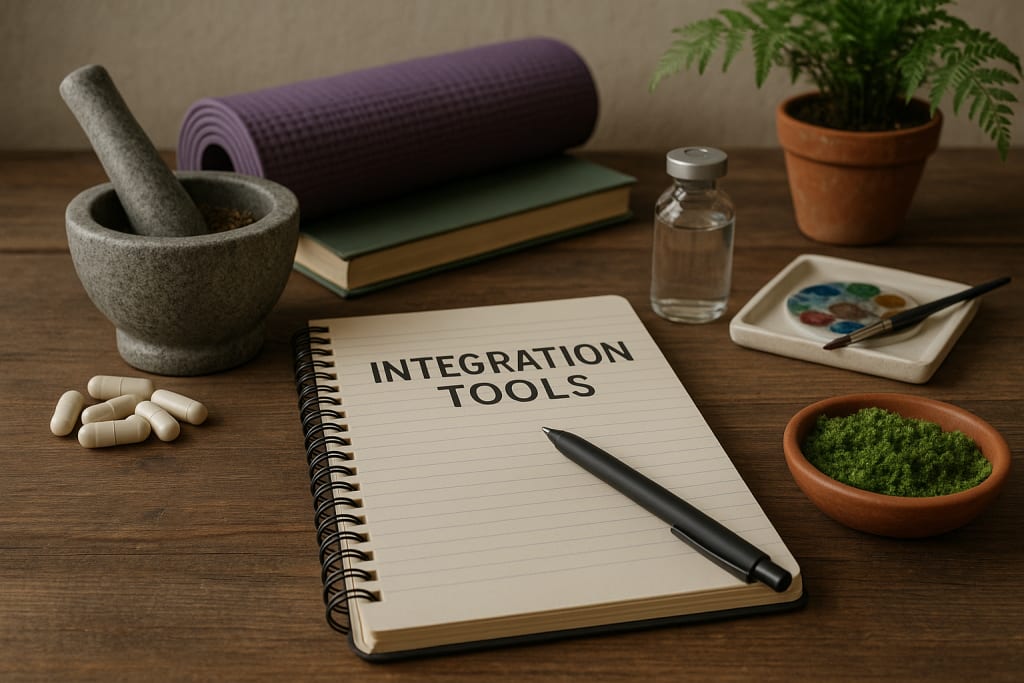
Ketamine infusions are not a cure. They are a powerful beginning.
For many, ketamine offers rapid relief, especially from depression, PTSD, anxiety, or chronic pain, when traditional treatments fall short.
But what happens after the session? How do you take that spark of clarity or calm and turn it into something sustainable?
That’s where integration comes in.
Integration is the process of turning temporary relief into lasting change. It's how you translate what happens during and after a ketamine experience into real-world improvements in your mental, emotional, and even physical life.
If ketamine is the key that unlocks a door, integration is the walking through it.
In this article, we’ll explore the most effective integration tools—those grounded in science, supported by therapists, and refined through real patient experiences.
These tools go far beyond simply “reflecting on what happened.” They offer structure, insight, and momentum. Whether you’re working with a therapist or navigating this path alone, what you do after the infusion may be as important as the infusion itself.
1. Somatic Practices: Reconnecting the Body with the Mind
After ketamine, many people report a heightened sense of embodiment. Their physical sensations feel more vivid, more meaningful. But for those who live mostly “in their heads,” this can be unfamiliar territory. Somatic integration helps bridge that gap.
What it looks like:
- Gentle movement like yoga, tai chi, or stretching
- Breathwork designed to calm the nervous system
- Body scans and guided somatic meditations
- Dance, shaking, or freeform movement to discharge emotional energy
These practices reconnect neural pathways that may have been dormant, helping the body "digest" the emotional insights unlocked during the ketamine session. They can also stabilize dissociation and support trauma healing.
2. Journaling: Making the Internal External
Words matter, especially your own. Journaling helps you anchor insights that might otherwise fade into memory.
But not all journaling is equal. The key is intentionality.
Try prompts like:
- What came up during the session that surprised me?
- How do I feel different now—emotionally, physically, spiritually?
- What recurring patterns or memories surfaced, and what might they be trying to show me?
- What’s one small action I can take today that aligns with what I felt in the session?
Writing forces you to organize thoughts, to give shape to emotion, to move from the abstract into the concrete. It can also serve as a timeline of progress, especially useful when change is subtle or slow.
3. Integration Therapy: Guided Support for the Inner Work
Some experiences during ketamine therapy are profound. Others are confusing, or even disturbing. Having a trained integration therapist makes a difference.
Therapists trained in psychedelic integration can help:
- Translate symbolism and meaning
- Recognize the difference between insight and avoidance
- Identify behavioral patterns that no longer serve you
- Provide emotional safety when deep wounds are uncovered
This isn’t talk therapy in the traditional sense. It’s more like guided excavation. Sessions might include mindfulness, dream analysis, somatic tracking, or even art-based reflection.
What matters is that you aren’t navigating it alone.
4. Creative Expression: Letting the Unspoken Speak
Some truths are too complex for language. That’s why drawing, painting, music, or sculpture can be so powerful post-ketamine.
These aren’t about creating something beautiful or even coherent. They’re about process.
Creative acts allow non-linear parts of the brain, often stirred by ketamine, to express what logic might miss. A simple sketch might reveal a long-buried emotion. A song might unlock a forgotten memory.
These expressions don’t need to be interpreted to be useful. The act of creating is often the integration itself.
5. Nature Immersion: Healing Through Connection
Modern life cuts us off from the rhythms of the natural world. Ketamine can temporarily return us to those rhythms, reminding us that we are part of something larger, something intelligent and alive.
Spending time in nature post-infusion can amplify this reconnection.
- Forest walks or hikes
- Sitting quietly by the water
- Gardening, foraging, or barefoot grounding
- Observing the slow movement of clouds or animals
These experiences soothe the nervous system, quiet the mind, and reinforce the felt sense of wholeness that ketamine often initiates. They also provide a low-stimulation environment where insights can continue to unfold organically.
6. Sleep Hygiene and Nutrition: Strengthening the Foundation
Ketamine resets neural patterns, but the brain still needs optimal conditions to rebuild those patterns long-term. That’s why sleep and nutrition matter.
Sleep is when memories consolidate and emotional processing deepens. Aim for consistent, unbroken sleep, especially in the days following an infusion. Reduce screen time, caffeine, and late-night stimulation.
As for nutrition, focus on whole, anti-inflammatory foods. Avoid sugar spikes and processed foods that stress the gut-brain axis. Hydration is critical. Your brain is an electrical organ, and water is its conduit.
Simple routines can have powerful effects. You’re creating an ecosystem for change, not forcing it, but inviting it.
7. Community and Connection: Healing in Relationship
Isolation is common for those seeking ketamine therapy. But healing doesn't happen in a vacuum. The more you can safely connect with others, especially those who understand the process, the deeper the integration can go.
Consider:
- Online or in-person integration circles
- Peer support groups
- Community art or movement events
- Speaking openly with a trusted friend who listens without fixing
The vulnerability that ketamine reveals needs a place to land. And when others witness your process, even quietly, that act becomes part of the medicine.
8. Spiritual or Existential Practices: Grounding the Transcendent
Ketamine can trigger deep existential realizations, some beautiful, some disorienting. Questions about purpose, death, God, and the nature of self.
These are not small matters.
Rather than dismiss these thoughts, create a structure for them.
This could include:
- Meditation, contemplative prayer, or breath-based stillness
- Reading spiritual texts or philosophy
- Working with a spiritual director, guide, or mentor
- Rituals or symbolic actions that honor your journey
You don’t need a fixed belief system. Just the willingness to listen and engage with what arises.
Integration Is a Lifestyle, Not a To-Do List
Too often, people treat integration like homework, something to finish and forget. But real integration doesn’t work that way.
It’s not about doing everything. It’s about finding what resonates with you, then doing it consistently enough that it becomes part of who you are. This is how you embody the insight, how you make the temporary permanent.
Ketamine opens the door. Integration is the walking, the stumbling, the returning, the growing. Again and again.
If you give the process time, support, and honesty, it will reward you with something rare: not just relief, but transformation.
About the Creator
Richard Bailey
I am currently working on expanding my writing topics and exploring different areas and topics of writing. I have a personal history with a very severe form of treatment-resistant major depressive disorder.
Keep reading
More stories from Richard Bailey and writers in Psyche and other communities.
Do You have a Support Network?
Life is harder when you’re on your own. Human beings are social creatures, and we usually feel better when we have support from a strong social network around us. For most people, it’s our families that hold us together like glue.
By Elizabeth Woodsabout 12 hours ago in Psyche


Comments
There are no comments for this story
Be the first to respond and start the conversation.