
Beyond the Beatdown: Raja Jackson, Rampage, and the Weight of Emotional Inheritance
A closer look at how teasing, expectation, and unresolved pain can quietly pile up between fathers and sons

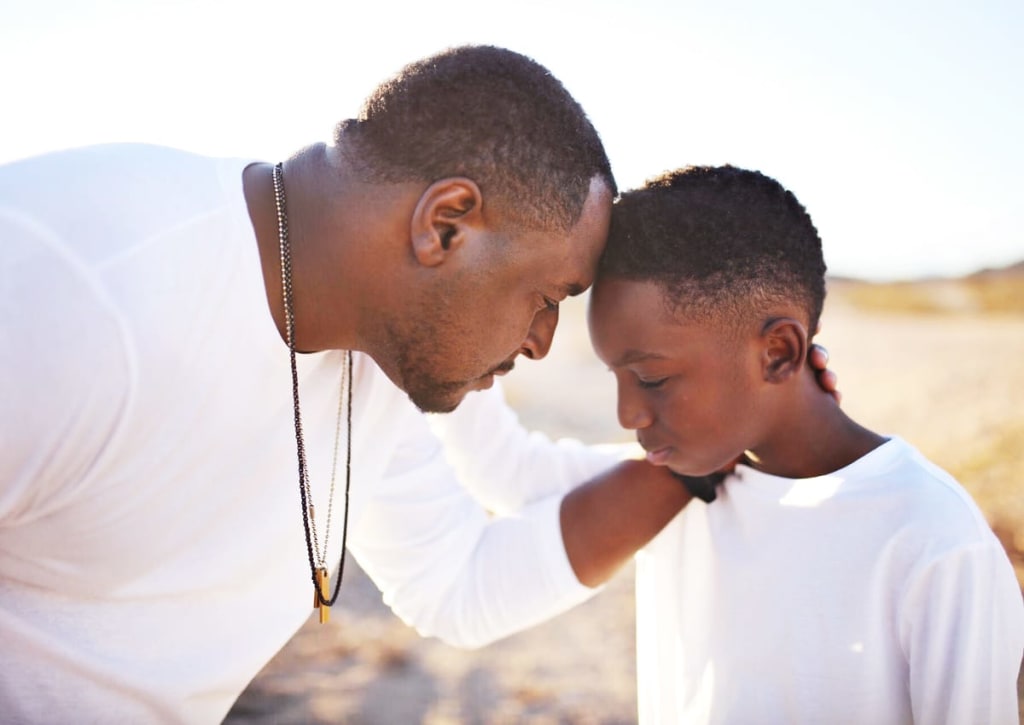
Let me start by saying this: I’m not here to attack Rampage Jackson.
That’s important to say up front, because what I’m about to unpack could sound like blame if you don’t listen carefully. But it’s not about blame. It’s about patterns. It’s about a moment that felt way too familiar — and way too painful — for anyone who grew up in households — often Black, but not exclusively — with certain kinds of parenting, under certain pressures to be ‘strong.’
The beatdown was disturbing — violent, unscripted, and completely outside what was supposed to be a pro-wrestling show. Raja Jackson crossed the line. But what played out in that ring started long before he ever stepped into it. You could feel it had deeper roots — emotional ones — and it all came to a head live on stream.
At first, people weren’t really examining his father, Rampage Jackson. But now, his role in sparking Raja’s outburst is finally being acknowledged.
Let’s walk through what happened first, just for clarity.
The Stream: What Actually Went Down
Raja Jackson was invited to the KnokX Pro Wrestling event on August 23 by his cousin, wrestler AJ Mana. Upon arrival, AJ brought Raja backstage to introduce him to other wrestlers. Raja was livestreaming the experience on Kick, and his presence behind the scenes — camera in hand — made it seem like he might be part of the show, at least to those who didn’t know him.
One of the wrestlers, Syko Stu, suddenly smashed a prop beer can over Raja’s head — thinking it was part of the act. But Raja wasn’t in on it. Caught off guard and clearly upset, he confronted Stu. After a tense exchange, Stu apologized several times, and the two eventually shook hands — seemingly settling the matter.
Later, AJ Mana allegedly offered Raja a chance to “get his receipt” — a wrestling term for returning a stiff shot — by confronting Syko Stu in the ring. It’s still unclear whether this was intended as a playful wrestling segment or something more real.
While Raja waited ringside for his cue, he continued livestreaming. As viewers in his chat goaded him — daring him to respond, questioning his manhood, and egging on his anger — his mood darkened. He began ranting about being disrespected and not being taken seriously. Fueled by anger and adrenaline, he stormed the ring mid-match and launched into a violent, unscripted attack on Syko Stu — slamming him to the mat and delivering more than 20 punches to the head. Stu was knocked unconscious and later hospitalized.
After the beatdown, Raja walked off the premises, still streaming live, and continued his heated rant.
What Followed Revealed Deeper Layers
While the violence itself was shocking, what came next offered even more insight into what had been building beneath the surface.
In the moments after the incident, Raja vented raw frustration about being mocked, disrespected, and underestimated. He shouted: “I’m tired of everyone clowning me. I’m not a bitch!” The phrase “people playing with me” came up repeatedly — pointing to a sense of humiliation that seemed to go far beyond what happened that night.
This is where the conversation shifts. What happened in that ring wasn’t just a reaction to a beer can or a wrestling misunderstanding — it was the eruption of something deeper. A buildup of emotions, likely compounded over time. To understand what led to that breaking point, we need to examine the broader emotional context behind it. We turn to that next.
How Rampage’s Influence Weaves Into the Story
Many overlook how Rampage’s influence is tangled up in all of this — as if he’s just the unfortunate father of a son who snapped. But that’s not quite true, and I say that carefully.
Raja and his father often go live together on stream, and those livestreams offer a clear window into their dynamic — one built heavily around teasing, banter, and public back-and-forth. There are at least two moments in recent streams that point to the dynamic between father and son.
One was a phone call that took place while Raja was waiting ringside, just before entering the ring at the KnokX Pro event. Raja was still livestreaming when Rampage called in, and the conversation quickly turned into a teasing exchange. Rampage joked that his son had been jumped by “men in booty shorts” and said he was “sending goons” — supposedly to help him out. Some of it was clearly in jest, but there was an edge to it. It didn’t feel like support — it felt like more public ridicule, in a moment when Raja already seemed on edge.
The second moment came in a vlog-style video Rampage uploaded, showing the two at a Vietnamese spa. The visit likely took place one or two days before the wrestling event but was posted two days after the event. The Spa day was meant to help Raja relax after taking a hard kick to the head earlier that day during sparring — a blow that had clearly shaken him. During the spa visit, Raja still looked unsettled.
Rampage brings up the sparring session several times in the video. While it starts off sounding like coaching — offering tips on how to avoid getting caught like that again — it later shifted into mockery with Rampage, reenacting Raja’s dizzy stumbling after being kicked in the head.
Throughout the hour-long footage — before, during, and after the Spa treatments — Rampage keeps taking jabs at his son and teasing him.
It might not sound like a big deal in isolation, especially because viewers are used to this interaction. But that’s exactly the point: it’s not isolated. You get the sense that this is their dynamic — Rampage dishes it, Raja eats it, and no one checks how much it’s piling up.
The Weight of Being “Rampage’s Son”
Imagine trying to carve out your own identity while the world constantly compares you to a larger-than-life father. A man with a nickname that literally means rage. Someone known for knockouts, dominance, charisma and fame.
Now imagine that same man is always clowning you — in public, in front of your followers, in front of his audience. And imagine you’re already someone who feels insecure, maybe overlooked, maybe weak.
The teasing doesn’t feel like love anymore. It feels like humiliation. And it doesn’t go away — it just stays bottled up until it finds a way out.
That’s why Raja’s rant matters. When he said he was tired of being mocked, tired of being treated like a joke — that wasn’t about one beer can. That was years of buildup. And part of that buildup came from trying to grow up under Rampage Jackson.
He probably also hears the whispers. That he’s a “nepo baby.” That he only got the platform because of his dad. That he’s not built like him. That he doesn’t measure up. All of that eats at you — especially if you don’t have the emotional tools to cope.
This Is What Happens When We Confuse Presence for Parenting
“The problem is too many children grow up in fatherless households.” That’s the go-to line for people trying to explain why there are so many problems in society, everything from crime to emotional instability. But as we can see now, physical presence isn’t the same as emotional presence. A dad being in the room doesn’t always mean he’s supporting your growth, affirming your worth, or teaching you how to handle pain.
If the main form of communication is teasing…
If there’s no space for vulnerability or softness…
If your manhood is always being tested, not nurtured…
Then you’re not being raised — you’re being hardened.
And that doesn’t build emotional strength. It builds shame.
This situation is exactly the kind of thing people mean when they talk about the resilience expected of Black people — especially Black men. But what gets missed is why that resilience is needed in the first place.
When emotional pain is dismissed, masked as culture, or laughed off as “just how we show love,” the weight adds up. And we expect young men to carry it all silently, with no real outlet. That’s not strength. That’s survival.
What Happened in That Ring Was More Than Violence — It Was a Cry From Deep Within a Generational Wound
What Raja did was wrong. There’s no excusing the violence, and he’ll have to face real consequences. But if we only look at the surface — the ring, the punches, the spectacle — we’ll miss the real lesson here.
This was a young man who’s been holding in years of hurt. Years of not feeling good enough. Years of being “Rampage’s son” but never fully his own person. And when the pressure finally broke, it came out in the worst way.
If we care at all about preventing more outbursts like this — in public or in private — then we need to start looking at how we’re raising our sons. How we talk to them. How we joke with them. How we support them emotionally, not just physically and financially.
If all we teach boys is how to take hits — but not how to process shame, rejection, or disrespect — then we shouldn’t be shocked when they turn into men who explode under the weight of it.
When Love Isn’t Enough
One final point: it’s obvious Rampage loves his son. You can feel that in how he talks to him, how he posts about him, and even in how he’s trying to stand by him now.
But love isn’t always enough to prevent harm — especially if that love comes wrapped in constant teasing, emotional pressure, or expectations of toughness that leave no room for vulnerability.
A parent can mean well and still pass down pain they never got the tools to process themselves. That’s what makes this so hard to talk about. It’s not about blame. It’s about recognizing how generational patterns work — even when love is present.
About the Creator
Rena Thorne
Unfiltered. Unbought. Unapologetic.
I’m not here to provoke—I’m here to make you rethink.
Keep reading
More stories from Rena Thorne and writers in Psyche and other communities.
My Unpopular Opinion: People Call It Fanboying. I Call It Strategy
Earlier this month, Russian President Vladimir Putin made a controversial visit to the United States — his first since diplomatic tensions between Washington and Moscow reached Cold War levels. The trip included a private, closed-door meeting with President Trump, a joint press conference, and a series of photo ops that quickly exploded across headlines and social media feeds. Cameras caught Trump praising Putin’s leadership, downplaying past election interference, and offering warm, even deferential body language.
By Rena Thorne5 months ago in The Swamp
Why Are We Obsessed With Perfect Crimes?
Setting the stage Picture this: a master thief slips past alarms, outsmarts guards, and vanishes into the night with priceless treasures—never caught, never suspected. Or a cunning murderer leaves no trace, no motive, no evidence, baffling even the sharpest detectives. These scenarios are the stuff of novels and films, yet they resonate far beyond fiction.
By The Crime Canvasabout 7 hours ago in Psyche


Comments
There are no comments for this story
Be the first to respond and start the conversation.