
Are You a Coca-Cola Person?
The Great American Lifestyle Brand


Background and Context:
Disclaimer: This article was written quite a while back and I forgot to release it. Forgive me
I've been doing some reflecting as I have now reached the age where drinking a whole can of coke in one day will make me quite ill indeed. I have owned by fair share of Coca-Cola merchandise in my life and yet, I have also realised that this is a soft drink. Why in God's name can I buy t-shirts, calendars, pencil cases, and even branded kitchen equipment made by Coca-Cola? It is something that I just think is very strange. I first read about something to do with this when Rory Sutherland did a breakdown of Red Bull's marketing strategy in his book "Alchemy". So, how did Coca-Cola become the ultimate symbol of the Modern American Lifestyle? As someone from the UK, I have always associated America with Coca-Cola. But this isn't organic. It's by design.
The YouTube Videos used in this videos are not going to be included in the reference list but are part of the research.
Are You a Coca-Cola Person?

Coca-Cola is more than just a soft drink; it has become a globally recognised symbol of happiness, togetherness, and cultural identity. Since its inception, the brand has positioned itself as a key part of everyday life, fostering emotional connections with consumers rather than simply promoting a beverage. By embedding itself into popular culture through advertising, sponsorships, and product placement, Coca-Cola has successfully cultivated an image that transcends refreshment, making it synonymous with shared experiences and universal joy (Pendergrast, 2013).
From the 1950s onwards, Coca-Cola’s advertising strategies have evolved significantly, reflecting societal changes and technological advancements. The post-war era saw Coca-Cola embracing wholesome family values, reinforcing its place at the heart of American domestic life. As youth culture emerged in the 1960s, the brand shifted towards a more dynamic, aspirational image, embracing music, counterculture, and global unity. The 1980s saw the rise of celebrity endorsements and high-energy marketing, while the 1990s introduced nostalgia-driven campaigns, solidifying Coca-Cola’s brand identity (Koehn, 2001).
In the digital era, Coca-Cola has continued to adapt, engaging consumers through social media, interactive campaigns, and personalisation strategies. However, as public awareness of health and environmental issues has grown, the brand has faced increasing scrutiny over its impact. This article will explore how Coca-Cola’s branding and marketing strategies have evolved from the 1950s to the present day, examining the ways in which the company has successfully sold not just a drink, but a lifestyle.
The 1950s: The Rise of Post-War Optimism
Uploaded by: Thompsontech1 here
The 1950s marked a period of rapid economic growth and consumer expansion, particularly in the United States and Western nations. After the hardships of World War II, societies embraced a newfound sense of prosperity, and Coca-Cola capitalised on this optimism by positioning itself as a symbol of leisure, family togetherness, and the idealised American lifestyle. Rather than simply marketing Coca-Cola as a refreshing drink, the company reinforced the idea that consuming it was part of a wholesome and aspirational way of life (Pendergrast, 2013).
One of Coca-Cola’s most significant marketing strategies in the 1950s was its use of television advertising, a medium that was rapidly gaining influence. Early commercials and print advertisements featured images of happy, smiling families, picnics, and friendly gatherings, all with Coca-Cola at the centre. This messaging aligned with the values of the era, which emphasised stability, tradition, and communal experiences. Slogans such as "What You Want is a Coke" (1952) and "Sign of Good Taste" (1957) reinforced the idea that Coca-Cola was not just a beverage but a pleasurable and essential part of daily life (Koehn, 2001).
Coca-Cola’s influence extended beyond the domestic market. As part of its global expansion strategy, the company linked itself to Western ideals, promoting Coca-Cola as a product of modernity and progress. Advertising campaigns abroad showcased the drink as a symbol of American prosperity, reinforcing the notion that adopting Coca-Cola was synonymous with embracing a modern, aspirational lifestyle. By the end of the 1950s, Coca-Cola had not only solidified its position as the dominant soft drink in the United States but had also strengthened its foothold in international markets, laying the foundation for its future as a globally recognised brand (Pendergrast, 2013).
The 1960s: The Youth Movement and Counterculture Influence
Uploaded by TheCocaCola here
The 1960s saw a dramatic cultural shift, with the rise of youth-driven movements that embraced freedom, self-expression, and social change. As the baby boomer generation came of age, young people became a powerful consumer demographic, and Coca-Cola adapted its marketing strategies to appeal to their dynamic and rebellious spirit. The brand moved away from its traditional family-oriented messaging and instead positioned Coca-Cola as an essential part of an exciting and youthful lifestyle (Klein, 2000).
One of the most influential advertising campaigns of the decade was "Things Go Better with Coke" (1963), which reinforced the idea that Coca-Cola enhanced every experience, whether socialising with friends, listening to music, or embracing adventure. This campaign was particularly significant because it embraced popular culture, integrating contemporary music and featuring high-profile artists such as The Supremes, Ray Charles, and Aretha Franklin in its advertisements. By associating Coca-Cola with emerging musical icons, the brand remained relevant to the younger generation and tapped into the power of celebrity influence (Pendergrast, 2013).
Coca-Cola also recognised the increasing importance of globalisation during the 1960s. As the counterculture movement promoted ideals of peace and unity, the company began to shift towards a more inclusive marketing approach. This transition culminated in the early 1970s with one of its most famous advertisements, "I'd Like to Buy the World a Coke" (1971). Featuring a multicultural group of young people singing in harmony on a hilltop, the ad conveyed a message of global unity and optimism, aligning Coca-Cola with ideals of peace and togetherness (Koehn, 2001). Although released in the early 1970s, the campaign reflected the ideals that had been building throughout the 1960s, reinforcing Coca-Cola’s ability to stay attuned to cultural trends.
By the end of the decade, Coca-Cola had successfully embedded itself into youth culture, proving that its marketing strategy could evolve alongside societal changes. By embracing music, celebrity endorsements, and messages of unity, the brand ensured its continued relevance, paving the way for its future as an enduring cultural icon.
The 1970s: A Global Brand with a Universal Message
Uploaded by Project ReBrief here
The 1970s marked a period of cultural change and increasing global interconnectedness, and Coca-Cola capitalised on these shifts by positioning itself as a brand that transcended national borders. This decade saw a stronger emphasis on diversity, unity, and emotional storytelling, as Coca-Cola sought to reinforce its image as a drink that could bring people together, regardless of background. The company’s marketing efforts reflected a growing global consciousness, aligning Coca-Cola with messages of friendship, love, and shared experiences (Pendergrast, 2013).
One of the most iconic representations of this shift was the "I’d Like to Buy the World a Coke" campaign (1971). The ad featured a diverse group of young people standing on a hilltop in Italy, singing about unity and harmony while holding bottles of Coca-Cola. This advertisement was groundbreaking in its inclusivity and emotional appeal, moving beyond traditional product promotion to sell an idea: Coca-Cola as a unifying force in an increasingly fragmented world (Koehn, 2001). The commercial resonated deeply with audiences, reinforcing Coca-Cola’s identity as more than just a soft drink—it was a symbol of shared happiness and cultural connection (Miller & Williams, 1998).
Beyond advertising, Coca-Cola expanded its global influence through sponsorship of major sporting events. The 1970s saw the brand deepen its relationship with international sports, becoming an official sponsor of the Olympics and the FIFA World Cup. This move strategically linked Coca-Cola with passion, competition, and global celebration, ensuring that its name was associated with some of the most widely viewed and emotionally charged events in the world (Mandell, 1988). By aligning itself with sports, Coca-Cola not only reached a massive audience but also reinforced its image as a brand that brought people together in moments of joy and excitement.
Emotional storytelling became a defining feature of Coca-Cola’s marketing throughout the decade. The company’s advertisements increasingly focused on personal connections, portraying Coca-Cola as a part of life’s happiest moments—whether shared among friends, lovers, or even strangers. This emotional branding strategy was highly effective, creating a deep-seated association between the product and positive experiences (Klein, 2000).
By the end of the 1970s, Coca-Cola had solidified its status as a truly global brand. Through inclusive messaging, emotional advertising, and strategic sports sponsorships, it had embedded itself into the cultural fabric of nations worldwide. The company’s ability to adapt to shifting societal values while maintaining its core message of happiness and unity ensured its continued dominance in the soft drink industry.
The 1980s: The Era of Excess and Celebrity Endorsements
Uploaded by Retro Man here
The 1980s were defined by materialism, rapid technological advancements, and the rise of celebrity culture, all of which influenced Coca-Cola’s marketing strategies. With the emergence of MTV in 1981 and the growing influence of pop music, Coca-Cola recognised the power of celebrity endorsements to connect with a younger, media-driven audience. This decade saw the brand embrace high-energy advertising, aligning itself with the fast-paced, consumerist culture of the time (Pendergrast, 2013).
One of the most memorable celebrity endorsements in advertising history was Michael Jackson’s partnership with Coca-Cola’s biggest rival, Pepsi. In response, Coca-Cola launched its "Coke is It!" campaign in 1984, featuring a range of celebrities and upbeat commercials that positioned Coca-Cola as the ultimate soft drink of the era (Klein, 2000). The campaign focused on energy, excitement, and indulgence—values that resonated with the 1980s consumer mindset. While Coca-Cola continued to dominate the global market, Pepsi’s aggressive marketing tactics, particularly The Pepsi Challenge—a blind taste test that often resulted in participants preferring Pepsi over Coke—posed a serious threat to its supremacy (Fisher, 2000).
In a controversial move, Coca-Cola responded to Pepsi’s rising popularity by reformulating its classic recipe and launching New Coke in 1985. The change was met with immediate backlash, as loyal customers rejected the new taste and demanded the return of the original formula. The company was forced to backtrack just months later, reintroducing the original drink under the name Coca-Cola Classic (Pendergrast, 2013). This misstep, while initially damaging, ultimately reinforced consumer loyalty, as the outrage over New Coke demonstrated the deep emotional connection people had with the brand.
Coca-Cola’s advertising in the 1980s also reflected the excess and high-energy culture of the time. Commercials featured vibrant imagery, fast editing, and energetic music, capturing the spirit of a decade driven by ambition and indulgence. One notable example was the Max Headroom campaign (1986), which introduced a futuristic, computer-generated spokesperson to appeal to the tech-savvy youth (Koehn, 2001). These campaigns reinforced Coca-Cola’s ability to remain relevant and adaptable, even in the face of fierce competition.
By the end of the decade, Coca-Cola had successfully navigated the challenges posed by its competitors and evolving consumer trends. While the New Coke fiasco had temporarily shaken the brand, it ultimately solidified its place as a cultural icon. Through celebrity endorsements, high-energy advertising, and a strong emotional connection with consumers, Coca-Cola continued to define itself as more than just a soft drink; it was a symbol of the decade’s aspirations, indulgence, and cultural shifts.
The 1990s: Nostalgia and Iconic Branding
Uploaded by Mackenzie Rough here
The 1990s saw Coca-Cola double down on nostalgia and emotional branding, reinforcing its image as a timeless and universal drink. In contrast to the high-energy, celebrity-driven campaigns of the 1980s, Coca-Cola shifted towards softer, more sentimental advertising, drawing on themes of tradition, happiness, and togetherness. This decade cemented some of the brand’s most enduring visual and cultural symbols, ensuring its place not just as a product but as a fundamental part of global pop culture (Pendergrast, 2013).
One of the most significant moments in Coca-Cola’s branding history was the introduction of the Coca-Cola polar bears in 1993. These animated, family-friendly mascots debuted in a commercial titled "Northern Lights," which depicted a group of polar bears watching the aurora borealis while enjoying bottles of Coca-Cola. The campaign’s success lay in its ability to evoke warmth, wonder, and innocence, fostering a deep emotional connection with consumers (Klein, 2000). The polar bears became one of Coca-Cola’s most recognisable brand assets, appearing in numerous holiday-themed advertisements throughout the decade and beyond.
The "Always Coca-Cola" campaign, launched in 1993, further solidified the brand’s identity. Featuring 27 different commercials tailored to various international markets, the campaign embraced diversity and individuality while maintaining the universal message of enjoyment and refreshment (Foster, 2008). The tagline emphasised consistency and reliability, reassuring consumers that no matter how much the world changed, Coca-Cola would remain the same. This approach resonated particularly well with Generation X, who were coming of age during this period and valued authenticity in marketing (Koehn, 2001).
Coca-Cola also strengthened its presence in sports sponsorship, further embedding itself into mainstream culture. The company had already built a relationship with the Olympics in previous decades, but the 1990s saw an increased focus on aligning the brand with major international sporting events. Coca-Cola was a key sponsor of the 1996 Atlanta Olympics, using the event to reinforce its American heritage while appealing to a global audience. The brand’s association with FIFA and the FIFA World Cup also grew during this period, securing its place as the official soft drink of the world’s most-watched sporting tournament (Pendergrast, 2013).
Beyond sports, Coca-Cola capitalised on its cultural significance through partnerships with popular entertainment franchises. The brand’s presence in films, television shows, and music videos was no accident—it was a calculated effort to maintain relevance with younger consumers. Iconic moments, such as Coca-Cola’s integration into Friends (one of the most-watched TV shows of the decade), reinforced its image as a staple of modern life (Klein, 2000).
By the end of the 1990s, Coca-Cola had successfully positioned itself as more than just a beverage: it was a symbol of nostalgia, comfort, and global togetherness. Through emotionally driven advertising, strategic sponsorships, and integration into entertainment, Coca-Cola continued to dominate the soft drink market while deepening its cultural significance.
The 2000s: Digital Expansion and Emotional Branding
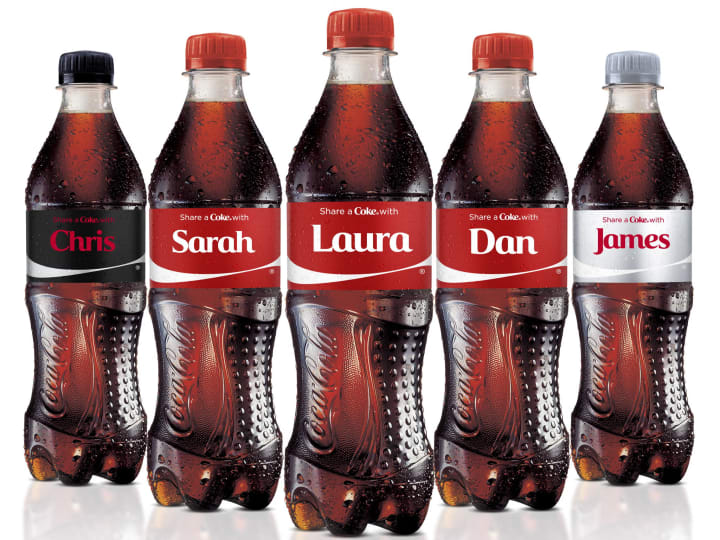
The 2000s marked a significant shift in Coca-Cola’s marketing strategy, as the rise of digital technology and social media changed the way brands interacted with consumers. No longer just relying on traditional advertising, Coca-Cola embraced new ways of engaging with audiences, making its brand more interactive and community-driven. The company focused on personalisation, emotional branding, and digital expansion to maintain its relevance in an increasingly connected world (Pendergrast, 2013).
One of the most successful campaigns of this era was the 'Share a Coke' campaign, which was first launched in Australia in 2011 before expanding globally. Instead of the traditional Coca-Cola logo, bottles featured popular first names, encouraging consumers to find and share a Coke with friends, family, or loved ones. This campaign was particularly effective because it created a sense of personal connection between consumers and the brand, making Coca-Cola feel more intimate and relevant to individuals. By tapping into the growing trend of personalisation, Coca-Cola transformed a simple beverage into a social experience (Foster, 2018).
Coca-Cola also expanded its presence into social media, recognising that digital platforms were becoming central to consumer engagement. The company actively used Facebook, Twitter, and YouTube to create interactive content, encourage user participation, and strengthen brand loyalty. One of the most notable examples was the Happiness Machine campaign in 2010, which featured a Coca-Cola vending machine that unexpectedly dispensed extra bottles, flowers, and even pizzas to delighted customers. The viral nature of this campaign demonstrated Coca-Cola’s ability to use digital storytelling to reinforce its message of happiness and surprise (Klein, 2019).
Another major development during this period was Coca-Cola’s increased focus on corporate social responsibility (CSR) and sustainability. As concerns about environmental impact grew, Coca-Cola sought to position itself as an ethical and socially conscious brand. Campaigns such as Live Positively aimed to highlight the company’s commitment to sustainability, water conservation, and community development. However, these efforts were often met with scepticism, as Coca-Cola faced criticism over water usage in drought-prone areas and plastic waste pollution. Despite this, the brand continued to invest heavily in CSR initiatives to maintain a positive public image (Yates, 2020).
Sponsorship remained a key element of Coca-Cola’s branding strategy, with the company continuing its long-standing association with major sporting events. Coca-Cola was a prominent sponsor of the FIFA World Cup in 2002 and 2006, using these global events to reinforce its message of unity and excitement. The brand also deepened its connection to music, launching initiatives such as Coca-Cola Music to engage younger audiences through exclusive content, artist collaborations, and live events (Foster, 2018).
By the end of the 2000s, Coca-Cola had successfully adapted to the digital age, embracing personalisation, social media engagement, and emotional branding to remain one of the world’s most recognisable and beloved brands. The company’s ability to evolve with changing consumer habits ensured that Coca-Cola remained a cultural icon in the modern era.
The 2010s and Beyond: Social Responsibility and Sustainability

As the 2010s progressed, Coca-Cola faced growing scrutiny over its environmental impact, health concerns, and corporate ethics. While the brand maintained its focus on happiness and togetherness, it also began addressing these criticisms by incorporating themes of social responsibility and sustainability into its marketing. However, many of these efforts have been accused of greenwashing, promoting an environmentally friendly image while continuing practices that contribute to pollution and resource depletion (Hawkins, 2017).
One of the most significant challenges for Coca-Cola has been its role in the global plastic waste crisis. As one of the largest producers of plastic bottles, Coca-Cola has been heavily criticised for its contribution to pollution. In response, the company launched its World Without Waste initiative in 2018, pledging to collect and recycle one bottle for every one sold by 2030. Coca-Cola also introduced PlantBottle packaging, made partially from plant-based materials, to reduce reliance on fossil fuels. Despite these efforts, environmental groups have argued that Coca-Cola continues to prioritise single-use plastics over sustainable alternatives, and in 2021, it was named the world's worst plastic polluter for the fourth consecutive year (Greenfield, 2021).
Health concerns also became a central issue in Coca-Cola’s branding strategy. As awareness of obesity and sugar-related diseases grew, the company sought to reposition itself by promoting lower-sugar options and reformulating products. The introduction of Coca-Cola Zero Sugar was part of this effort, alongside campaigns that encouraged moderation and active lifestyles. However, critics have pointed out that Coca-Cola continues to market sugary drinks aggressively, particularly in developing markets where regulations are less stringent (Nestle, 2019).
Uploaded by Coca-Cola here
Coca-Cola also aimed to modernise its brand by focusing on inclusivity and diversity. The 'Taste the Feeling' campaign (2016) replaced the long-running Open Happiness slogan, aiming for a more universal appeal while maintaining the brand’s emotional connection. Advertisements featured diverse representations of people enjoying Coca-Cola in various settings, reinforcing its message of inclusivity. Notably, a 2018 Super Bowl ad celebrated different languages and cultures, positioning Coca-Cola as a drink that unites people globally. However, this attempt to balance traditional branding with modern concerns has sometimes come across as performative rather than substantive (Miller & Johnston, 2020).
Coca-Cola’s use of digital marketing continued to expand, with a heavy focus on social media and experiential marketing. The company engaged consumers through interactive campaigns, such as the Share a Coke campaign’s digital extension, which allowed people to personalise virtual Coke bottles online. Influencer partnerships also became a key strategy, particularly on platforms like Instagram and TikTok, where Coca-Cola collaborated with content creators to maintain its relevance among younger audiences (Foster, 2018).
By the end of the 2010s and into the 2020s, Coca-Cola remained one of the most recognisable brands in the world. However, its ability to navigate the increasing demand for ethical business practices while maintaining its dominance in the soft drink market remains an ongoing challenge. While Coca-Cola continues to market itself as a brand that brings people together, the tension between its corporate actions and public messaging raises important questions about the future of brand authenticity in an age of social responsibility.
Conclusion

Coca-Cola’s success is not merely due to the quality of its product but rather its ability to market a lifestyle. From the post-war optimism of the 1950s to the digital personalisation of the 2000s, Coca-Cola has consistently aligned itself with cultural and societal trends. By associating itself with happiness, unity, and shared experiences, Coca-Cola has embedded itself into global consciousness as more than just a soft drink, it is a symbol of connection and enjoyment.
One of Coca-Cola’s greatest strengths has been its adaptability. It has successfully navigated shifting consumer values, whether through the countercultural energy of the 1960s, the celebrity-driven excess of the 1980s, or the socially conscious branding of the 2010s. Despite fierce competition, particularly from Pepsi, Coca-Cola has maintained a strong brand identity that remains instantly recognisable across generations. Its ability to retain consumer loyalty, even through challenges such as the failed New Coke launch and growing health concerns, is a testament to its marketing prowess (Foster, 2018).
However, as consumer awareness of health risks (see: 'Ultra-Processed People' by Chris Van Tulleken) and environmental sustainability grows, Coca-Cola’s branding strategy faces new challenges. While its recent sustainability efforts and promotion of lower-sugar options demonstrate an attempt to stay relevant, questions remain about the authenticity of these initiatives.
In conclusion, moving forward Coca-Cola must find ways to maintain its emotional appeal while addressing these concerns meaningfully. Whether it can continue to thrive in an era of increasing corporate accountability will determine the longevity of its lifestyle branding (Miller & Johnston, 2020). Even if the whole world buys into it in the exact same way.
Works Cited:
- Fisher, L. (2000) The Pepsi Challenge: The Inside Story of the Battle Between Pepsi and Coke. New York: Crown Business.
- Foster, R. J. (2008) Coca-Globalization: Following Soft Drinks from New York to New Guinea. New York: Palgrave Macmillan
- Greenfield, P. (2021) ‘Coca-Cola named the world’s worst plastic polluter for fourth year in a row’, The Guardian
- Hawkins, R. (2017) Branding and Greenwashing: Corporate Sustainability in the Age of Marketing. London: Routledge.
- Klein, N. (2000) No Logo: Taking Aim at the Brand Bullies. London: Flamingo
- Koehn, N. F. (2001) Brand New: How Entrepreneurs Earned Consumers’ Trust from Wedgwood to Dell. Boston: Harvard Business School Press.
- Mandell, R. D. (1988) The Olympics of 1972: A Munich Diary. Chapel Hill: University of North Carolina Press.
- Miller, K. and Johnston, T. (2020) Consumer Perceptions of Ethical Branding. Oxford: Oxford University Press
- Miller, B. & Williams, J. (1998) Sport, Media, Culture: Global and Local Dimensions. London: Routledge.
- Pendergrast, M. (2013) For God, Country and Coca-Cola: The Definitive History of the Great American Soft Drink and the Company That Makes It. New York: Basic Books.
About the Creator
Annie Kapur
I am:
🙋🏽♀️ Annie
📚 Avid Reader
📝 Reviewer and Commentator
🎓 Post-Grad Millennial (M.A)
***
I have:
📖 300K+ reads on Vocal
🫶🏼 Love for reading & research
🦋/X @AnnieWithBooks
***
🏡 UK
Keep reading
More stories from Annie Kapur and writers in Psyche and other communities.
Sorry, But I'm Not Gambling...
Background and Context: I love long-form video content. If I'm watching YouTube, I will seek out the longest video with the deepest dive to sink my teeth into. Whilst watching these videos there are obvious and fairly annoying, bursts of advertisements. I counted that in a few days alone of video content watching, I had seen 35 advertisements with 33 of those being dedicated to online gambling in some form. I say in some form because some of them were advertising Sky Vegas gambling which is a site that collects gambling games and puts them in one place, but then there were also adverts for apps in which the player could play a game that resembles gambling or is actual gambling. However, I have never gambled in my life and even after seeing the adverts, I am no closer to doing so. I am in contrast, interested in this over-saturation of gambling adverts that I have also been told a lot of people have been receiving.
By Annie Kapur11 months ago in Psyche
Why Dreams Unlock Your Hidden Self
Have you ever woken up from a dream that sticks with you through the day? A fall that shook you awake, a conversation with someone you are sure you know from somewhere, a door that you couldn't open but had to know what was behind it? These dreams aren't just figures of your imagination, but rather pointers to parts of yourself you don't always see during your busy day. From fears that held you back to hidden strengths that deep down you wish for, these dreams are an insight into your deeper self.
By Dave's Your Uncle!4 days ago in Psyche
Trickle Them Down, But Not Out
The thing about smart people is that they should know better, but alas, intelligence is not the same as wisdom. Not only do the mistakes of experts too short on vision—when they are not corrected—have the potential to do great and far-reaching damage, but they also undermine public confidence in the very notion of expertise. This is particularly so when expertise is wielded in defence of the rich and powerful as a cudgel against those laid low. As an academic, this lack of faith in “so-called experts” is painful to see as it plays out in the spread of dis-/misinformation, conspiracy theories, and anti-intellectualism writ large. But it is also an understandable impulse given the catastrophic failure of an economic ideology pushed by certain economic experts. Supply-side economics has shaped a broken system for the last half-century and has arguably done more to undermine the fabric of the American Dream than any policy framework of the past century.
By Cory Wright-Maley6 days ago in Humans




Comments (1)
Nice