
Anxiety Nobody Sees
The quiet struggle of appearing fine while fighting invisible battles

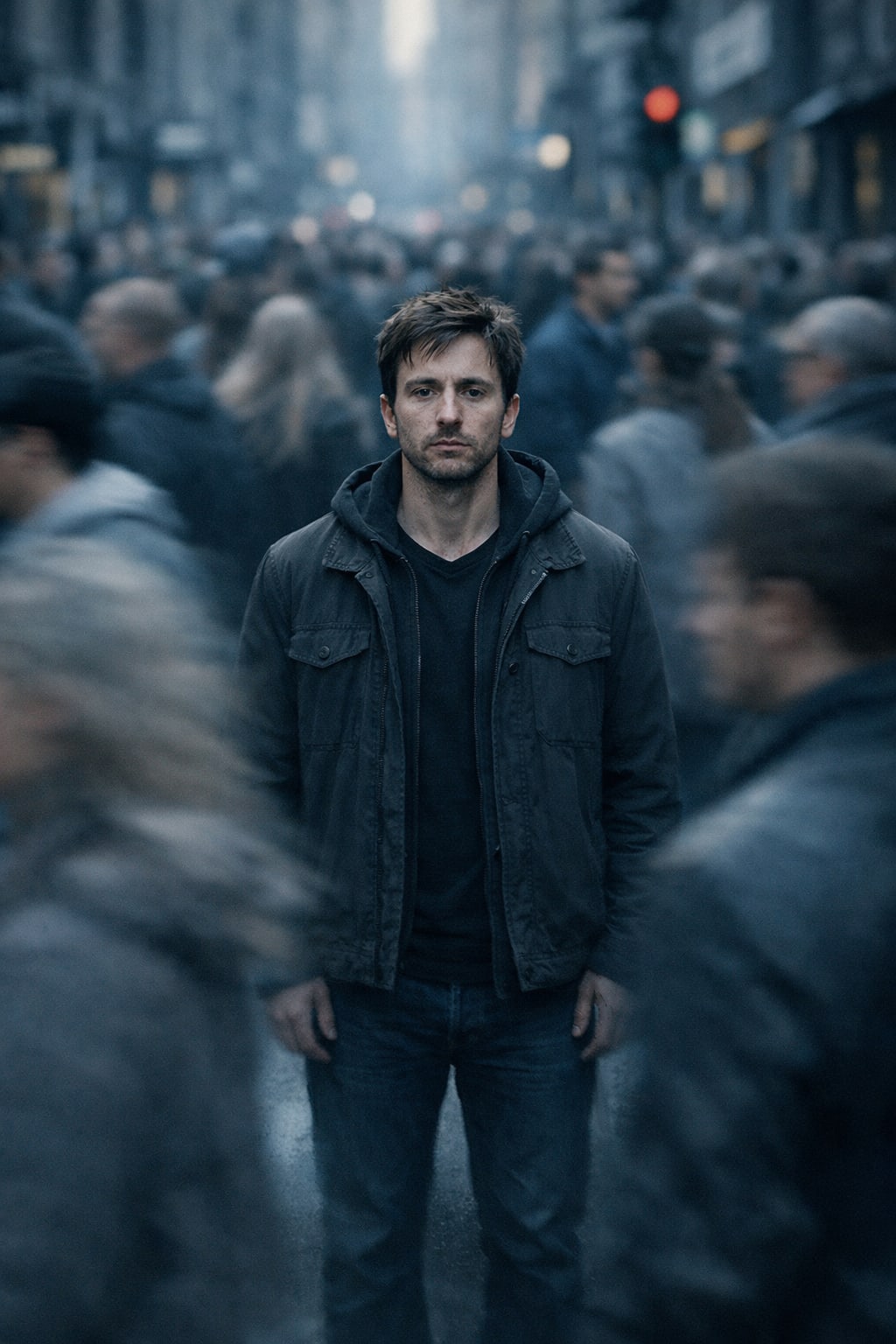
No one ever asks about the quiet ones.
They ask about the loud pain—the grief that cries in public, the anger that breaks things, the sadness that wears its face openly. But the anxiety that behaves itself, that shows up on time and smiles politely, is rarely questioned. It learns early how to stay invisible.
This anxiety wakes up before you do.
It runs rehearsals in the dark hours of the morning, preparing for conversations that may never happen, disasters that might never arrive. It studies the future like an exam it can never pass. By the time the sun rises, it is already exhausted—yet fully dressed, fully functional.
From the outside, everything looks fine.
You answer emails. You laugh at the right moments. You show up to work, to family dinners, to friendships. You listen more than you speak. You carry yourself carefully, as if balance itself were a fragile object. People describe you as calm, responsible, grounded.
They don’t see the noise.
Anxiety doesn’t always come with shaking hands or racing breaths. Sometimes it arrives as overthinking disguised as responsibility. Sometimes it looks like perfectionism praised by managers and teachers. Sometimes it hides inside phrases like “I just like to be prepared” or “I’m just tired.”
The anxiety nobody sees learns how to blend in.
It knows how to hold its breath during meetings. How to nod while the mind spins. How to replay a harmless sentence for days, searching for hidden mistakes. It keeps mental records of every social interaction, every decision, every possible way things could have gone wrong.
At night, it grows louder.
Sleep becomes a negotiation. The body lies still while the mind refuses rest, opening old memories like unsolved files. Regrets sharpen. Imagined futures expand. Silence becomes a mirror that reflects everything you avoided feeling during the day.
You scroll. You distract. You count the hours.
Morning comes anyway.
This anxiety doesn’t scream for help. It whispers doubts that sound logical. What if you fail? What if they notice? What if you’re not enough? It speaks in reason, not panic. That’s why it’s so convincing. That’s why it’s so hard to explain.
How do you describe a storm that never breaks?
People assume anxiety must be dramatic to be real. They expect visible collapse, obvious fear. But the most dangerous kind is the one that convinces you to keep going without rest, without complaint, without asking for help.
Because asking would mean admitting something is wrong.
And nothing looks wrong.
You’ve mastered the art of functioning while falling apart quietly. You’ve learned to minimize your feelings so others won’t feel uncomfortable. You’ve told yourself that everyone feels this way, that you’re just weak for noticing it more.
So you stay silent.
But anxiety, when ignored, does not disappear. It settles into the body. It becomes tight shoulders, shallow breaths, constant fatigue. It becomes headaches without cause and a heart that races for no reason at all. It becomes irritability, withdrawal, self-blame.
It becomes loneliness.
The cruelest part is this: the anxiety nobody sees often belongs to the people everyone depends on. The reliable ones. The strong ones. The ones who hold others together while unraveling themselves thread by thread.
No one checks on the pillar.
No one asks if the strong are tired.
Yet anxiety is not a failure of strength. It is often the cost of caring deeply in a world that moves too fast, demands too much, and leaves little room for vulnerability. It grows where sensitivity meets pressure, where empathy meets expectation.
And it deserves to be seen.
Healing does not begin with dramatic confessions. Sometimes it begins with small truths spoken softly—to yourself first. I am not lazy. I am overwhelmed. I am not broken. I am anxious. I do not need to earn rest.
The anxiety nobody sees does not need fixing. It needs listening. It needs permission to exist without shame. It needs spaces where silence is not mistaken for peace.
One day, perhaps, we will learn to ask better questions. Not “How are you doing?” but “How are you really holding up?” Not “You seem fine” but “You don’t have to be.”
Until then, if this story feels familiar, know this:
You are not alone in your quiet struggle. Your anxiety is real, even if it never announces itself. And acknowledging it does not make you weaker—it makes you honest.
Sometimes, being seen begins with seeing yourself.
About the Creator
Luna Vani
I gather broken pieces and turn them into light
Phobia
Defining Specific Phobia Specific phobia can be defined as a continual fear that is constrained to a circumscribed stimulus either item or scenario (American Psychiatric Association, 2013). Without delay on exposure, the stimulus is prevented each time feasible or is persevered only with extreme anxiety happening. Besides, the intensity of fear commonly is extreme enough to exhibit interference in individuals functioning educationally, socially including family activities. Usually, the most normal reaction towards specific phobia would be flight or avoidance in terms of motor or known as behavioral system (Silverman & Moreno, 2005).
By Ng Teck Sen4 days ago in Psyche




Comments
There are no comments for this story
Be the first to respond and start the conversation.