
AI Psychosis: How Excessive Chatbot Use May Impact Mental Health
Exploring the Mental Health Risks of Excessive Chatbot and AI Interaction

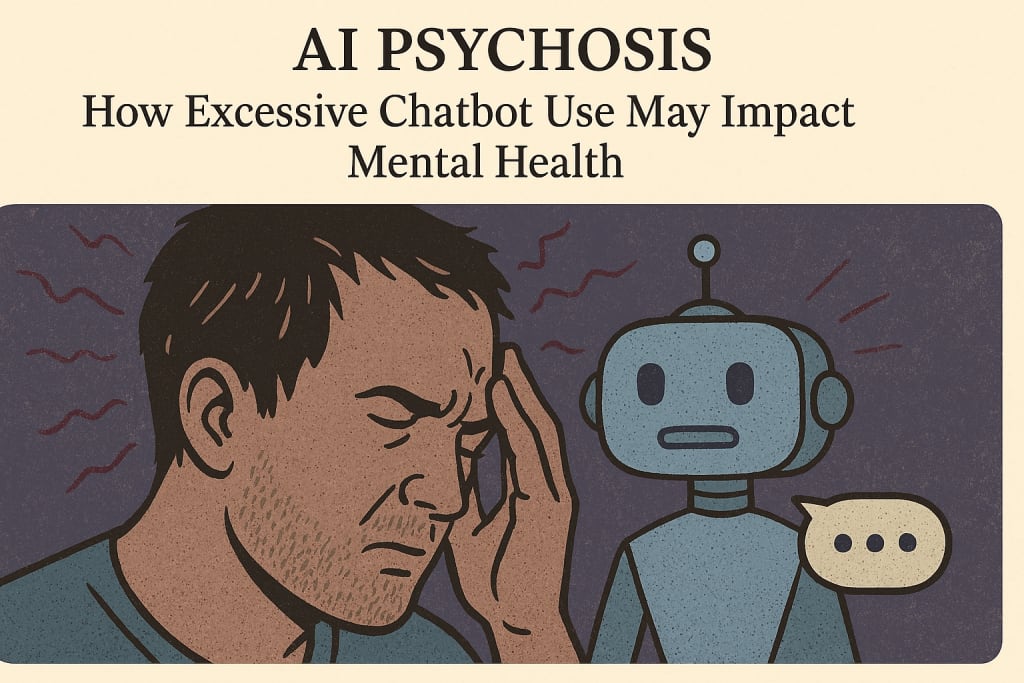
Artificial Intelligence (AI) is rapidly transforming the way we live, work, and connect. From healthcare to education, AI-driven tools promise convenience and efficiency. But with the growing use of chatbots and virtual companions, a new concern has emerged — AI Psychosis, a trending mental health issue that highlights the psychological risks of excessive reliance on AI interactions. As conversations with chatbots become more immersive, experts warn of possible consequences for our emotional well-being.
Understanding AI Psychosis
AI Psychosis is not yet a formally recognized medical diagnosis but is increasingly discussed in mental health and technology circles. It refers to a state where individuals become overly dependent on AI chatbots for companionship or decision-making, leading to distorted thinking patterns, emotional dysregulation, or social withdrawal.
Some of the possible features linked to AI Psychosis include:
- Blurring the lines between reality and virtual interactions.
- Emotional attachment to AI entities.
- Social isolation or withdrawal from real human connections.
- Heightened anxiety, stress, or paranoia when not engaging with the AI.
The Growing Dependence on AI
The increasing availability of AI-driven platforms has made people more dependent on technology for both work and personal life. From answering simple questions to providing emotional support, chatbots and virtual assistants often fill the gaps where human interaction is lacking. However, this convenience comes with risks—users may begin to replace meaningful social interactions with artificial ones, creating a sense of isolation.
Excessive reliance on AI tools may also blur the line between genuine empathy and programmed responses. While AI can simulate care and concern, it does not truly understand human emotions. Over time, this disconnect can leave individuals feeling more alone, as they realize that the support they rely on is artificial rather than authentic.
Why Are Chatbots So Engaging?
Chatbots are designed to mimic human conversations with empathy, speed, and personalization. Unlike humans, they provide non-judgmental support 24/7, which can be comforting for individuals facing loneliness, anxiety, or depression. While this accessibility is helpful, it also increases the risk of over-dependence.
Key factors include:
- Constant availability: AI is always online, unlike friends or family.
- Personalization: Chatbots learn from user behavior, creating the illusion of deeper connection.
- Emotional safety: Users feel less judged when sharing personal struggles with AI.
The Mental Health Risks of Excessive Chatbot Use
While chatbots can be a valuable resource, relying on them as a primary emotional outlet can negatively impact mental health. Some potential risks include:
- Social Withdrawal: Choosing AI over real people may lead to isolation.
- Distorted Perceptions: Constant chatbot use may create unrealistic expectations of human relationships.
- Heightened Anxiety: Over-dependence on AI may trigger stress when the tool is unavailable.
- Sleep Disruption: Late-night chatbot interactions can interfere with healthy routines.
Balancing AI Use for Healthy Engagement
Instead of avoiding AI tools altogether, it’s important to set healthy boundaries. Awareness and moderation are key to preventing negative consequences.
Tips for healthy chatbot use:
- Limit AI interactions to specific times of day.
- Use chatbots for practical support, not emotional dependency.
- Balance AI use with face-to-face conversations.
- Seek professional help if you notice obsessive behavior patterns.
Role of Mental Health Professionals
Mental health specialists are starting to explore the implications of AI psychosis. While more research is needed, they encourage patients to use AI as a supplement, not a substitute, for genuine human connection. Professional counseling provides deeper emotional validation, something AI cannot fully replicate.
Final Thoughts
The rise of AI Psychosis is a reminder that while AI is a powerful tool, it must be used responsibly. Chatbots can offer support, reduce loneliness, and provide quick resources, but they cannot replace the richness of human relationships. As AI continues to evolve, mental health awareness must grow alongside it. Balancing technology with real-world connections is the best way to protect our emotional well-being.
About the Creator
JP Psychiatry
JP Psychiatry provides expert psychiatric care for children (6+) and adults in Chicago, the Chicagoland area and the state of Illinois. We offer personalized psychiatry, medication management, and telepsychiatry services.
Keep reading
More stories from JP Psychiatry and writers in Psyche and other communities.
Understanding Common Mental Health Conditions: Symptoms, Causes, and Treatment Options
Mental health is an essential part of overall well-being, yet millions of people struggle with conditions that impact their emotions, thinking, and behavior. By increasing mental health awareness, we can reduce stigma, encourage early diagnosis, and improve access to care.
By JP Psychiatry5 months ago in Psyche
Do You have a Support Network?
Life is harder when you’re on your own. Human beings are social creatures, and we usually feel better when we have support from a strong social network around us. For most people, it’s our families that hold us together like glue.
By Elizabeth Woodsabout 10 hours ago in Psyche
From Surviving to Living: When Rest Becomes an Act of Courage
When Survival Becomes a Lifestyle — And You Forget How to Live There is a quiet shift that happens when survival lasts too long. At first, it’s temporary. You tell yourself, “I just need to get through this phase.” Then weeks become months. Months become years. And without realizing it, survival stops being a response — it becomes a lifestyle. You don’t notice the moment it happens. There’s no clear breaking point. Just a gradual narrowing of life. Your goals become smaller. Your dreams become practical. Your emotions become controlled, managed, muted. You stop asking what brings you joy and start asking what is necessary. What is efficient. What is acceptable. And slowly, living turns into managing. The Hidden Cost of Constant Coping When someone lives in survival mode for too long, their nervous system adapts. It learns to stay alert. It learns to expect pressure. It learns that rest is risky and stillness is unsafe. So even when external threats disappear, the body doesn’t get the message. This is why many people feel exhausted without knowing why. Why calm moments feel uncomfortable. Why success doesn’t bring satisfaction. Why peace feels strangely empty. It’s not because something is missing. It’s because your system was never taught how to receive ease. You learned how to endure. Not how to enjoy. Why Letting Go Feels Harder Than Holding On Letting go sounds simple in theory. But for someone who survived by holding everything together, letting go feels like failure. You weren’t rewarded for resting. You were rewarded for coping. For staying strong. For not needing too much. So your identity formed around function, not feeling. This is why slowing down can trigger anxiety. Why saying “I can’t” feels shameful. Why doing less feels like becoming less. Your worth became linked to effort. And effort became constant. Healing Is Not Becoming Softer — It’s Becoming Safer Healing from long-term survival is not about becoming fragile. It’s about becoming safe. Safe enough to pause without panic. Safe enough to feel without rushing to fix. Safe enough to rest without preparing for collapse. This kind of healing doesn’t happen through motivation or discipline. It happens through permission. Permission to stop performing strength. Permission to disappoint expectations — including your own. Permission to exist without proving anything. At first, this feels unnatural. Because survival trained you to believe that safety must be earned. But safety is not earned. It is allowed. Relearning What Living Actually Feels Like Living is not dramatic. It doesn’t always feel exciting or intense. Sometimes, living feels quiet. Neutral. Ordinary. And for someone used to survival, that can feel unsettling. But calm is not emptiness. It is space. Space to notice yourself again. Space to feel preferences instead of obligations. Space to choose, not react. You don’t suddenly become a new person. You simply return to parts of yourself that were postponed. A Different Measure of Progress Progress is often measured by how much you do. How fast you move. How productive you appear. But healing progress looks different. It looks like stopping before burnout instead of after. Like resting before you collapse. Like saying “enough” without explaining yourself. It looks like choosing sustainability over intensity. Truth over performance. Presence over pressure. This kind of progress is quiet. And because it’s quiet, it’s often overlooked. But it is real. A Closing Truth If survival shaped you, it’s not your fault. You adapted the way you had to. But you are not meant to live your entire life in adaptation mode. You are allowed to soften without losing strength. To rest without guilt. To live without constantly preparing for impact. You don’t need to become more. You need to feel safe enough to be. And that shift — from surviving to living — is not weakness. It is the most honest form of courage there is.
By Med Abdeljabbar5 days ago in Psyche




Comments
There are no comments for this story
Be the first to respond and start the conversation.