
ADHD Manifesting in Relationships
A follow up article to "The Signs That Made Me Realise I Wasn't Crazy But Had ADHD"

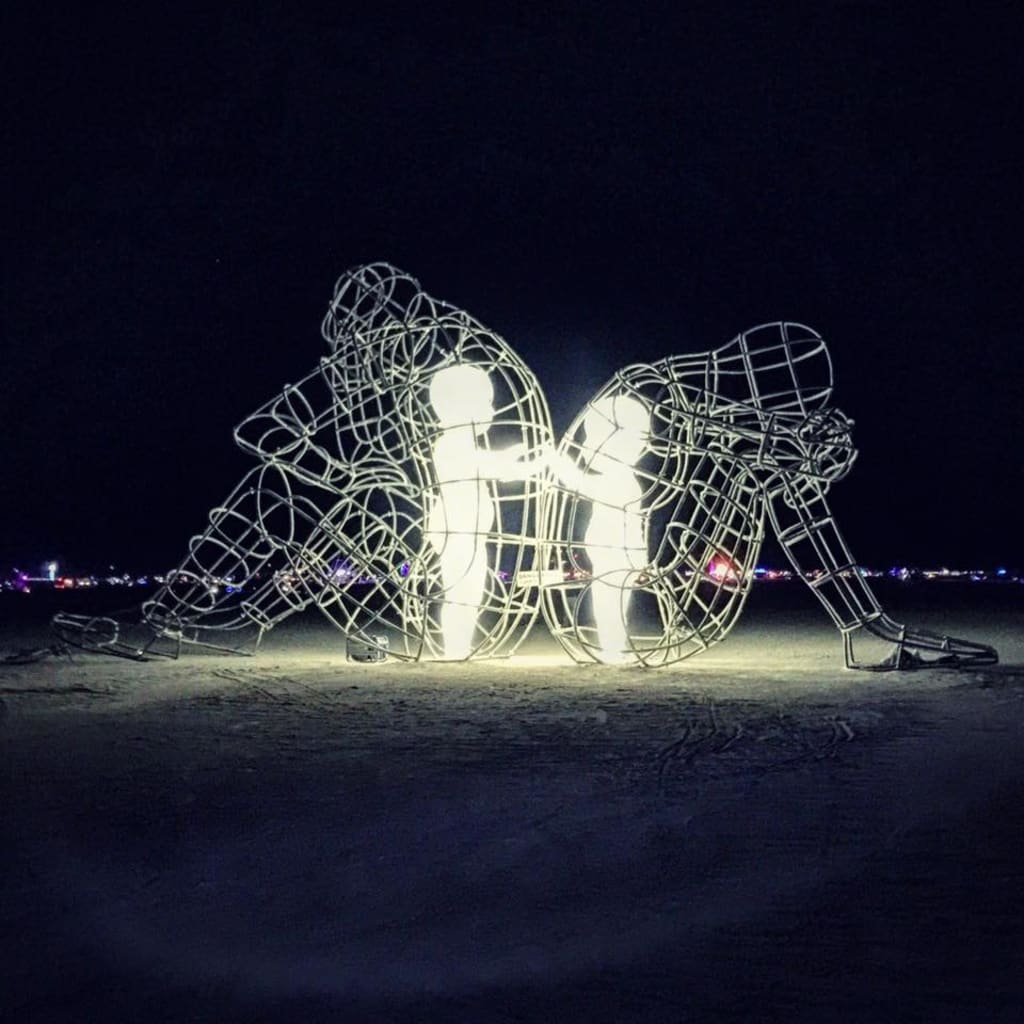
Being ADHD is one thing. Being ADHD and maintaining lasting relationships is a totally different story.
For myself, during high school and even into university, I went through friends like a packet of crisps and whilst I didn’t know it at the time, having been diagnosed with ADHD as an adult, looking back on what has become a borderline traumatic but self defining experience, it is abundantly clear that the primary contributing factor to that lifestyle of jumping friendships was down to my undiagnosed ADHD. Growing up with this lifestyle - with any lifestyle - can really impact your self belief, your belief in the natural state around you and belief in what is the normal and right way to be treated by people around you. To expect people to eventually leave you genuinely makes you too scared to become close to people in the first place, which still affects me even now at 25. It was only when I got the diagnosis (22-24yo) that I not only opened up a little more, but I maintained friendships and even ended up accidentally surrounding myself with like-minded and equally neuro-spicy people. It’s like a gaydar, but for spicy brained people… neuro-spicy-dar I guess?
It can be horrifically scary going through this, and for me I felt like I was 100% alone in this situation, and eventually that there was something habitually wrong with me. “Maybe it wasn’t the hundred and one people around me that were wrong, it was me - !” For a lot of what happened in highschool it was down to my symptoms of ADHD, however, later on in my life it became the people around me who couldn’t accept me for who I was, rather than the symptoms themselves being the primary reason for fallouts. In fact, one of the reasons in which my symptoms would interfere in my social life was a response to my past trauma; having constantly been called a liar, manic, overwhelming, disobedient, bossy, careless, attention seeking etc because people wouldn’t believe me nor understand me.
Going as far back as primary school my ADHD was at its peak of visibility, but just like the paradox we live in, these symptoms were put down to me being a disobedient energetic child, which shone strongly through my school reports.
“She kept forgetting her reading material so she was moved down a reading group”
“She doesn’t focus on her work, she only really shines in things that she likes to do and is good at”
“She has far too much of an imagination”
Those are legitimate words from my teachers by the way, yes, I was told off for having too much of an imagination. My parents could not understand how I, their child, could have such contrasting personalities, attitude and behaviour at school as to at home. Inevitably you will act differently at home and at work, but the constant negative feedback about my inability to be a good co-operative student was perplexing, coming from this book worm of a child.
Now, I believe that my generation was undeniably on the cusp of “you’re a manic, disobedient, bossy, lazy child” and “these are clear symptoms of ADHD” which the latter only became prominent a generation after us. Thanks to this our generation, and the many generations above us became legendary maskers, hiding our true selves behind safe facades in order to prevent ourselves being signed into an asylum by our peers, or even ourselves. Unfortunately, being an undiagnosed neurodivergent does something incredibly paradoxical. The symptoms in which we are experiencing, which are normal reactions and responses for our mind and body, don’t conform to the “norm” around us, forcing us to not only mask all of these confusing thoughts and biological responses, but creates this intense war inside of us; a battle of identity and understanding. So in the end it doesn’t matter how much of a good masker you are, if you don’t even know why you are the way you are or why you do the things that you do, how are you to understand and deal with everything? You simply can’t. So, the symptoms you try to mask can sometimes instead be worsened and/or heightened. It’s like trying to get through an RPG game as a mage: you set all your stats and abilities to strengthen wind magic without knowing that the monsters you’re facing have fire abilities, so, no matter how much you try to defeat these monsters you’re only going to make them stronger.
So, long story short, ADHD sucks, but it doesn’t suck as much as being an undiagnosed ADHD, and to put it simply it is the primary contributing factor to how I lost so many friends in my life. The cause being of my own symptoms, and also of my peers, but if you read on you'll understand how neither are faults.
By telling you my story I hope for you to have a better understanding of your neuro-spicy compatriots, or to help you yourself not feel alone.
The ways in which ADHD makes relationships challenging
Going through highschool is torture enough as it is, but as a nerdy undiagnosed ADHD, it was a playing field for bullies and power hungry peers with low self esteem. I hated not fitting in and would try my hardest to change myself in order to keep myself safe and maintain friends. Sadly this just made things worse as I built a library of lies and an identity that was so uncomfortable I clashed with myself constantly. I didn’t want to go out and get rat arsed drunk like everyone else, and whilst I didn’t mind a drink or two, the huge social situations would make me want to be sick and every executive function would shut down and I would be a mouse amidst a room of cats. Eventually, these lies became too much and I broke down in early highschool and confessed everything. Teenagers are never understanding creatures and no matter how much I tried to explain myself I just dug holes deeper and deeper into the Earth’s core. They all left me and inevitably the whole year group knew about my “habitual lying tendencies” within minutes. Naturally I went for a different approach; distancing. I became the quiet hard worker with little to no social skills and only surrounded myself with one or two friends; jumping friendship groups like it was a parlour trick. Why did I jump friendship groups so much? It’s honestly a lot simpler than you think, and it boils down to these components of ADHD that I was completely unaware of - and please note, these are but a few in which I personally experienced, all experiences differ:
1. Boredom
This sounds so incredibly harsh, but because ADHDers suffer from under stimulation we are always looking for things that are new, challenging, interesting and stimulating. If we find something interesting the executive functions of our brain click into place and our bodies and minds start to function. But because of this, people with ADHD fear and avoid boredom because when nothing is stimulating our brain and keeping uncontrollable energy occupied it can start to physically hurt.
Sadly this leeks into friendships, where ADHDers can get bored of doing the same things with the same people and it can become challenging to enjoy their company and it’s easier to lose focus/attention when around them or even get agitated with small annoyances they would have otherwise ignored before. This can then form a few conclusions. First of all, ADHDers will want to take time/space away from these friends that they have spent lots of time with and whilst this is a coping mechanism and a means to preserve the friendship it can be seen to others as a hostile act. On a similar note, the fear of boredom can make ADHDers workaholics, continuously striving for projects which busies our schedule to the point we can’t meet up with friends. Both situations can, and personally have, caused friends who have opposing needs - aka, to be continuously in the company of friends to maintain the relationship - break up the friendship.
2. Object Permanence
This one is honestly both tragic and funny at the same time. Simply put, it becomes exceptionally easy to forget people exist. If we don’t have friends or people in our lives constantly it becomes exponentially easier for us to wholeheartedly forget that they even exist. Whether that’s because of, for example, geographical distance or no time to meet up because of scheduling - to put it bluntly they’re “out of sight, so, out of mind”. It’s kind of like we put friends into our ‘safe drawer’ so we don’t lose them, but instead forget that they’re there, so when we open the drawer it’s a genuine surprise and embarrassment to find them there. “Oh yeah! Steve! How could I forget? It’s not like you’ve been my friend since childhood”.
3. Hard to hold back opinions/annoyances
ADHDers can become impatient with friends and family with things that annoy them. At first, for the fear of being rejected or losing friendships an ADHDer can hold back a lot of themselves that could scare or overwhelm peers, but unlike neurotypical people ADHDers get easily irritated by small mannerisms or habits and/or need to correct people when they know that they are wrong as these habits become painful to constantly be around. A personal example would be with this friend I had for six years who, for the verb “to eat”, no matter the tense, she would always use the same word - which has no spelling so take the pronunciation instead - ‘Eh-t’. Eventually I started pointing this out every time she did that because it was something that would make me so uncomfortable and it was hard to endure. This constant nitpicking easily equally wound up both parties.
On a different note, a personal pet peeve of mine that outranks all pet peeves is loud eating, particularly food slapping. Hearing it not only annoys me but it sets off all my responses and I will be so close to crying whilst building this vivid in-the-moment hatred and really trying hard to hold back smacking said person (I do resist I hasten to add). For example, when I was watching The Count of Monte Cristo (2024) the other day, the character Halifax was represented as being this foul rich aristocrat who, during an interaction with another character, was violently slapping the food he was eating. This had me recoiled in my seat and covering my ears because I was about to be physically sick.
That type of physical response was what I felt to my friend misusing the tenses of that word and as such I had to correct her in order to not feel so uncomfortable.
These types of reactions to certain sensations are extremely common for neurodivergents.
4. RSD
Possibly the most obvious one and by far the most intense.
A quick reminder about RSD:
People with ADHD more often than not suffer from something called: Rejection Sensitive Dysphoria (RSD). People who suffer from RSD are hypersensitive to what people say or think about them. A couple examples of symptoms include:
• Being easily embarrassed
• Getting very angry or having an emotional outburst when they feel like someone has hurt or rejected them
• Feeling anxious, especially in social settings
RSD and ADHD work together to make it extremely difficult to manage relationships. First of all, the natural reaction to the potential of losing someone we care about or being abandoned by them can make us come across as paranoid, protective and possessive. People around an ADHDer will often receive “are you okay?” or “did I do something?” or “are you mad at me?” with little to no rhyme or reason for these worries. This constant onslaught of smothering can annoy people and even overwhelm them and do the exact thing that is feared and make them run away, despite the innocent intentions.
ADHD… Should be called paradox syndrome.
The scariest part of RSD however is that if anything happens that sets it off like a disagreement, argument or something that breaks the comfort of our norm it’s like gently tapping a vase and causing it to cascade to the otherside of the room and smash. This can ensue what people would classify as “an overreaction” when in reality it is a biological reaction before any logic has the capability to form, and by the time it has, tears could be shed, shouts could have happened and an argument could be in full swing. I’m not saying that the ADHDer is in the wrong when they react like this, there could easily be extremely warranted reason for this reaction - this is not an excuse for neurotypicals to blame neurodivergents for arguments etc - it is to simply explain that thanks to RSD we have a habitual tendency to over worry about relationships and can have intense explosive episodes that are not out of choice, especially as we have been built with out-of-the-blue illogical, pathological paranoia that everyone around us hates us. Go figure. Because of the fear of setting off an RSD episode, like walking on eggshells around an ADHDer, or simply being overwhelmed and tired of experiencing an ADHDer’s RSD people won’t want to stay around them and will abandon friendships.
It’s hard enough to have this genuine tortuous RSD, the one thing I absolutely loathe about having ADHD, but for people around us to give us reason to feel it even more because they can’t cope with it, it’s once again a nasty paradox that no one can be blamed for.
There are so many ways to get help for RSD if it’s something that you struggle with, and please understand that you are far from alone in this. I personally struggle with it a lot - sporadically - but when it hits, it’s painful, and can leave you wanting to harm yourself which is so dangerous.
Here’s a link that I have previously shared about RSD that covers a lot more than I can: https://www.webmd.com/add-adhd/rejection-sensitive-dysphoria
5. Energy
“You’re too overwhelming” “You’re too much for me”
Have you ever heard those words? Have you ever said those words?
Those words are more painful to hear than downright insults. I have lost more friends from those words than I have in any other way. I get it, I really really do, being around me can be too much for people because I do have a lot of energy.
Honestly, having lived my whole life with this height of energy it’s near to impossible for me to put myself in the shoes of those who live lives where silence in a room full of people and sitting still is not only physically possible but a natural and enjoyable way of living. Being ADHD means that I am naturally an empathetic person, most of us are able to place ourselves in other people’s shoes even without meaning to because we have the ability to leech the emotions out of other people just by walking past them, however, despite that, it’s still extremely challenging to understand that contrasting lifestyle that other people have to me.
I swear we are so much like dogs it’s uncanny - maybe that’ll be my next article “How ADHDers are basically dogs” - watch this space people.
So, people will find it exhausting to be in our company and hanging out with an ADHDer can be daunting, energy draining and a challenge to the point that they have to tell said ADHDer that they can’t be around them anymore. Despite the fact that deep down you totally understand how that can be the case, you can’t help but be hurt by those words as it’s saying that your pure sheer existence causes someone you thought you really cared about to be uncomfortable. In the end I have become so intensely hyper aware of my energy levels that I also tell people to let me know if at any point I get too much or if I am overwhelming.
6. Being Sensitive - Positively and Negatively
People often say “you’re so sensitive” in an insulting way, especially if there is dispute and one party has been reduced to emotions where the other hasn’t. I want this made abundantly clear that being ‘sensitive’ is not a bad thing, but people who have, to quote Hermione Granger, “An emotional range of a teaspoon” don’t understand why or how others can find the smallest of things emotionally triggering. For someone with ADHD particular flare ups or even life itself feels like you're on a 24/7 menstrual cycle where your moods and emotions have a mind of their own, are out of your control and sheer hell to live with. But the emotions aren’t always negative. The extremes range from the obvious - sadness and anger - to sheer joy, where you will see us reacting, sometimes uncontrollably, like excited 5 year olds over something like the latest season of our favourite TV series or managing to finally get a toy from the claw machine. The things in life that fill us with these emotions are extreme, there’s very little room for a middle ground. As such this can become intensely overwhelming for people around us who don’t share the same level of emotional output, and some people as well can’t deal with emotions in general so don’t know what to do when they see someone crying. It can also feel like a lifestyle of living on eggshells for other people, especially people who have less empathy (which isn’t a bad thing, but a potential clashing factor) who won’t be able to work out triggers or what to do in these situations. To put it short, emotions are scary for not just the ADHDer, but the people around them.
7. Anxiety and Depression
I feel like these speak for themselves. You don’t need to have ADHD to have many of the ADHD symptoms; anxiety and depression being the top of that list. Anyone on this planet can have this, but sadly for someone with ADHD - especially undiagnosed ADHD (and other neuro-spicy conditions) - it is a common symptom. It can be because of the way in which we are wired we are more attuned to emotions and feelings and becoming sensitive to them very easily which can make us fall into these states, but it can also be a result of traumatic experiences whilst growing up as undiagnosed neurodivergents. Anyone who has gone through these mental health issues will understand how difficult it is to maintain relationships because they cause symptoms that make you antisocial and hard to deal with whilst you are coping, struggling and/or healing. I won’t delve further into this particular topic, because it is an all around sensitive topic I don’t wish to do misjustice to, especially as it isn’t specific to ADHD alone, but I will provide links for further information and support if you feel like it could be helpful in relation to this topic in the footnote.
8. Misunderstood Behaviours
I speak about this primarily from the perspective of during the stages of being undiagnosed. Now that I am a diagnosed ADHD adult I am open about it and people around me understand why I am the way I am, however, growing up undiagnosed is a totally different story and it is the primary reason why I went through so many friends during my school years.
If you take all the things I have listed above as contributing factors to ADHD manifesting in relationships and how it can affect relationships, and now imagine having all of that without the knowledge of having all of that - that is how it feels to be an undiagnosed neurodivergent. When you yourself don’t know why you feel the way you do, act the way you do, behave the way you do when all that you do feels totally normal to you and more often than not completely out of your control, how can you possibly expect a school year load of snot nosed teens going through puberty to understand why you are so clearly different and “weird”. Misunderstood behaviours have personally lead to my highschool years being saturated with targeted bullying and ostracisation, constant falling out with friends over the most menial of scenarios, being easily manipulated and pushed around because I was in a constant state between wanting to fit in and being incredibly gullible, and, being in a constant war with my own mind and body and the people around me with whom I could never quite fit in with. But put much simpler, if you know why you think and feel certain ways it’s a lot easier to have a more respectable social etiquette and ability to hold back or know when to take a step back and pick your fights. If you have these intense feelings and impulses that make sense to you but don’t seem socially acceptable, but you don’t know why, well, you’re not just fighting the people around you when you hit these walls you are fighting with yourself. No one is going to want to hang around you if you seem to be habitually “weird” and “narcissistic” when in actual fact you aren’t, you are just misunderstood by everyone, including yourself. This can still be the case, however, when you are diagnosed, believe me, even when you do know yourself, people will still choose to believe your actions to be that which it is not rather than just simply a different way of existing.
...
These are all examples stemming from my own personal experiences, and even though I speak them from the perspective of someone with ADHD, a lot of these can be associated with other neuro-spicy conditions as well as so much more. It’s really difficult to maintain lasting relationships sometimes when you are ADHD, but I will tell you this one thing you might not know about an ADHDer:
If an ADHDer cares about you they really care about you. They will LOVE the hell out of you. There’s no half assing emotions when it comes to us, both positive and negative.
Afternote
I would like to say that once you are diagnosed, or even once the people around you are made aware of your spicy brain, that it gets easier… mostly it does, but you will still get the few trials and tribulations with the people around you. Like I mentioned before, I’ve lost many friends to my ADHD, most of them were when I was undiagnosed - however, very ironically, all of those people I fell out with during my high school years I am actually currently friends with again since I left university. The more serious friendship fallouts stem from the friends I lost when I was diagnosed with ADHD and they understood my symptoms and actions. Don’t get me wrong, even though it is important for people to be understanding of my actions I do not use it as an excuse to be annoying or hurtful. Where my ADHD affects the people around me I work hard to tone down and suppress things that aren’t socially fair, such as nit picking and correcting people, talking too much (though being a chatterbox is my natural disposition), interrupting people, but above all I ask the people around me to let me know if I get too much for them and I beg them to tell me if I hurt them in anyway without knowing. I know there’s a little RSD leaking through there, but my friends have always promised me they will let me know… not all have kept that promise.
During lockdown I didn’t see one of my friends much at all and neither of us stayed in touch very well over that time, to the point that I actually forgot about her (object permanence) and lost track of how long we hadn’t seen each other (time blindness). Even though we met up a couple of times after lockdown this still caused our friendship to fall apart.
The worst one for me however was my best friend of six years. She had been with me through thick and thin; when I broke away from a toxic and abusive relationship, when I was diagnosed with fibromyalgia (chronic condition), when I was diagnosed with ADHD and when I was going through a difficult time with my work. Despite promising me that she would tell me if I hurt her or if my ADHD got too much, she turned round to me out of the blue and in short told me that everything she had been smiling and nodding through was making her hate our friendship and when I said she at the very least owes me an explanation because she had been my best friend, she in short listed everything that boiled down to ADHD. Which she knew about, however at the end of the day it didn’t matter how much explaining I did, in these situations people have their mind and heart set on what they have experienced and what they see which isn’t always the truth. And some people, with even no malice, just can’t cope with a neurodivergent friendship. The worst part was that during this time I was going through an intense period of depression, not only because of being bullied at work but I had graduated from university the year that Covid hit and I was struggling with my career, my happiness and fighting with newly realised neurodiversity, my disability and questioning my sexuality. Depression is hard enough but it is heightened to extreme levels for those with ADHD and it was a trying time for not just me, but our friendship.
It’s hard for me to write this as it harks me right back to something that I have worked hard to move so far beyond, but knowing that who I am causes me to loose the people around me, it scares me all the time and the more I start to care for someone, unless they are already integrated into my inner circle of fellow weirdos, the more I will unintentionally start to drift further away from them and watch them from afar making myself feel jealous and upset that I’m not beside them. But if I move closer, I freeze up and forget what I was like with them before I wanted to be closer. All down to the fear of losing them.
Despite this, I have now found myself surrounded by wonderful like minded people with whom I don’t have to worry about being myself around, who see me for just being someone and not someone with problems or being different, or a problem! Who like the things about me that I hate and who not only accept all my ADHD qualities but who don’t get scared by me or overwhelmed and I trust implicitly to tell me if anything isn’t right. Most of these people are also neuro-spicy, but completely by coincidence. Like a gaydar we seem to subconsciously surround ourselves with fellow spicy brain people. We like the same things, we interact the same way and we understand our way of thinking. Not to say that I don’t have neurotypical people in my life! I just really consider that despite my crazy journey and the jobs I have jumped to and fro that I am so incredibly lucky and happy to have made the choices that put me on this crazy path because it has allowed me to end up in a place where I feel so happy and safe with the people around me.
I hope that if you are reading this feeling lost and alone and scared of yourself because the people around you are leaving you like they did me, that you understand that there is a reason they are leaving you and that is to make room for the people who will stay there - it’s not impossible, there are people out there who are just as crazy and manic and lovable as you. My biggest tip is to not force it; wait and surround yourself in activities you love because that is where you will find these friends. For me, one big example has been my cosplaying world.
And always remember that even though others can walk away from our ADHD, we can’t, so make the damn most of it.
___________________
Footnote:
https://www.meandmymind.nhs.uk/getting-help/mental-health-websites/
https://sandyhealthcentre.nhs.uk/practice-information/a-z-list-of-organisations-for-mental-health/
https://www.mentalhealth.org.uk/
https://www.nami.org/
About the Creator
Megan Kingsbury
Author 📝and voice actor 🎤 by day
Animation 🎬 fanatic by night
Cosplayer 🖌️🪡 all the way in between
Reader insights
Outstanding
Excellent work. Looking forward to reading more!
Top insights
Compelling and original writing
Creative use of language & vocab
Easy to read and follow
Well-structured & engaging content
Excellent storytelling
Original narrative & well developed characters
Expert insights and opinions
Arguments were carefully researched and presented
Eye opening
Niche topic & fresh perspectives
Heartfelt and relatable
The story invoked strong personal emotions
Masterful proofreading
Zero grammar & spelling mistakes
On-point and relevant
Writing reflected the title & theme
Keep reading
More stories from Megan Kingsbury and writers in Psyche and other communities.
The signs that made me realise I wasn't crazy but had ADHD
What is ADHD? ADHD stands for Attention Deficit Hyperactivity Disorder and is often diagnosed at a young age where symptoms are most often exhibited. However, for people like myself where the symptoms were missed or put down to being a part of my personality it led to being diagnosed as adult ADHD.
By Megan Kingsbury4 years ago in Psyche
Top tipple tricks
Been thinking a lot about drinking, lately. Not least because of a recent episode of over-indulgence and the inevitable after effects. Some readers may recall the earlier articles I wrote about beating the booze. Here I set out an experiment in techniques for cutting down on my alcohol intake. The experiment was successful, the techniques worked, and I have armed myself with an arsenal of weapons in the war against the demon drink. I have yet to fire the first round however. It's all a question of timing (perhaps procrastination).
By Raymond G. Taylor3 days ago in Psyche
The 6 Hardest Life Truths You Already Know But Refuse to Face
Life has a strange way of teaching lessons we wish were not true. Deep down, most people already know some uncomfortable truths about life. Yet, instead of facing them directly, we distract ourselves with routines, entertainment, or false hopes. These truths are not meant to discourage you. In fact, accepting them can be incredibly freeing. When you stop denying reality, you gain clarity, resilience, and control over your life. Here are six of the hardest life truths most people already know—but often refuse to face.
By Shahid Zaman4 days ago in Psyche
From ad men to mad men
It's after 2am in the morning when a local police patrol vehicle in Northern New Jersey spots a figure costumed as Quasimodo, The Hunchback of Notre Dame, proceeding southbound on the sidewalk along Lydecker Street. Though the hunchback’s costume stuffing offers added insulation, it's January, and friggin’ freezing. Carefully, the officers slow down, gently question the subject, and offer him a ride home.
By David W. Maury7 days ago in Humor



Comments
There are no comments for this story
Be the first to respond and start the conversation.