
15 Fascinating Psychological Facts About Human Behavior
Today, we’ll dive into 15 captivating psychological insights that reveal the mysteries of our behavior. Let’s embark on this enlightening journey together.
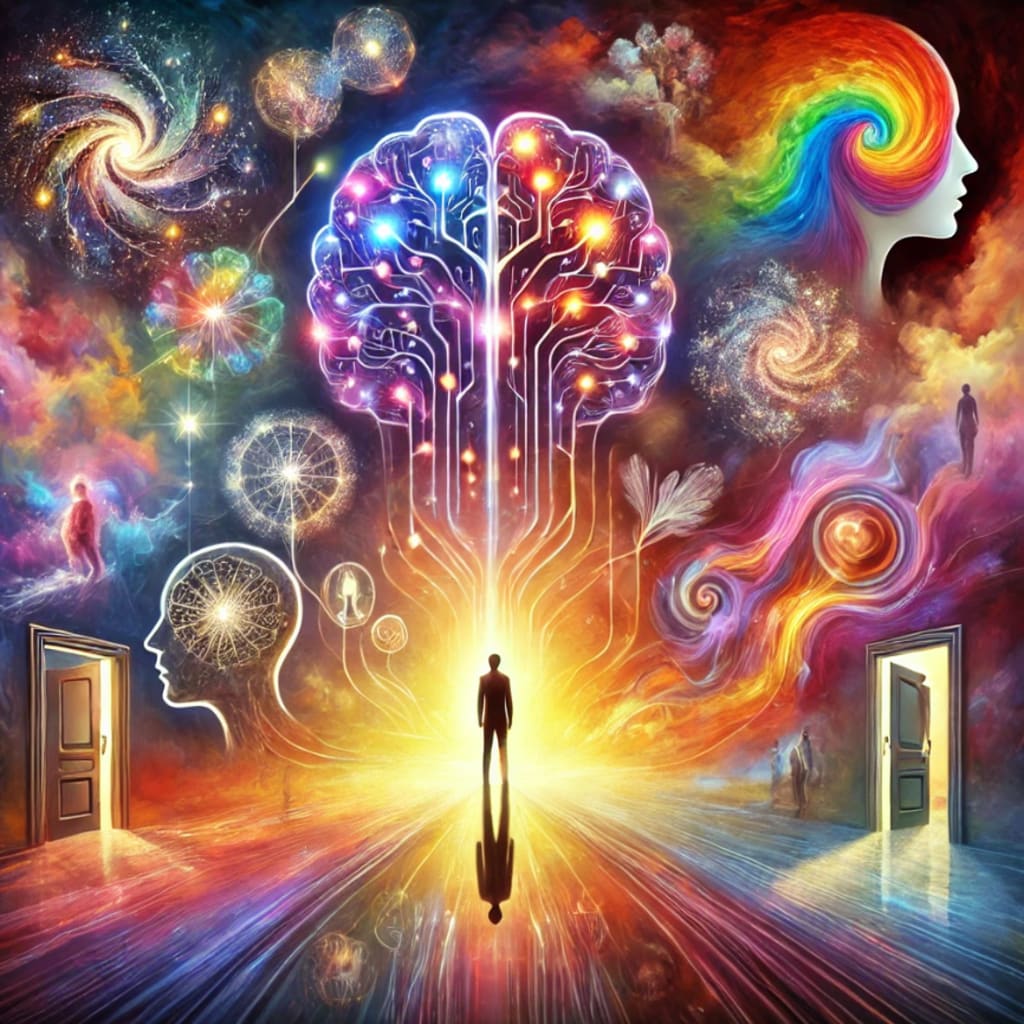
Psychology is a rich tapestry of thought processes, emotions, and behaviors, weaving together the story of our existence. It’s like peering behind the curtain of a grand stage, revealing the hidden mechanisms that drive our daily lives. Every decision we make, every memory we store, and every dream we have is influenced by the inner workings of our minds.
What makes psychology so fascinating is its relevance to every aspect of life—from forming relationships to making choices. The invisible hand of psychology guides us through daily interactions and complex emotions, offering profound insights into the human condition.
Let’s explore 15 psychological phenomena that shed light on our behavior:
1. Mirroring Mirage
Have you ever found yourself subconsciously mimicking a friend's actions? This is known as "Mirroring Mirage," where we unknowingly copy the gestures and behaviors of those around us. It’s an automatic response, helping us build connections through empathy, like a silent dance of rapport.
2. The Paradox of Choice
Too many options can be overwhelming. This is the "Paradox of Choice." Imagine standing in a candy store with endless varieties but struggling to choose. Instead of feeling excited, you may become anxious, fearing you’ll make the wrong choice. It turns out that more options can sometimes lead to less satisfaction.
3. The Doorway Effect
Have you ever walked into a room and forgotten why you were there? The "Doorway Effect" explains this. Each time we pass through a doorway, it’s like our brain resets, making it harder to recall our original intention. It’s as if every new room is a blank slate.
4. The Baader-Meinhof Phenomenon
Once you learn something new—like a word—you suddenly notice it everywhere. This is called the "Baader-Meinhof Phenomenon." Your brain tunes in to this newly acquired knowledge, spotting it in conversations, books, and even on TV.
5. The Tetris Effect
Ever played a game so much that you keep seeing it in your mind? That’s the "Tetris Effect." After intense focus on an activity, your brain continues to replay the patterns, sometimes even in your dreams. It’s a glimpse into how deeply we internalize what we focus on.
6. Rosy Retrospection
Looking back on past experiences, we often remember them more fondly than they were. This is "Rosy Retrospection." Our brains have a tendency to beautify memories, highlighting the joyful moments while downplaying any negatives, like an edited version of our past.
7. The Ostrich Effect
Avoiding something unpleasant? That’s the "Ostrich Effect." Like an ostrich burying its head in the sand, we sometimes ignore uncomfortable information—such as avoiding checking your bank balance when you suspect it’s low—hoping the problem will disappear on its own.
8. Emotional Echoes
Emotions can be contagious, a phenomenon known as "Emotional Echoes." When someone in a group is happy or upset, their mood often spreads to others. This shared emotional experience highlights how deeply interconnected we are with those around us.
9. The Halo Effect
First impressions matter. The "Halo Effect" shows how one positive trait, like being funny, can lead us to believe a person possesses other favorable qualities, such as kindness or intelligence. Our brains tend to generalize from a single trait, creating a rosy perception of the whole person.
10. The Clustering Illusion
We often see patterns where none exist, a tendency known as the "Clustering Illusion." For instance, you might believe you notice a pattern in coin flips, but it’s just random chance. Our brains are wired to find order in randomness, even when there’s none.
11. The Cheerleader Effect
Ever notice how people in a group seem more attractive? This is the "Cheerleader Effect." Our brains perceive individuals in a group as more appealing than when they’re seen alone, enhancing their attractiveness simply because they’re part of a crowd.
12. Memory’s Paintbrush
Our memories are not perfect recordings. "Memory’s Paintbrush" refers to how new information can alter our recollection of events. For example, if someone suggests that a dog you saw was actually a cat, you might start remembering it as a cat. Our memories are constantly being reshaped by what we hear after the fact.
13. The Framing Effect
The way information is presented can dramatically influence our decisions, a concept known as the "Framing Effect." For instance, describing a glass of water as "half-full" sounds more optimistic than calling it "half-empty," even though both descriptions are technically the same. This subtle shift in perspective can impact how we feel about the situation.
14. Bystander Apathy
In emergencies, when more people are around, we’re less likely to take action. This is "Bystander Apathy," where individuals feel less responsible to help, assuming someone else will step in. Ironically, this often leads to no one helping at all.
15. Egocentric Bias
We often see ourselves as the center of events, a perspective known as "Egocentric Bias." This bias causes us to overestimate our influence on situations. For example, if something goes wrong at a party, we might assume everyone is thinking about our role, even when they’re not.
**Final Thoughts**
The human mind is a fascinating blend of patterns, emotions, and behaviors. By understanding these psychological phenomena, we gain insight not only into the way we interact with the world but also into the deeper aspects of WHO WE ARE.
About the Creator
THiNK
Think - Your go-to destination for exploring captivating mysteries, insightful psychology, intriguing facts, and the latest news. Our mission is to spark curiosity and inspire learning. Join us as we uncover the unknown!
The BAFTA Awards
By now, in a stunning departure from recent years, most of the world is aware of what happened at the BAFTA film awards. Social Media Headlines will tell you the bare bones: that John Davidson, a Tourette's Syndrome advocate, shouted a racial slur at two Actors of Colour, Michael B Jordan and Delroy Lindo.
By Natasja Rose3 days ago in Psyche
The Weight of a Feeling I Was Not Supposed to Have
I was walking my dog on a Saturday morning when the news arrived. A coalition of the United States and Israel had struck targets in Tehran. Among them: the office of Ali Khamenei, Supreme Leader of the Islamic Republic of Iran. Shortly after, his death was confirmed.
By Hashem Koohy5 days ago in Psyche




Comments (1)
Learned a lot from this post. the last line is outstanding!