
The Return of the “Vampire Deer”
An endangered species reappears after nearly 60 years, and yes, it has fangs.

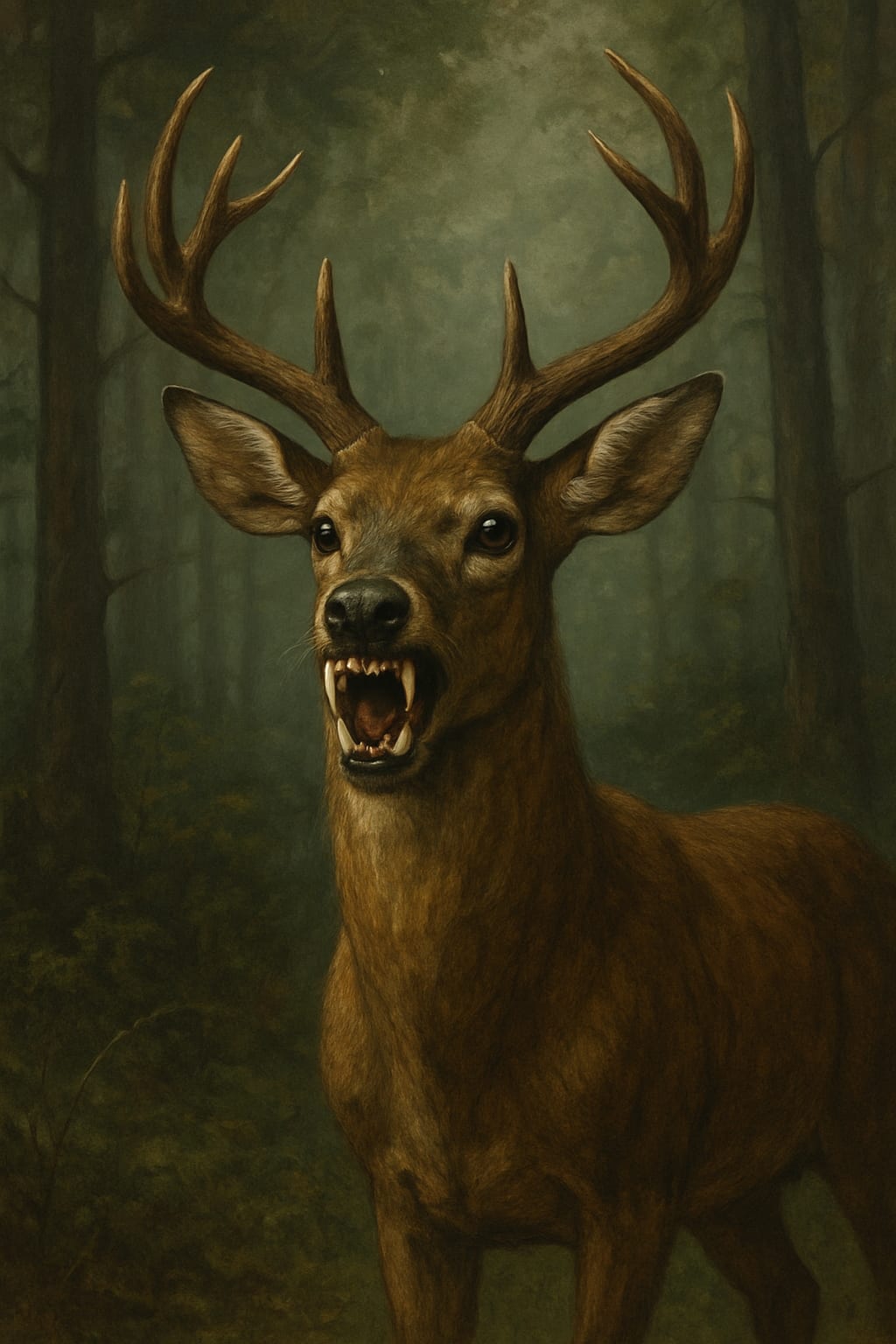
If you think vampires only belong in movies, buckle up, because nature just reminded us it can outdo Hollywood anytime.
Earlier today, reports surfaced about a strange, almost mythical animal spotted in a remote forest in northeastern Afghanistan. For the first time in nearly six decades, researchers confirmed the presence of the Kashmir musk deer, a tiny, shy deer known for one wild feature: its vampire-like fangs.
Yep. Fangs. On a deer.
But before you picture it stalking the night and draining the blood of other animals… relax. Only the males have these fangs, and instead of using them to terrify villagers, they use them for something far less dramatic: competing during mating season. Basically, they “joust” each other for the attention of female deer. Honestly, imagine if that’s how male vampires settled arguments, just two undead guys fang-wrestling over a girl. I’d watch that show.
A Rare Sighting in a Dangerous Region
A team from the Wildlife Conservation Society (WCS) made the discovery and reported five sightings in rugged terrain filled with steep rocky slopes and alpine meadows. Among these sightings were:
- A solitary male, seen three separate times
- One female with a young deer
- Another solitary female
- And sadly, one deceased female
This is a huge deal because musk deer are classified as endangered. With so many conflicts and so much instability in the region, conservation groups haven’t even been able to work there since 2010. Just getting this confirmation feels like spotting a ghost, appropriate, considering the fangs.
Why This Deer Is Disappearing
Unfortunately, the Kashmir musk deer is hunted heavily, not for its meat, although that’s considered a delicacy, but for something far more valuable: its scent gland.
This gland, used in perfumes and traditional medicine, can sell for around $2,455 per pound on the black market, making it literally more valuable than gold. Because of that, poachers travel from far and wide to track the deer, especially in winter when heavy snow forces them down from the mountains and into easier-to-reach areas.
To make things worse, geological surveys reveal the species has lost about 50% of its forest habitat since the 1970s. So between poaching and disappearing forests, the musk deer doesn’t stand much of a chance without serious protection.
The Part Where My Imagination Runs Wild
When I first saw the photos of this deer, my brain did something very unscientific: I immediately pictured a vampire biting a regular deer and turning it into a tiny forest Dracula. If a deer ever showed up with its own bite marks and drained of blood? Yeah… I’d probably switch off the lights and pretend I didn’t see anything.
And look, I don’t condone violence of any kind, vampire-related or otherwise. But if some mythical fanged creature did decide to go after poachers specifically? Let’s just say I wouldn’t be losing sleep over it.
Why This Matters Today
This isn’t just a quirky wildlife story; it's a reminder that even in the middle of conflict zones and disappearing habitats, nature still finds ways to surprise us. A creature we assumed was gone for good is still out there, clinging to survival with its tiny deer fangs.
And honestly? That’s kind of amazing.
About the Creator
Areeba Umair
Writing stories that blend fiction and history, exploring the past with a touch of imagination.
Keep reading
More stories from Areeba Umair and writers in Proof and other communities.
The Mystery Circles: Were Ancient Giants Playing With Toys… or Were Humans Playing a Prank?
If you’ve heard of Stonehenge, you probably imagine massive stones arranged in a neat circle, full of mystery and maybe a dash of magic. But here’s a fun thought I once had: what if the stones were actually toys used by baby giants? I mean… who’s to say they weren’t stacking blocks while their parents weren’t looking?
By Areeba Umairabout a month ago in Earth
Symbolic Cocktail Meaning: The Stories Behind Your Favorite Drinks
Non-judgmental awareness is a gentle way of paying attention to your present experience without labeling it as good or bad. It invites you to notice thoughts, feelings, and sensations as they arise, simply as they are. This practice helps create space between you and your reactions, allowing calm and clarity to grow.
By Ethan Chena day ago in Proof
Crafting a Poetic Drink Menu: Elevate Your Bar Experience
Non-judgmental awareness is a gentle way of paying attention to your present experience without labeling it as good or bad. It invites you to notice thoughts, feelings, and sensations as they arise, simply as they are. This practice helps create space between you and your reactions, allowing calm and clarity to grow.
By Aisha Patela day ago in Proof


Comments
There are no comments for this story
Be the first to respond and start the conversation.