
The Intimacy of Bitterness: Why Not All Drinks Should Be Easy
Exploring the emotional complexity behind bitter cocktails — and why we keep coming back to them


There’s a quiet defiance in ordering a bitter drink. While sweet, fruity cocktails often greet the palate with immediate charm, bitterness is an acquired taste — one that doesn’t beg for affection but earns it slowly, sip by sip. And maybe that’s why it feels so intimate. Bitterness demands presence, patience, and a willingness to linger with discomfort. In a world addicted to ease and instant gratification, it whispers: “Not everything worth savoring comes sweet.”
From the herbal complexity of a Negroni to the biting elegance of a Boulevardier, bitter drinks speak a different emotional language. They don’t seduce; they challenge. And in doing so, they mirror the emotional landscapes we often avoid — sorrow, nostalgia, longing, resilience. To enjoy a bitter cocktail is to accept that life’s flavor profile includes shadows — and that those shadows can be beautiful, too.
A Taste for Experience
Bitterness isn’t just a flavor; it’s a signal. In nature, bitterness often indicates danger or poison. But in the world of cocktails, it has evolved into something more symbolic — a marker of maturity. Children recoil from bitter flavors; adults learn to seek them out. Amaro, Fernet, Campari, gentian — each of these ingredients carries centuries of herbal tradition and often, medicinal roots. They’re not there to please; they’re there to awaken.
There’s something almost philosophical about this evolution. The drinker who chooses bitterness over sweetness is someone who has tasted life — someone who knows that not every story ends with a cherry on top, and that’s okay. These drinks don’t seek to erase pain or mask discomfort. They meet you where you are. They invite you to reflect.
The Slow Seduction of Complexity
Sweet drinks can be delightful, even euphoric, but they tend to announce themselves all at once. Bitterness unfolds. It arrives in layers — a dry note on the tongue, an herbal tail, a lingering memory that stays in the mouth long after the glass is empty. It rewards slowness. In fact, it requires it.
That’s why so many bitter cocktails are sipped slowly, ideally in good company or reflective solitude. They’re not the life of the party; they’re the ones who stay after the music stops and ask how you really are. To drink bitter is to honor depth. To say, “I don’t need everything to be easy.”
Cocktail as Character
Bartenders often say that every drink has a personality — some are loud and flirty, others subtle and reserved. Bitterness tends to belong to the latter. But that doesn’t mean it’s cold or unfriendly. In fact, bitter drinks can be profoundly comforting. They create space. They hold weight. They allow you to sit in your truth without the need to sweeten it.
That’s why they’re often associated with rituals of reflection: the after-dinner drink, the quiet evening pour, the solo bar moment at the end of a long day. Bitterness doesn’t distract — it reveals. It clears space in the palate and the mind.
The Culture of Bitter
In Italian and French drinking cultures, bitterness isn’t just accepted — it’s revered. Aperitifs and digestifs built on bitter botanicals are part of a daily rhythm. They stimulate appetite, signal closure, mark transitions. They have purpose and personality. They say: “You’re here. You’ve made it through the day. Now let’s sit with that.”
There’s something sacred in that ritual — the slow pour, the clink of glass, the slight wince of the first sip followed by the warm, unfolding reward. It’s a flavor that holds time, place, and memory in suspension.
An Emotional Ingredient
More than any other flavor, bitterness is emotional. It’s complicated, layered, and often misunderstood. But it’s also profoundly human. We all carry a little bitterness inside us — from heartbreak, from loss, from simply growing up. And maybe that’s why we crave it in our drinks. Not to escape those feelings, but to acknowledge them. To toast them. To say, “This, too, is part of me.”
In that way, bitter cocktails aren’t just beverages. They’re mirrors. They reflect the parts of ourselves that don’t always get invited to the party — and they welcome them without judgment.
Bitterness as a Ritual of Return
There’s a reason why so many people return to their favorite bitter cocktail again and again, even if it wasn’t love at first sip. It’s not just about taste — it’s about recognition. About memory. About comfort in complexity. The return becomes its own kind of ritual: a gesture of self-respect, a quiet nod to the parts of ourselves that don’t need to be sweetened or smoothed out.
In a culture that often celebrates ease, bitterness reminds us that struggle has its place. That elegance can be sharp. That grace sometimes wears a twist of orange peel and a rim of quiet defiance.
About the Creator
Ava Mitchell
Spirits writer and editor, focusing on cocktail culture and trends.
Keep reading
More stories from Ava Mitchell and writers in Proof and other communities.
From Bar Cart to Altar: Designing Sacred Space for Nightly Pause
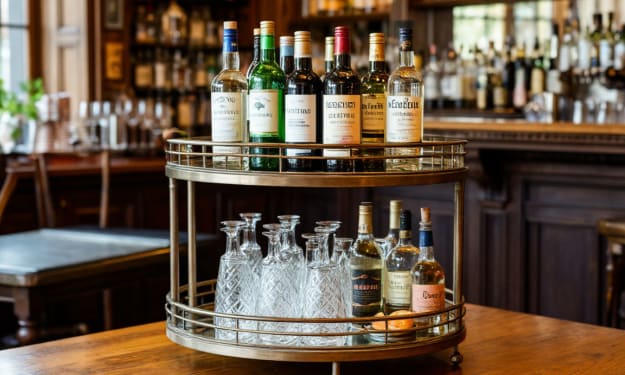
In a world that rarely slows down, the idea of pausing — truly pausing — can feel almost radical. Yet within that pause lies an opportunity: a chance to reclaim your evening, to transition from the noise of the day into the stillness of night. For many, that transition begins with a simple ritual — the mixing of a drink, the lighting of a candle, the creation of space. And at the center of that ritual is the bar cart.
By Ava Mitchell8 months ago in Proof
Cosmic Cocktails: Galaxy-Inspired Drinks to Dazzle Your Night
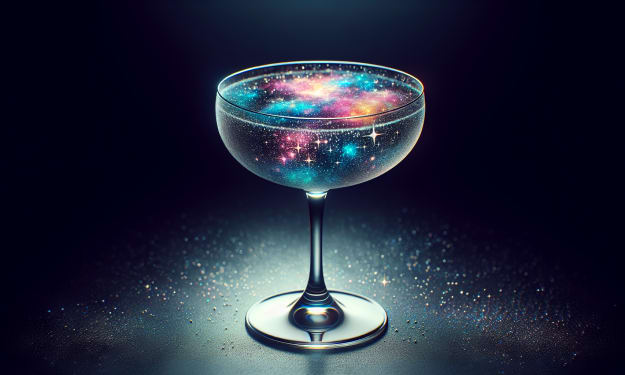
When it comes to cocktails, sometimes you want to shoot for the stars—literally. Galaxy cocktails have taken the bar scene by storm, dazzling drinkers with shimmering colors, swirling patterns, and out-of-this-world flavors. These cosmic cocktails look like they were plucked from a nebula, glowing softly with iridescent hues that shift from deep purples to electric blues and shimmering silvers. They’re the perfect drinks for anyone who wants to add a little magic and mystery to their night.
By Vivian Chen5 days ago in Proof
The Bottle I Was Afraid to Open
I am not a whiskey person. In fact, I’m barely an alcohol person at all. I might have a drink once or twice a year—usually at a wedding, a holiday dinner, or when someone insists I “at least try it.” Even then, I’m the person who nurses the same glass for an hour while everyone else orders a second round.
By Jhon smithabout 17 hours ago in Proof
Guard Your Battery
Why are some people so attractive just by standing there? It’s not because they are "likable," but because they don’t need everyone to like them. I realized later that truly charismatic people allow themselves to be criticized, but they never criticize themselves. They never try to please the world; instead, the world stops to watch them.
By Emily Chan - Life and love sharing2 days ago in Poets


Comments
There are no comments for this story
Be the first to respond and start the conversation.