
The Evolution of the NBA All-Star Game
NBA All-Star Game Through Ears

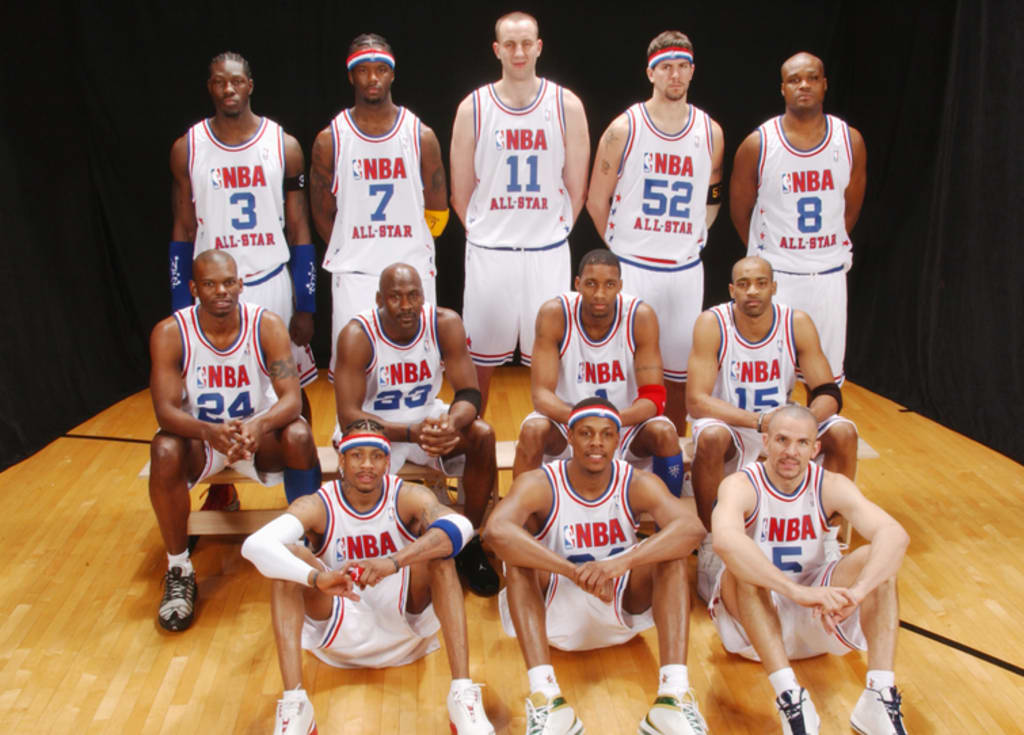
The NBA All-Star Game has changed a lot since its first tip-off in 1951. What began as a simple East vs. West exhibition has become a major entertainment event that reflects the league’s growth, culture, and global reach. Over the decades, the game has gone through many transformations—in format, competitiveness, and fan involvement.
The Early Years: A Showcase of Talent
The NBA All-Star Game began in 1951, just five years after the league was formed. Held at Boston Garden, the first game was a bold idea—to bring together the best players in one exhibition. It worked. Over 10,000 fans showed up, and the East defeated the West 111–94. It marked the start of what would become an annual tradition.
In these early decades, the game was taken seriously. Players saw All-Star selection as a badge of honor, not just a popularity contest. The East vs. West format created natural rivalries, and the top athletes came to play hard. Stars like George Mikan, Bob Cousy, and Bill Russell didn’t hold back. The game was competitive, physical, and often close, with bragging rights on the line.
The structure was simple. Coaches from the teams with the best records led each conference’s squad. Fans didn't vote for starters until 1975, so lineups were selected by coaches and league officials. This gave the game a reputation for quality—it was about rewarding true performance, not just fame.
In the 1960s and '70s, the game featured legends like Wilt Chamberlain, Jerry West, Oscar Robertson, and Kareem Abdul-Jabbar. These matchups were more than entertainment; they were showcases of elite skill. Fans tuned in to see the best go head-to-head, and players used the opportunity to prove their standing among their peers.
The All-Star Game also helped grow the NBA’s audience. With television exposure increasing in the 1960s, the event became a key part of the league’s image. It wasn't just about points and passes—it was a demonstration of how exciting pro basketball could be.
In those early years, the All-Star Game set the foundation for what it is today: a celebration of the game’s best talent on a national—and eventually global—stage.
Flash Over Fight: The Entertainment Era
By the late 1980s and into the 1990s, the NBA All-Star Game began shifting from fierce competition to flashy entertainment. While the All-Star stage still featured elite players, the tone of the game began to change. The intensity and physicality of earlier decades started to give way to alley-oops, no-look passes, and playful one-on-one matchups that favored style over substance.
The rise of global superstars like Michael Jordan, Magic Johnson, and later Kobe Bryant and Allen Iverson brought a new kind of attention. Fans weren’t just watching to see who won—they wanted to be amazed. Dunks, crossovers, and showmanship became the main attraction. Players smiled more, defended less, and often put on a personal highlight reel for fans around the world.
The NBA leaned into this entertainment angle. The All-Star Weekend expanded to include the Slam Dunk Contest, Three-Point Contest, and Skills Challenge. These events started to draw almost as much attention as the game itself. In some years, they even overshadowed it. For example, Vince Carter’s legendary 2000 dunk performance became one of the most replayed moments in All-Star history.
As scoring rose, defense all but disappeared. Games regularly crossed 300 combined points, with little resistance at the rim or pressure on the perimeter. Critics began to argue that the All-Star Game had lost its edge—that players were protecting their bodies, avoiding injury, and not taking the game seriously.
Still, fans kept watching. The game had become a celebration—more about fun and entertainment than rivalry and grit. Social media helped amplify the excitement, turning dunks and big plays into viral moments.
Though the competitiveness dropped, this era solidified the All-Star Game’s place as a must-watch event. It wasn’t the toughest game on the calendar, but it was the most fun.
New Formats and Fan Engagement
As criticism of the NBA All-Star Game grew in the 2010s—mainly for its lack of defense and competitiveness—the league began to rethink its format. The goal was clear: make the game more exciting for fans while encouraging players to care again. This led to one of the biggest changes in the game’s history.
In 2018, the NBA scrapped the traditional East vs. West matchup. Instead, the top vote-getters from each conference became team captains and selected their rosters playground-style from the pool of All-Star players. This format introduced strategy, unpredictability, and a bit of drama. Suddenly, teammates could be split, rivals could join forces, and fans had more to talk about. Team LeBron vs. Team Steph kicked off the new era, and the change was widely praised.
Then, in 2020, the NBA added another twist: the Elam Ending. Instead of a timed fourth quarter, teams played to a target score—leading to a much more intense and competitive finish. That year’s game, played in honor of Kobe Bryant, was one of the most thrilling in recent memory. Players locked in, defense showed up, and fans got a taste of the fire that had been missing.
Fan engagement also became a bigger focus. Fans continued voting for starters, but now had a louder voice in All-Star Weekend as a whole. Social media campaigns, behind-the-scenes content, and player mic’d-up moments gave fans more ways to connect. Voting became easier and more interactive, with fans casting ballots through apps, websites, and even social media hashtags.
The league also used All-Star Weekend to spotlight causes, with charity incentives tied to team victories and standout performances. The result was a more meaningful game with added heart.
These changes proved that with the right ideas, even a long-standing event like the All-Star Game could evolve, stay relevant, and win fans back.
A Global Stage
The NBA All-Star Game has grown far beyond a national celebration—it’s now a global event. What was once a U.S.-centric showcase of American talent is today a gathering of stars from all over the world. This transformation reflects the NBA’s broader international reach and the league’s push to become a truly global brand.
In earlier decades, international players were rare in the NBA. That began to change in the 1990s and exploded in the 2000s. The impact of stars like Dirk Nowitzki (Germany), Yao Ming (China), and Manu Ginóbili (Argentina) helped open the door for more international talent. Today, global stars like Giannis Antetokounmpo (Greece), Luka Dončić (Slovenia), Joel Embiid (Cameroon), and Nikola Jokić (Serbia) are not only part of the All-Star Game—they’re often captains, MVPs, and fan favorites.
This shift has expanded the NBA’s fan base worldwide. Millions now watch the All-Star Game from Europe, Asia, Africa, and Latin America. The league promotes the event across multiple languages and platforms, and voting is open globally, allowing fans everywhere to help choose the starting lineups. Social media also plays a big role in connecting international fans to the All-Star experience in real time.
NBA merchandise, global broadcasts, and even international media coverage of All-Star Weekend show how far the game’s reach has come. Events like Basketball Without Borders and the NBA Global Games have only deepened the league’s global ties.
The result is an All-Star Game that represents more than just the NBA’s best—it reflects the worldwide growth of basketball. It brings together cultures, languages, and fanbases in one celebration. As more international players rise to stardom, the All-Star Game becomes not just a North American highlight, but a global moment in the sports calendar.
Looking Ahead
The NBA All-Star Game will keep evolving as the league looks for new ways to stay fresh, exciting, and meaningful. While recent changes like the captain draft format and the Elam Ending have brought renewed energy, the NBA knows it must continue adapting to maintain fan interest.
One idea gaining traction is tying the All-Star Game to the in-season tournament or playoff implications. This could raise the stakes and make players more invested. Others suggest returning to an East vs. West format but with incentives for winning, like home-court advantages or charity bonuses.
Technology will also shape the future. With augmented reality, live player stats, and more immersive fan experiences, watching the All-Star Game may feel very different in a few years. International events and partnerships could even bring the game overseas someday, reinforcing its global status.
What’s clear is that fans want competition, personality, and moments that feel real—not just flashy dunks and open layups. The challenge for the NBA is balancing fun with effort, spectacle with substance.
Looking ahead, the All-Star Game will likely remain a work in progress. But with the league’s track record of innovation and global vision, its future looks as exciting as ever.
About the Creator
Gus Woltmann
Hi everyone, nice to meet you all! I am Gus Woltmann, sports journalist from Toronto.
Keep reading
More stories from Gus Woltmann and writers in Proof and other communities.
Most Influential Female Athletes of All Time
Female athletes have broken records, barriers, and expectations. Their impact has reached far beyond the field, inspiring generations and changing how the world sees women in sports. These women didn’t just win—they changed the game. Here are some of the most influential female athletes of all time.
By Gus Woltmann8 months ago in Gamers
Why Infrastructure Spending Is Becoming a Strategic Weapon?
A decade ago, infrastructure spending rarely captured headlines outside engineering circles. Data centers, network cables, semiconductor fabs, and cloud capacity were viewed as background mechanics — essential but largely invisible to users and investors alike.
By Samantha Blake5 days ago in Proof
Maple Cocktails: Embrace Natural Sweetness in Fall Drinks
When the leaves turn golden and the air grows crisp, nothing captures the cozy spirit of fall quite like maple syrup. This natural sweetener brings a rich, woody depth to cocktails that’s both comforting and sophisticated. Maple cocktails are perfect for those who want to add a touch of autumn magic to their glass without relying on artificial flavors or heavy syrups.
By Andrea Martinez5 days ago in Proof
Review of 'Man on the Run'
My wife and I saw Man on the Run, a nearly 2-hour documentary on Amazon Prime, about Wings, Paul McCartney's group that flew around the world from shortly after The Beatles broke up in early 1970 to shortly after John Lennon was murdered at the end of 1980, making a Beatles reunion forever impossible.
By Paul Levinson3 days ago in Beat


Comments
There are no comments for this story
Be the first to respond and start the conversation.