
The Animal That Never Grows Up
Why These Perpetually Youthful Creatures Are Nature’s Most Fascinating Amphibians

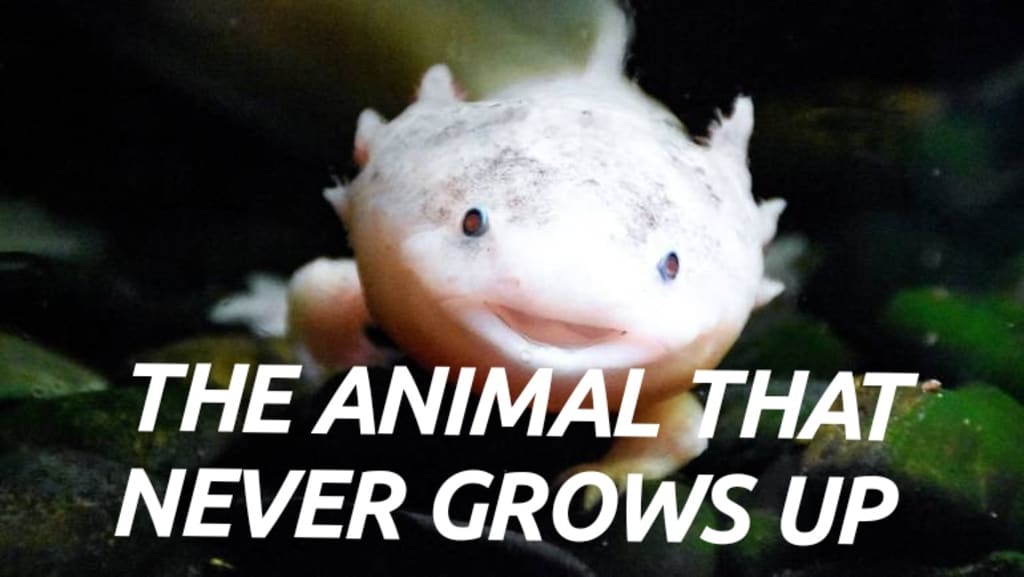
In the depths of Mexico’s freshwater lakes lurks a creature unlike any other: the axolotl, a salamander that never grows up—at least in the conventional sense. Known scientifically as Ambystoma mexicanum, the axolotl is a biological marvel. While most amphibians undergo a metamorphic transition from aquatic larvae to terrestrial adults, axolotls remain in their juvenile state for their entire lives. This unique trait, called neoteny, is what makes them one of nature’s most captivating wonders.
The Eternal Youth of Axolotls

To understand why axolotls never fully mature, it’s essential to grasp the concept of neoteny. In many amphibians, neoteny is a rare and often environmental phenomenon. However, in axolotls, it’s a genetic hallmark. Unlike their close relatives, tiger salamanders, which leave the water and develop lungs for terrestrial life, axolotls retain their larval features, such as gills and fin-like tails, throughout their lives. They live exclusively in water and continue to look like oversized tadpoles even as they age.
This eternal youthfulness isn’t just a biological quirk; it’s a survival strategy. Axolotls inhabit the lakes and canals of Xochimilco and Chalco near Mexico City, ecosystems rich in aquatic resources but with limited terrestrial options. By staying aquatic, axolotls have adapted perfectly to their environment, avoiding the competition and risks of a terrestrial lifestyle.
Axolotls and Their Superpowers

What makes axolotls even more fascinating is their ability to regenerate almost any part of their body. Lose a limb? No problem. Axolotls can regrow it—complete with bones, muscles, nerves, and even skin. This capability extends to more complex structures, such as parts of their heart, spinal cord, and even brain. Scientists have been studying this extraordinary regenerative ability for decades, hoping to unlock the secrets of cellular regeneration and apply them to human medicine.
The axolotl’s regenerative powers are so advanced that even transplanted organs from one axolotl to another can integrate and function seamlessly. This remarkable ability places axolotls at the forefront of biomedical research. Scientists believe that understanding how axolotls regenerate tissues could lead to breakthroughs in treating spinal cord injuries, heart disease, and degenerative conditions in humans.
A Symbol of Mexican Culture

Axolotls hold a special place in Mexican culture and mythology. The name “axolotl” comes from the Nahuatl language, meaning “water dog.” In Aztec mythology, the axolotl was associated with the god Xolotl, a deity linked to fire, lightning, and death. According to legend, Xolotl transformed into an axolotl to avoid being sacrificed, hiding in the water to escape his fate.
Today, the axolotl is an unofficial symbol of Mexico City and a powerful emblem of environmental conservation. Despite their cultural significance, axolotls are critically endangered in the wild. Habitat destruction, pollution, and the introduction of invasive species have drastically reduced their numbers. Conservation efforts, including breeding programs and habitat restoration projects, are underway to ensure the survival of these remarkable creatures.
Axolotls in Popular Culture
Axolotls have gained a cult following in recent years, thanks to their unique appearance and captivating behavior. Their feathery gills, perpetual smile, and curious demeanor make them popular in the pet trade and a favorite subject in aquariums worldwide. Axolotls have also found fame in video games, movies, and even memes, further cementing their status as one of the world’s most beloved amphibians.
However, this popularity has a downside. The demand for axolotls as pets has led to concerns about their welfare. Axolotls require specific care to thrive, including a properly maintained aquatic environment, suitable water temperature, and a balanced diet. Improper care can lead to health issues, emphasizing the importance of educating potential owners about their needs.
Conservation Challenges and Efforts
The axolotl’s wild habitat—the lakes and canals of Xochimilco—is under constant threat from urbanization, agricultural runoff, and invasive species such as tilapia and carp. These factors have pushed axolotls to the brink of extinction in their natural environment. Current estimates suggest that fewer than 1,000 individuals remain in the wild.
Conservationists are working tirelessly to reverse this trend. Efforts include creating artificial refuges within Xochimilco, implementing breeding programs, and educating local communities about the importance of preserving this unique species. Additionally, organizations are advocating for stricter regulations to protect their habitat and prevent further degradation.
Why Axolotls Matter
Beyond their ecological and cultural importance, axolotls serve as a reminder of nature’s ingenuity. Their ability to remain youthful and regenerate complex tissues challenges our understanding of biology and offers a glimpse into possibilities for medical advancements. Moreover, their plight highlights the urgent need for conservation and sustainable coexistence with our natural world.
Axolotls teach us that sometimes, staying young at heart (or in this case, at body) can be a powerful strategy for survival. As we marvel at these eternal juveniles, we’re also called to act—to protect their habitats, support conservation efforts, and appreciate the delicate balance of ecosystems that allow such wonders to exist.
About the Creator
Keep reading
More stories from INFO INSIDER and writers in Proof and other communities.
Optical Illusion: Find the Real Owl in 5 Seconds!
Optical illusions have long been a source of fascination and intrigue for people of all ages. They challenge our perception and push the boundaries of what our eyes can see and our brains can process. In today’s challenge, we present an image that has puzzled many: a collection of objects and patterns cleverly camouflaged to hide one real owl. Can you find it in just 5 seconds?
By INFO INSIDER about a year ago in Proof
Spiced Cocktails to Warm Your Winter Nights
Winter calls for drinks that wrap you up like a cozy blanket. Spiced cocktails, with their rich aromas and warm flavors, are the perfect remedy for chilly evenings. Imagine the scent of cinnamon, clove, nutmeg, and allspice swirling in your glass, teasing your senses before the first sip. These spices don’t just add flavor — they bring a comforting warmth that feels like a hug from the inside out.
By Marcus Petrov4 days ago in Proof
Savory Cocktails: Unlocking the Umami Magic of Tomato and Herb Flavors
Savory cocktails are the bold rebels of the cocktail world. They don’t chase sweetness or fruity freshness. Instead, they dive deep into rich, complex flavors that tease your palate with umami, salt, and herbal notes. If you’ve ever wondered how to turn a drink into a full-on flavor experience that feels like a gourmet meal in a glass, savory cocktails are your ticket.
By Marcus Petrov6 days ago in Proof
Review of 'Man on the Run'
My wife and I saw Man on the Run, a nearly 2-hour documentary on Amazon Prime, about Wings, Paul McCartney's group that flew around the world from shortly after The Beatles broke up in early 1970 to shortly after John Lennon was murdered at the end of 1980, making a Beatles reunion forever impossible.
By Paul Levinson2 days ago in Beat




Comments
There are no comments for this story
Be the first to respond and start the conversation.