
Meet the World’s Longest and Heaviest Snake
Discover the Astonishing Facts About the Reticulated Python and Green Anaconda


Snakes have always captivated human imagination, whether through fear, fascination, or reverence. Among the thousands of snake species slithering across our planet, two giants have consistently dominated conversations: the reticulated python and the green anaconda. These incredible reptiles not only hold records for their size and weight but also boast unique adaptations that make them apex predators in their respective habitats. In this article, we dive deep into the lives of these two colossal serpents to uncover what makes them the world's longest and heaviest snakes.
The Reticulated Python: The Longest Snake

The reticulated python (Malayopython reticulatus), native to Southeast Asia, holds the title of the world’s longest snake. These non-venomous constrictors can grow to staggering lengths, with the longest verified specimen stretching over 32 feet (9.75 meters). Reports of even longer pythons exist, though they often lack scientific verification.
Physical Characteristics

The reticulated python’s name comes from its intricate, net-like pattern of scales. This camouflage helps it blend seamlessly into its surroundings, whether it’s lying in wait on the forest floor or coiled around tree branches. Despite their massive length, these snakes are relatively slender compared to their heavyweight cousin, the green anaconda.
Habitat and Behavior
Reticulated pythons are highly adaptable, thriving in rainforests, grasslands, and even urban areas. They are skilled swimmers and have been found on small islands far from the mainland. As ambush predators, they rely on their powerful muscles to constrict and subdue prey, which can include mammals, birds, and reptiles. Their incredible jaw flexibility allows them to consume prey much larger than their head.
The Green Anaconda: The Heaviest Snake

While the reticulated python holds the length record, the green anaconda (Eunectes murinus) reigns as the heaviest snake on Earth. Native to South America, these aquatic giants can weigh over 500 pounds (227 kilograms) and reach lengths of up to 30 feet (9 meters).
Physical Characteristics
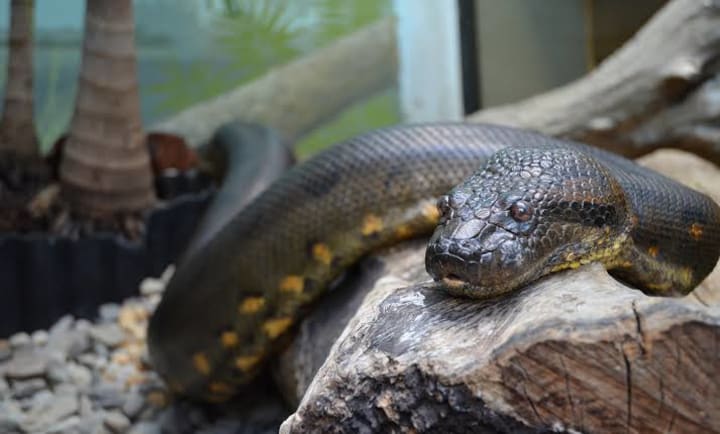
The green anaconda’s olive-green skin, accented with dark oval spots, provides excellent camouflage in its swampy habitat. Its massive girth—sometimes exceeding 12 inches in diameter—is a testament to its strength and the large prey it consumes.
Habitat and Behavior
Green anacondas are predominantly aquatic, inhabiting rivers, swamps, and marshes. Their muscular bodies are perfectly adapted for life in water, where they can move stealthily and ambush prey. Unlike the reticulated python, which relies on dry land for hunting, the green anaconda’s aquatic lifestyle allows it to take down larger prey, such as caimans, capybaras, and even jaguars.
Record-Breaking Snakes

The fascination with record-breaking snakes has led to numerous claims, some more credible than others. Among the most famous was a green anaconda reportedly measuring 33 feet (10 meters) and weighing nearly 900 pounds (408 kilograms), though the measurement lacked scientific validation. Similarly, the longest reticulated python in captivity, named Medusa, measures 25 feet (7.67 meters) and weighs 350 pounds (159 kilograms). Medusa holds the Guinness World Record as the longest snake ever kept in captivity.
Snake Conservation and Misunderstandings
Despite their size and strength, both the reticulated python and green anaconda face threats from habitat destruction, poaching, and the pet trade. These snakes play crucial roles in their ecosystems, controlling populations of prey species and maintaining balance in their habitats. Unfortunately, their intimidating size and predatory nature have led to widespread fear and misconceptions.
In Southeast Asia, reticulated pythons are often hunted for their skin and meat, while green anacondas face similar threats in South America. Efforts to protect these giants include habitat conservation and educating local communities about their ecological importance.
Fascinating Adaptations
Both species possess remarkable adaptations that have enabled them to thrive as apex predators:
Flexibility: Their highly elastic ligaments and skin allow them to swallow prey much larger than their heads.
Camouflage: Both snakes are masters of disguise, blending seamlessly into their environments to ambush prey.
Aquatic Skills: Green anacondas’ ability to stay submerged for extended periods makes them formidable hunters in water.
Resilience: Reticulated pythons’ ability to adapt to diverse habitats, including urban environments, demonstrates their incredible survival skills.
The Human Connection
Throughout history, these giant snakes have featured in folklore and mythology. In Southeast Asia, reticulated pythons are both feared and respected, often symbolizing strength and mystery. Similarly, green anacondas are central to many Amazonian legends, where they’re depicted as mythical beings capable of immense power.
However, these cultural narratives often amplify fears, overshadowing the snakes’ ecological importance. By understanding their role in the environment and addressing misconceptions, we can foster a more balanced relationship with these awe-inspiring creatures.
Final Thoughts
The reticulated python and green anaconda are true marvels of nature, showcasing the incredible diversity and adaptability of snakes. While one holds the record for length and the other for weight, both are champions in their own right. By learning more about these giants and working to protect their habitats, we can ensure that future generations continue to marvel at these extraordinary reptiles. Whether admired for their size, strength, or survival skills, the world’s longest and heaviest snakes are a testament to the wonders of the natural world.
About the Creator
Keep reading
More stories from INFO INSIDER and writers in Proof and other communities.
Top 10 Most Expensive Sneakers in the World
Sneakers have evolved from being purely athletic footwear to becoming powerful status symbols and works of art. Today, some pairs are worth more than a luxury car, making headlines for their price tags. From collaborations with top designers to celebrity endorsements and ultra-rare releases, the most expensive sneakers in the world are as much about culture as they are about fashion. Let’s lace up and explore the top 10 most expensive sneakers ever sold.
By INFO INSIDER about a year ago in Proof
The Bottle I Was Afraid to Open
I am not a whiskey person. In fact, I’m barely an alcohol person at all. I might have a drink once or twice a year—usually at a wedding, a holiday dinner, or when someone insists I “at least try it.” Even then, I’m the person who nurses the same glass for an hour while everyone else orders a second round.
By Jhon smith4 days ago in Proof
At Will
Section 1 Pollen and the bright sun anesthetized color - muting almost every color to its equivalent shade in pastels. James stood by the window of his apartment at Bayside Village, adjusting his tie and checking the time - it was 8:30 AM. On his phone, a message from the Recruiting Agency, Eastridge. Cassie assured him that the partners at Sidley Austin, a corporate law firm, had asked for him by name - which never happened so he should be excited. It was a request that had never occurred in his ten years as a paralegal, a sudden, specific gravity pulling him into their orbit.
By James L. Royer3 days ago in Proof


Comments
There are no comments for this story
Be the first to respond and start the conversation.