
IRS Alert: Charitable Contribution Scams on the Rise – Taxpayers Beware of Fraudulent Schemes
Taxpayers Beware of Fraudulent Schemes
Summary:
As charitable contribution scams rise, taxpayers must be more vigilant than ever. Fraudsters are exploiting generosity, posing as fake charities to steal money and personal information. The IRS has issued warnings, but many still fall victim. This blog explores the latest scams, how to identify fraud, the legal landscape surrounding charity fraud, and how strategic tax planning can help protect your contributions. Stay informed to safeguard your finances and support genuine causes.
Introduction
Giving to charity is one of the most meaningful ways to make a difference. But what if your donation never reaches the cause you intended to support? Unfortunately, scammers are preying on the goodwill of taxpayers, deceiving them into donating to fraudulent charities. The IRS has raised concerns about a surge in fake charity scams, warning individuals and businesses to be cautious. If you contribute to charity for both goodwill and tax benefits, this blog will guide you through spotting scams, protecting your contributions, and ensuring your donations are tax-deductible.
Scammers Are Getting Smarter – How They Trick Donors
Fraudulent charities are evolving, making it harder for taxpayers to differentiate between real and fake organizations. Here’s how they do it:
1. Fake Charities with Real-Sounding Names
Many scammers create organizations with names that closely resemble well-known charities. For example, a fraudulent group might call itself “United Relief Foundation” to mimic “United Way.”
2. High-Pressure Donation Requests
Scammers often push donors to give immediately, claiming urgent needs or limited-time matches from anonymous donors. They may use emotional stories to trigger an instant response.
3. Social Media and Crowdfunding Scams
Fake charities thrive on social media, using fake profiles and crowdfunding platforms to collect donations. Without verification processes in place, scammers can disappear with your money overnight.
4. Phishing Emails and Fake Websites
Many fraudsters send emails that appear to be from real charities, but the donation links lead to fake websites designed to steal payment details and personal information.
The IRS Crackdown on Charity Fraud
The IRS has increased efforts to identify and prosecute fraudulent charities. They have advised taxpayers to:
Check the IRS Tax Exempt Organization Search Tool before donating.
Avoid charities that refuse to provide tax-deductible receipts.
Report suspicious activity directly to the IRS or the Federal Trade Commission (FTC).
Did You Know? In 2023, over $2.8 billion was lost to fraudulent charities worldwide. Awareness is the first step to prevention.
How Business Law Helps Protect Donors
Legal frameworks play a crucial role in preventing charity fraud and ensuring legitimate organizations follow proper regulations. Business law governs how charities operate and sets transparency requirements to prevent fraud.
1. Legal Compliance for Charities
Registered charities must file financial statements and meet legal requirements. Fraudulent charities fail to meet these standards and often lack proper documentation.
2. Tax Planning and Charitable Contributions
With proper tax planning, individuals and businesses can ensure their charitable donations are legally recognized and deductible. Business law experts can help navigate tax benefits and verify legitimate organizations.
3. Investigations and Fraud Prevention
Government agencies rely on this law principles to investigate and shut down fraudulent charities. Understanding these legal safeguards can protect your contributions.
How to Protect Yourself from Charity Scams
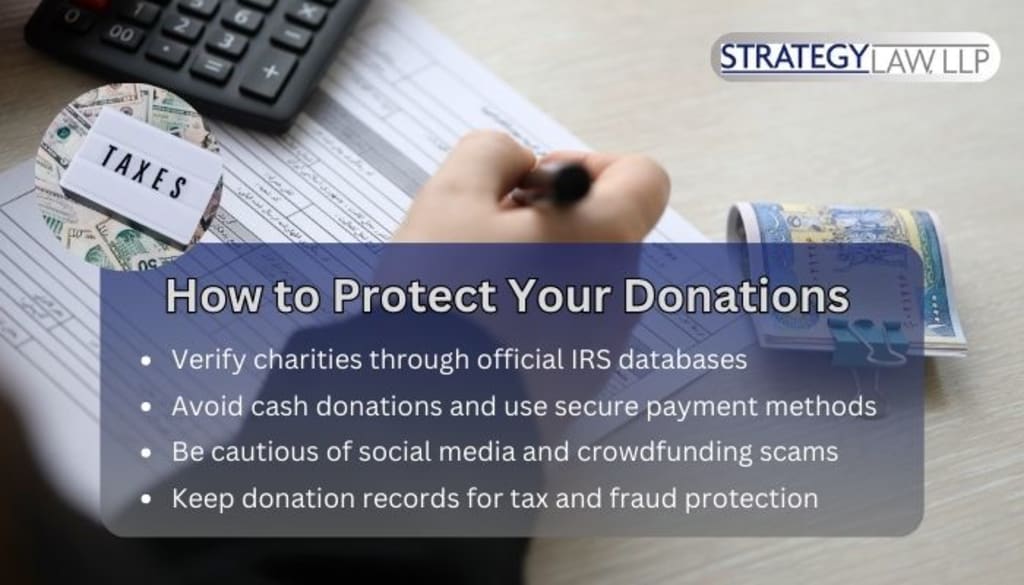
To ensure your donations are safe and reach the intended cause, follow these essential tips:
1. Verify the Charity’s Legitimacy
Always check the official IRS database or Charity Navigator to confirm the legitimacy of a nonprofit.
2. Avoid Cash Donations and Wire Transfers
Use secure payment methods like credit cards or checks for a record of your contribution.
3. Be Wary of High-Pressure Tactics
Legitimate charities will never rush or pressure you into donating on the spot.
4. Research Before Donating on Crowdfunding Platforms
Scammers exploit GoFundMe and similar platforms. Look for verified fundraisers before contributing.
5. Keep Records of Your Donations
Save receipts and confirmation emails for tax deductions and fraud protection.
For additional insights, check out this Wikipedia article on Charity Fraud to understand how these scams operate worldwide.
Final Thought
Charitable scams are on the rise, but awareness and careful vetting can protect your contributions. Always verify charities before donating and consider strategic tax planning to maximize your impact. If you need guidance on tax planning and charitable giving, consult with Strategy Law LLP for expert advice to safeguard your donations and ensure compliance with tax regulations.
About the Creator
Keep reading
More stories from writers in Proof and other communities.
Cultivating Kindness: A Guide to Compassion Training
Compassion training is a gentle practice that helps us open our hearts to ourselves and others. It invites us to soften judgment and respond with kindness, even in difficult moments. Developing compassion is like nurturing a seed that grows into a warm, steady light inside us. This light can soothe pain, ease tension, and deepen our connection with the world around us.
By Victoria Marse7 days ago in Proof
Ambiguous Drink Ideas: Crafting Mysterious Cocktails That Spark Curiosity
When you want to shake things up at your next gathering, sometimes the best approach is to serve cocktails that keep your guests guessing. Ambiguous drink ideas are all about creating cocktails with flavors and appearances that don’t give away their ingredients upfront. They invite curiosity, conversation, and a sense of playful mystery around the glass.
By Sofia Mertinezz7 days ago in Proof




Comments
There are no comments for this story
Be the first to respond and start the conversation.