
Exploring Open Awareness Meditation for Inner Calm

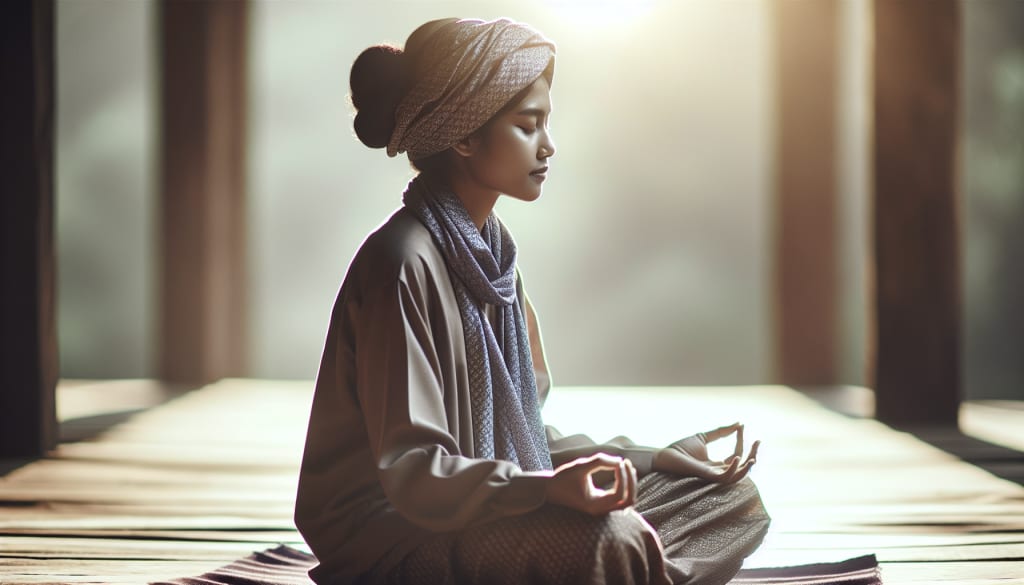
Open awareness meditation is a simple yet profound way to cultivate a spacious and peaceful mind. Instead of focusing on a single object like the breath or a mantra, this practice invites you to gently open your attention to whatever arises in your experience without grasping or pushing anything away. It is about resting in a state of open presence, noticing thoughts, sounds, sensations, and feelings as they come and go.
What is Open Awareness?
Open awareness means allowing your mind to be like the sky—vast, open, and clear—while your experiences are like clouds passing by. You do not follow the clouds or try to change them. You simply notice them and let them drift naturally. This practice helps you develop a relaxed alertness and a sense of spaciousness that is always available, even in busy moments.
Benefits of Open Awareness Meditation
1) Cultivates a calm and stable mind
2) Increases clarity and insight into your mental habits
3) Reduces stress by letting go of resistance to experience
4) Enhances your ability to be present with whatever is happening
5) Supports emotional balance and resilience
How to Practice Open Awareness Meditation
Try this short guided open awareness meditation to experience the spaciousness of your mind:
1) Find a quiet place to sit comfortably with your back straight but relaxed. Close your eyes gently or keep a soft gaze.
2) Take a few deep breaths, feeling the natural rise and fall of your belly or chest. Let your breath settle into its own rhythm.
3) Now, widen your attention to include all the sensations in your body, the sounds around you, any smells, and the feeling of the air on your skin.
4) Notice any thoughts or feelings that arise. Instead of following or judging them, simply acknowledge their presence and let them pass like clouds across the sky.
5) If you find yourself caught in a thought or emotion, gently bring your awareness back to the openness itself—the space in which all experience arises.
6) Rest in this open, spacious awareness for 5 to 10 minutes, allowing your mind to be free and relaxed.
7) When you are ready, bring your attention back to your breath for a few moments, then slowly open your eyes.
This practice can be done daily or whenever you feel the need to reconnect with a calm and clear mind.
Open awareness meditation invites you to experience your mind as a vast, open space where thoughts and sensations come and go naturally. This gentle openness helps you develop a peaceful presence that can support you throughout your day and deepen your connection to the present moment through the mindful breathing practice
"Tips for Deepening Your Practice
1) Start with short sessions and gradually increase the time as you feel comfortable.
2) Practice in a quiet place where you won’t be disturbed.
3) If your mind wanders, treat it kindly and return to the feeling of openness without frustration.
4) You can practice open awareness while walking or doing gentle movements by noticing the sensations and sounds around you.
5) Consider journaling after your practice to notice any insights or shifts in mood.
Common Challenges
It is normal to feel restless or distracted at first. Open awareness meditation is a skill that develops with patience. When strong emotions arise, try to observe them without reacting or identifying with them. Over time, you may notice a growing sense of ease and spaciousness in your daily life.
Integrating Open Awareness into Daily Life
Open awareness is not just a meditation technique but a way of being. You can bring this open, accepting attention to conversations, work, or nature. Notice how it changes your experience when you stop trying to control or fix things and simply allow them to be as they are.
Open awareness meditation offers a gentle path to inner calm and clarity. With regular practice, you may find yourself more grounded, compassionate, and present in each moment.
Take time today to try this simple practice and discover the peace that comes from resting in open awareness.
About the Creator
Keep reading
More stories from Victoria Marse and writers in Proof and other communities.
Cultivating Compassionate Awareness: A Gentle Path to Presence
Compassionate awareness is the art of holding your experience with kindness and openness. It invites you to notice your thoughts, feelings, and sensations without judgment, and to respond with warmth rather than criticism. This practice nurtures a deep connection to yourself and others, fostering patience and understanding.
By Victoria Marse6 days ago in Proof
Conscious Breathing: A Path to Present Awareness
Breathing is something we do every moment without thinking. Yet, when we bring conscious attention to our breath, it becomes a powerful tool to anchor us in the present moment. Conscious breathing helps calm the mind, relax the body, and open space for clarity and peace.
By Garold One6 days ago in Proof
Nature Inspired Drinks: Cocktails That Capture the Outdoors
When you think of nature-inspired drinks, imagine cocktails that celebrate the fresh, earthy, and botanical flavors of the great outdoors. These drinks often highlight herbs, flowers, fruits, and natural elements that bring a refreshing vibe and a little wild magic to your glass. Whether you're sipping by a campfire or just want a taste of nature in your city apartment, these cocktails connect you with the earth in the most delicious way.
By Ethan Chen6 days ago in Proof




Comments
There are no comments for this story
Be the first to respond and start the conversation.