
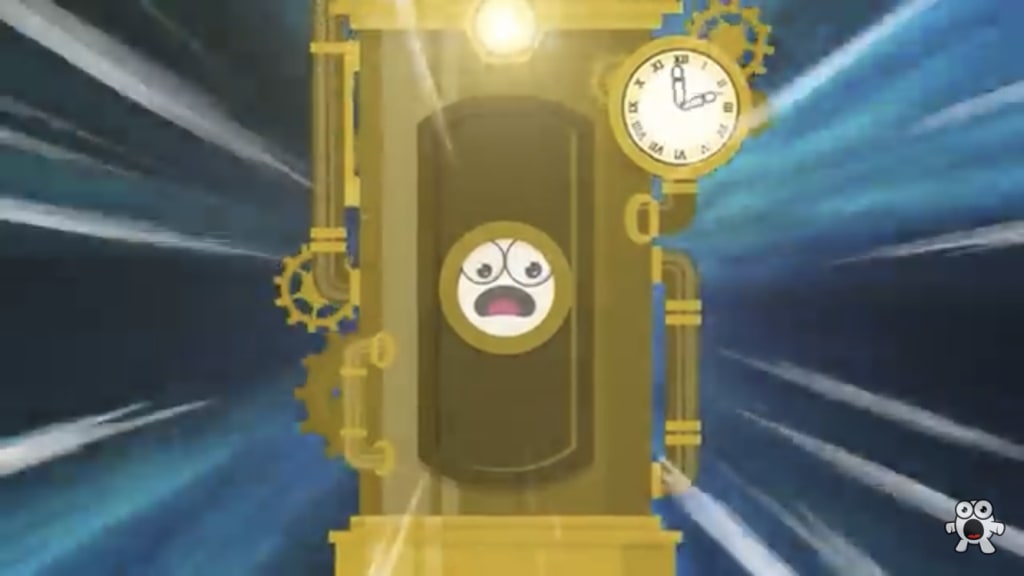
Time travel is not just science fiction; it's a scientifically backed possibility. Albert Einstein’s theories of special and general relativity laid the groundwork, proving that time travel, especially to the future, is within the realm of scientific possibility. One intriguing case is a 400-year-old tomb discovered in China containing a ring shaped like a Swiss wristwatch. While this suggests the possibility of time travel, it could also just as likely be a mistake or a modern artifact that somehow found its way into the tomb. Ferdinand Waldmuller’s 1860 painting has often been cited as evidence of time travel, as it shows what appears to be a girl texting on a smartphone. However, a closer look reveals that she is actually holding a prayer book. Similarly, Umberto Romano painted a Native American seemingly using an iPhone, but upon further inspection, it is more likely that he was holding a hand mirror.
Interestingly, people have noted resemblances of famous figures like Jay-Z, Eddie Murphy, and Vladimir Putin in old photographs, leading to speculation that these celebrities might be time travelers. However, this can also be explained by the doppelganger theory, suggesting that people from different times can look remarkably similar.
A hammer found in rock, known as the "London Hammer," was once thought to be an anachronistic artifact, but geologists have shown it is most likely a recent formation encased in older materials. Another curious finding was some ancient boots discovered in Mongolia that bore a striking resemblance to modern Adidas sneakers, demonstrating that historical fashion sometimes mirrors modern styles. A 1941 photo of a man who looks like a modern ‘hipster’ led to speculation about futuristic fashion, but these styles can also be explained within the context of the period.
Morgan Robertson’s 1898 book “Futility” includes an uncannily accurate prediction of the Titanic's sinking, but this is likely a coincidence rather than evidence of time travel. A TikTok broadcast claiming to be from time travelers turned out to be part of an escape room puzzle. In a 1995 photograph from a Mike Tyson fight, a spectator appeared to be holding a smartphone, but on closer examination, it was more likely a camcorder, a technology that was available at the time. Similarly, a 1928 film footage featured a woman using what looked like a cell phone, but it was probably a hearing aid, a relatively advanced device for that era.
The Salamanca Cathedral contains a carving of an astronaut, but this was part of restoration works carried out in 1992, showing that modern elements were added during this period. A viral photo of a soldier dabbing in Dunkirk turned out to be an actor on a movie set, showcasing how easily modern behaviors can be inserted into historical contexts. Lastly, an 800-year-old ‘cell phone’ was revealed to be a modern sculpture, debunking theories of ancient advanced technology.
Einstein’s theories have been validated through practical scientific experiments. For instance, satellites have to adjust their clocks to account for time discrepancies in space, a confirmation of relativity. His work demonstrates that time travel, at least to the future, is possible and that time travels slower in space at high speeds, further proving his groundbreaking theories. These scientific validations showcase the potential of time travel not just as a theoretical concept, but as a real, albeit complex, scientific phenomenon.
About the Creator
Keep reading
More stories from writers in Proof and other communities.
Honey Cocktails: Sweet, Natural, and Healthy Sips
Honey has been cherished for centuries not just as a natural sweetener but as a flavor enhancer that brings depth and warmth to cocktails. Unlike refined sugar or artificial syrups, honey offers complex floral notes and a silky texture that can elevate even the simplest drinks. Plus, it’s packed with antioxidants and has soothing qualities, making it a favorite among those who want a healthier twist in their glass.
By Stella Rossi4 days ago in Proof
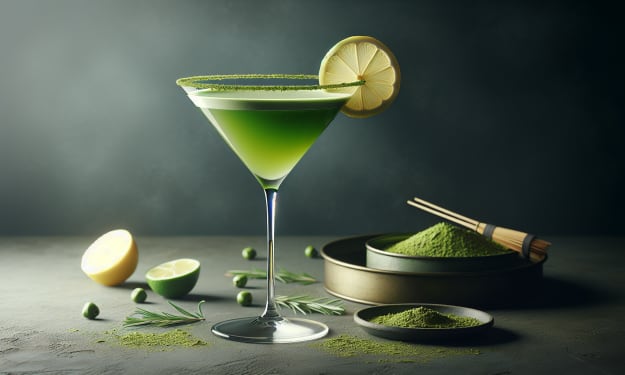
Matcha Cocktails: Green Tea Drinks with a Kick
Matcha isn’t just for your morning latte anymore. This vibrant green powder, made from finely ground Japanese green tea leaves, has stormed the cocktail world with its earthy flavor, bright color, and health perks. If you’re looking for a refreshing drink that packs antioxidants and a gentle caffeine boost, matcha cocktails are your new best friend.
By Andrea Martinez4 days ago in Proof
Cassie and Johnny
I’m the kind of dame you notice. I’m no femme fatale, but you can’t ignore me, at least not until I warn you about what’s coming, then everybody ignores me. Hell, they usually blame me afterwards and give Johnny all the credit for saving the day, but my Johnny couldn’t save a seat at the movies without my help. Sure, he’s brawny, but brainy? Not so much. Like that time I asked him to spot me five bucks, and he said he didn’t see it anywhere on me, and believe you me, he looked but good.
By Harper Lewis4 days ago in Critique


Comments (2)
Thanks for sharing
I really love your content and how it's crafted , I love it and happily subscribed , you can check out my content and subscribe to me also , thanks for this beautiful one