
Decoding Wine Labels: What You Need to Know
Master the art of reading wine labels to make informed choices that suit your palate and occasion


Ever stood in front of a wall of wine bottles, trying to make sense of the fancy labels, only to feel like you’re deciphering some kind of secret code? You’re not alone. Wineries love to throw around elegant words, historical references, and foreign phrases that leave most people scratching their heads. But here’s the thing—once you know what to look for, you can pick a great bottle without second-guessing yourself. Let’s break it down.
The Name That Matters Most
Somewhere on the label, you’ll find the name of the producer or winery. Sometimes it’s displayed boldly across the front. Other times, it’s tucked away in fine print. Either way, this is one of the most important clues about quality. A well-known winery with a strong reputation usually means a carefully crafted wine. If you’re in France, for example, this name might not be obvious, but in places like California or Australia, you’ll usually see it front and center.
The Magic of the Region
Where the grapes grow makes all the difference. Every region has its own climate, soil, and winemaking traditions that influence the flavor of what’s inside the bottle. A bottle from Napa Valley tells you one thing, while one from Bordeaux tells you another. Some regions, like Burgundy, assume you already know what grapes they use, so you won’t see "Pinot Noir" or "Chardonnay" spelled out on the label. Instead, you’ll just see the name of the place. Learning a few key regions will help you figure out what you’re getting before you even take a sip.
The Grape Game
In some parts of the world, wineries spell out exactly what’s in the bottle—Cabernet Sauvignon, Merlot, Sauvignon Blanc. In others, they expect you to know. If you pick up a red wine from Rioja, Spain, it’s likely Tempranillo. A bottle from Chablis, France? That’s Chardonnay, even if the label doesn’t say it. Knowing a little about grape varieties makes a huge difference in choosing a wine you’ll love.
That Mysterious Number
Every wine bottle has a year printed on it. That’s the vintage—the year the grapes were harvested. Some years are legendary, others not so much. Weather plays a huge role in how the wine turns out. A 2010 Bordeaux, for example, might be amazing, while a 2013 from the same region might not be as impressive. If you’re picking up a bottle at random, checking the vintage can help you guess how good it might be.
How Strong Is It?
The alcohol percentage, or ABV (alcohol by volume), gives you an idea of how bold or light a wine will be. Higher percentages, around 14% or more, usually mean a richer, fuller-bodied wine. Lower percentages, closer to 12% or below, tend to be lighter and more refreshing. If you’re looking for something smooth and easy-drinking, a lower ABV might be the way to go. If you want something big and bold, a higher ABV will deliver.

The Quality Stamp
Many countries have strict systems for classifying wine quality. In France, you’ll see “AOC” (Appellation d’Origine Contrôlée), which means the wine meets strict regional standards. Italy uses “DOC” and “DOCG,” with DOCG being the highest quality designation. In Germany, terms like “Kabinett” or “Spätlese” indicate sweetness levels and ripeness. These little letters and words might seem confusing at first, but they’re actually great hints about what’s inside the bottle.
Extra Clues on the Label
Sometimes you’ll see terms like "Estate Bottled." This means the winery grew the grapes and made the wine themselves, which usually means more control over quality. "Old Vines" (or "Vieilles Vignes") suggests the grapes come from older vines, which often produce more concentrated and flavorful wines. And then there’s "Reserve," "Riserva," or "Reserva"—terms that hint at extended aging or higher quality, though the meaning varies depending on the country.
Is It Sweet or Dry?
Labels don’t always come right out and tell you if a wine is sweet or dry. Instead, they use words like "Sec" (dry in French), "Trocken" (dry in German), or "Demi-Sec" (which means it’s slightly sweet). If you see "Dolce" or "Doux," expect a much sweeter wine. If you’re picking up a bottle of Riesling, check if it says "Trocken" or "Halbtrocken" to get an idea of the sweetness level.
What About the Back Label?
Some wines include tasting notes and food pairing suggestions on the back label. While these can be helpful, remember they’re written by the people who made the wine—so of course, they’ll hype it up. Take these descriptions with a grain of salt. The best way to figure out what you like is to try different bottles and see what works for you.
Now You’re Ready to Pick a Great Bottle
Next time you’re staring at a shelf of wine, you won’t feel lost. You’ll know what details to focus on and what to ignore. No more guessing, no more second-guessing—just confidence in picking a bottle that suits your taste.
And if you’re looking to explore an incredible selection of wines, check out Wine.com. It’s an easy way to discover high-quality wines without the hassle of decoding every label on the shelf. Whether you're a seasoned connoisseur or just starting out, you'll find something you love.
Cheers to that.
About the Creator
Ojo
🔍 I explore anything that matters—because the best discoveries don’t fit into a box...
Why Infrastructure Spending Is Becoming a Strategic Weapon?
A decade ago, infrastructure spending rarely captured headlines outside engineering circles. Data centers, network cables, semiconductor fabs, and cloud capacity were viewed as background mechanics — essential but largely invisible to users and investors alike.
By Samantha Blake3 days ago in Proof
Maple Cocktails: Embrace Natural Sweetness in Fall Drinks
When the leaves turn golden and the air grows crisp, nothing captures the cozy spirit of fall quite like maple syrup. This natural sweetener brings a rich, woody depth to cocktails that’s both comforting and sophisticated. Maple cocktails are perfect for those who want to add a touch of autumn magic to their glass without relying on artificial flavors or heavy syrups.
By Andrea Martinez2 days ago in Proof
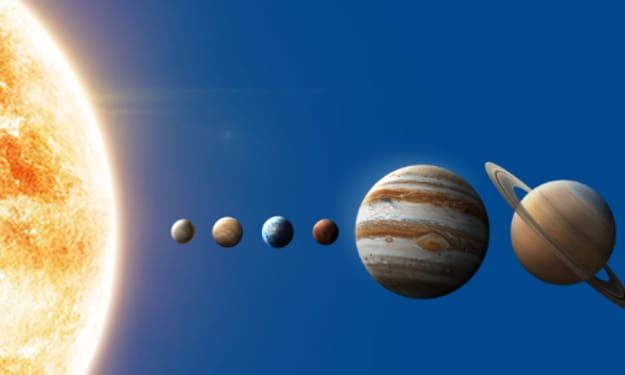
A Planetary Alignment will coincide with Mercury Retrograde
Double phenomena in the heavens Some people say in jest that the planets have aligned in their favor when life works the way they desire. Were you aware that there are seasons when things do line up in the heavens? There will be a planetary alignment AKA a planet parade, on February 28, 2026.
By Cheryl E Preston3 days ago in FYI


Comments
There are no comments for this story
Be the first to respond and start the conversation.