
Coins & Shares
Bridging the Gap Between Crypto and the Stock Market

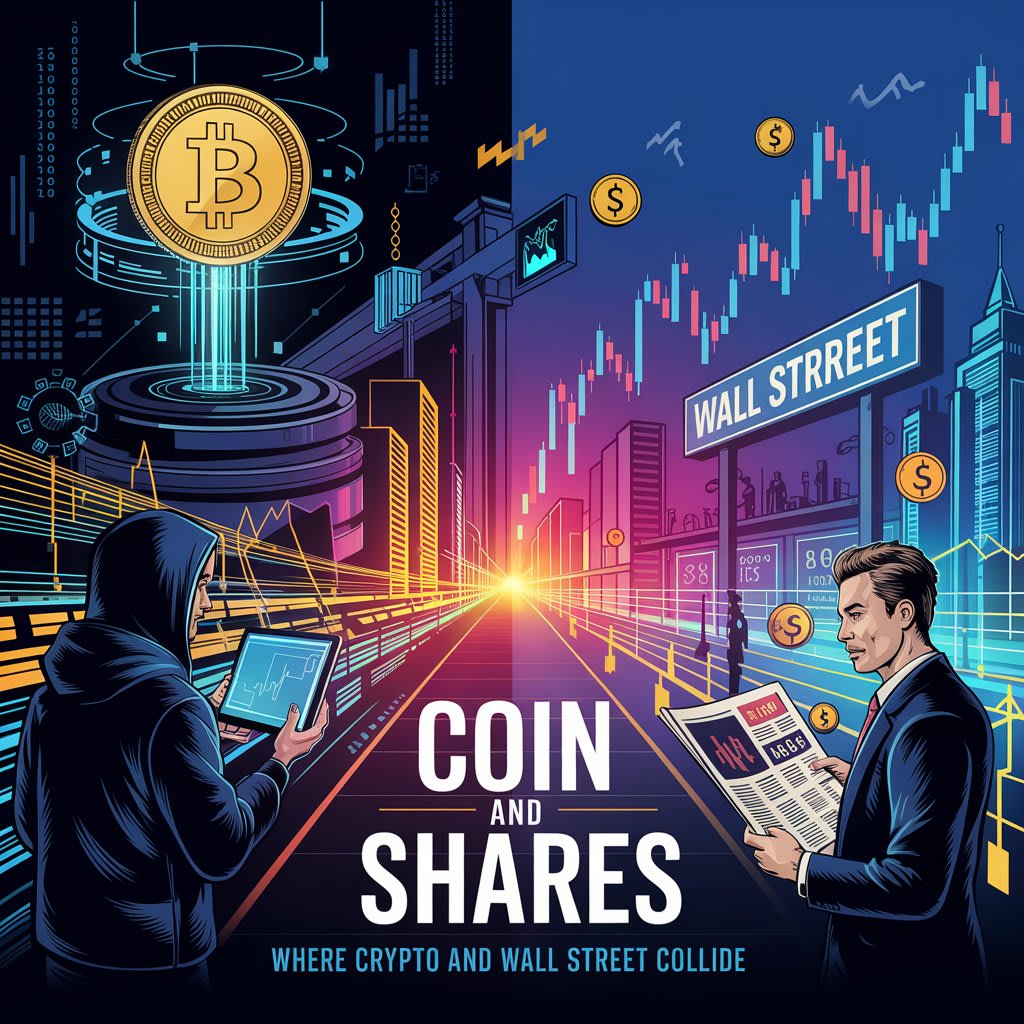
The morning sun filtered through the glass windows of Alex Carter’s apartment, casting reflections off the multiple screens that filled his small home office. Candlestick charts blinked red and green. Tickers scrolled like breaking news banners. Bitcoin was up 3.6%. Tesla had dipped. Ethereum was recovering from last night’s drop.
Alex took a sip of his lukewarm coffee and rubbed his tired eyes.
He had one foot in the world of Wall Street and the other in the blockchain. For years, he worked as a junior analyst at a well-known investment firm, buried in stock reports, balance sheets, and investor meetings. But since the 2021 crypto boom, something shifted in him. The decentralization, the raw volatility, the freedom—it called to him in a way traditional finance never had.
Now, two monitors showed his watchlist of traditional stocks—Apple, NVIDIA, Meta. The other two displayed charts for Bitcoin, Ethereum, and a few altcoins he didn’t quite trust but held anyway, "just in case."
The market bell rang. 9:30 AM. Wall Street was awake.
So was the blockchain. Always.
Alex’s dual strategy—investing in both crypto and stocks—had earned him both admiration and doubt. To some of his old colleagues, he was a traitor to the system. To the crypto crowd, he was too traditional, clinging to outdated rules.
But Alex had his own philosophy.
“Crypto gives you freedom. Stocks give you structure. You need both to survive the future,” he often said.
Today felt different, though.
A mysterious coin—ShareCoin—had been quietly gaining traction. A hybrid token, ShareCoin claimed to bridge decentralized finance with equity-backed security. One coin equaled one share in a basket of real-world stocks, automatically rebalanced by smart contracts. No middlemen, no brokers. Just code.
Some called it revolutionary. Others called it a scam.
Alex wasn’t sure yet.
But curiosity got the better of him. He opened the whitepaper, reviewed the blockchain audits, and scrolled through the dev team’s profiles. Impressive. Transparent. Maybe even legit.
A new message popped up on his Discord:
CryptoSage98: “DYOR, but ShareCoin’s about to hit a new listing. Could be a game-changer.”
Alex hesitated. He didn’t usually ape into new coins, especially ones that sounded too perfect. But something about this felt... inevitable.
He opened his trading wallet and bought a small amount—just a test position. Nothing reckless.
The next few days were a blur. ShareCoin exploded.
Every major financial news outlet covered it. CNBC debated its legitimacy. Twitter was flooded with charts and memes. Reddit threads with titles like “Why $SC Will Replace the S&P 500” blew up overnight.
Even his boss from the old firm called him.
“You seeing this ShareCoin thing?” the voice on the other end asked, half-intrigued, half-panicked.
“I’ve seen it,” Alex said.
“You think it’s real?”
“I think it’s the future knocking on our door.”
But with hype came chaos.
Fake versions of ShareCoin began popping up. Scammers released tokens with similar names. Regulators started sniffing around. People panicked. Some sold at the top. Others bought the dip, only to see it dip again.
Alex watched his small investment quadruple, then drop by 40% the next day. Welcome to crypto.
But he didn’t sell.
He believed in balance. Bitcoin had survived crashes. So had Amazon. Volatility was a symptom of innovation.
He opened a new spreadsheet—something he hadn’t done in weeks. It was time to organize.
Portfolio A: Traditional stocks. Dividends. Quarterly reports. Long-term growth.
Portfolio B: Crypto. Innovation. Risk. Decentralization.
Portfolio C: Hybrid assets like ShareCoin. The unknown. The bridge between two worlds.
He stared at the three columns.
Coins. Shares. And now... something in between.
Weeks passed. ShareCoin stabilized, and rumors of a partnership with a major exchange turned out to be true. Regulatory frameworks were being discussed. A major investment firm—ironically, the one Alex used to work for—announced plans to offer ShareCoin as part of its new “Modern Wealth” portfolio.
Alex chuckled.
He looked out his window at the city skyline—glass towers reflecting the digital age, and somewhere, a little server was quietly validating the next block on the ShareCoin ledger.
He didn’t see himself as a trader anymore. Not just an analyst either.
He was a translator—someone who could read the language of Wall Street and understand the code of blockchain. Someone who knew that the future wasn’t a choice between coins or shares.
It was both.
"Coin and Shares" was no longer just a title on his trading dashboard.
It was the story of how finance was evolving—blending the trust of the old with the possibilities of the new.
And Alex Carter was right in the middle of it.
About the Creator
Keep reading
More stories from salman khan and writers in Proof and other communities.
The Breaking Point
### **Chapter 1: The Crash** **"The pink slip felt like a death sentence."** I stared at the email—my hands shaking, my throat dry. *"Due to company restructuring, your position has been eliminated."* Just like that, my $60K/year job was gone.
By salman khan10 months ago in Lifehack
Berry Cocktails: Fresh and Antioxidant-Packed Summer Sips
Summer calls for vibrant, refreshing drinks that not only taste amazing but also boost your health. Berry cocktails fit this bill perfectly. Bursting with fresh berries, these cocktails bring a natural sweetness and a punch of antioxidants that help fight free radicals. From strawberries and blueberries to raspberries and blackberries, the range of berries offers a colorful palette and a wealth of nutrients.
By Andrea Martinez6 days ago in Proof
My Future Self Texted Me: “Don’t Trust Him.”
The message came at 2:17 a.m. I remember the exact time because I was still awake, staring at the ceiling, replaying my conversation with Daniel for the hundredth time. My phone buzzed softly against my nightstand, lighting up my dark bedroom in a pale blue glow.
By Maavia tahir7 days ago in Proof




Comments
There are no comments for this story
Be the first to respond and start the conversation.