
Women in Space Technology: Breaking Barriers and Advancing Exploration
A Look at the Achievements and Contributions of Women in the Male-Dominated Field of Space Technology

Introduction:
Since the launch of Sputnik 1 in 1957, space technology has rapidly advanced, and space exploration has become a symbol of human ingenuity and achievement. Women have played an essential role in the space industry and made significant contributions to space exploration over the years. Women in space technology have defied societal norms, stereotypes and have made incredible progress in an industry that has been predominantly male-dominated. In this article, we will explore the contributions and achievements of women in space technology.
Women in Space Technology and Their Roles:
Historically, women were not widely accepted in the field of space technology. The Mercury Seven, the first group of American astronauts, consisted entirely of men. The first woman in space was Soviet cosmonaut Valentina Tereshkova in 1963. It wasn't until two decades later in 1983 that Sally Ride became the first American woman to go to space. However, since then, women have been making significant strides in the industry.
Women in space technology have filled a variety of roles, from scientists to engineers, astronauts, and even CEOs of space companies. These women have made significant contributions to space exploration and have helped to advance the technology needed for space travel. Women such as Ellen Ochoa, a physicist and former astronaut, and Jocelyn Bell Burnell, an astrophysicist, have made groundbreaking discoveries that have expanded our knowledge of the universe.
Achievements:
Women in space technology have achieved a variety of milestones over the years. In 1984, Kathryn D. Sullivan became the first American woman to complete a spacewalk. In 1999, Eileen Collins became the first woman to command a space shuttle mission. Peggy Whitson holds the record for the most cumulative time spent in space by an American astronaut, with a total of 665 days in space. These women have shown that they are just as capable as their male counterparts, and their achievements have paved the way for future generations of women in space technology.
The International Space Station (ISS) is another area where women have made significant contributions. Women have been a part of the ISS since its inception, and they have served in various roles, including as astronauts, flight directors, and even as part of the support teams on the ground. The ISS has provided an opportunity for women to work in space for extended periods, allowing them to conduct experiments and research that has furthered our understanding of the universe.
Another significant achievement for women in space technology has been their leadership roles in the industry. Women such as Gwynne Shotwell, the President, and COO of SpaceX, and Lisa Callahan, the Vice President and General Manager of Commercial Civil Space at Lockheed Martin, have shown that women can lead in the space industry. These women have played crucial roles in the development of space technology and have helped to advance space exploration.
Conclusion:
Women have made significant contributions to space technology, and their achievements have paved the way for future generations of women in the industry. Despite the challenges and obstacles they have faced, women in space technology have persevered, and their contributions have been invaluable to the advancement of space exploration. It is essential to recognize and celebrate the achievements of women in space technology, and to continue to support and encourage women in the field. By doing so, we can ensure that women continue to make progress in space technology and help to shape the future of space exploration.
"The sky is not the limit for women in space technology; it's just the beginning of a limitless journey."
About the Creator
Keep reading
More stories from Thangaraj Murugan and writers in Pride and other communities.
"Empowering Women: Strategies for Achieving Gender Equality and Building a Better Society"
Introduction: Women's empowerment has become a critical issue in today's world, as women continue to face challenges in various aspects of their lives. Empowering women means giving them the necessary resources, tools, and opportunities to succeed and reach their full potential. It involves removing the barriers that prevent women from participating fully in social, economic, and political life. In this article, we will discuss what women empowerment is, why it is important, and how it can be achieved.
By Thangaraj Murugan3 years ago in Education
The Pride Flag and the Diversion
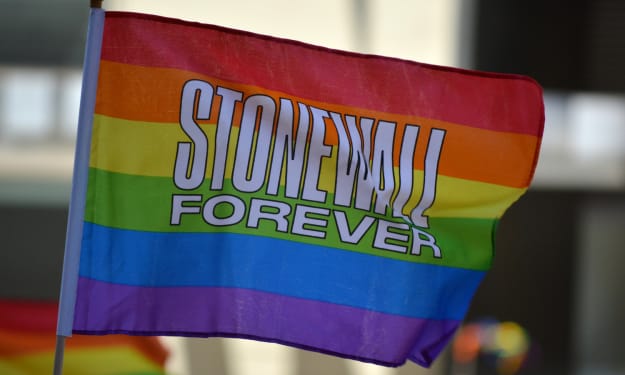
For nearly a decade, the LGBTQIA Pride Flag rippled in the wind at Christopher Park, a kaleidoscope of color staked into the soil of America’s first national monument to LGBTQIA+ liberation. That flag came down this week. Federal officials, citing new guidance from the Trump Administration, silently lowered the rainbow flag from its pole across the street from the Stonewall Inn. The birthplace of the modern gay rights movement now flies only the United States flag.
By Tim Carmichael24 days ago in Pride



Comments
There are no comments for this story
Be the first to respond and start the conversation.