
Ultraman: Japan’s Timeless Hero Who Defends Earth From the Unknown
“From Silver Giant to Global Icon: The Enduring Legacy of Ultraman”

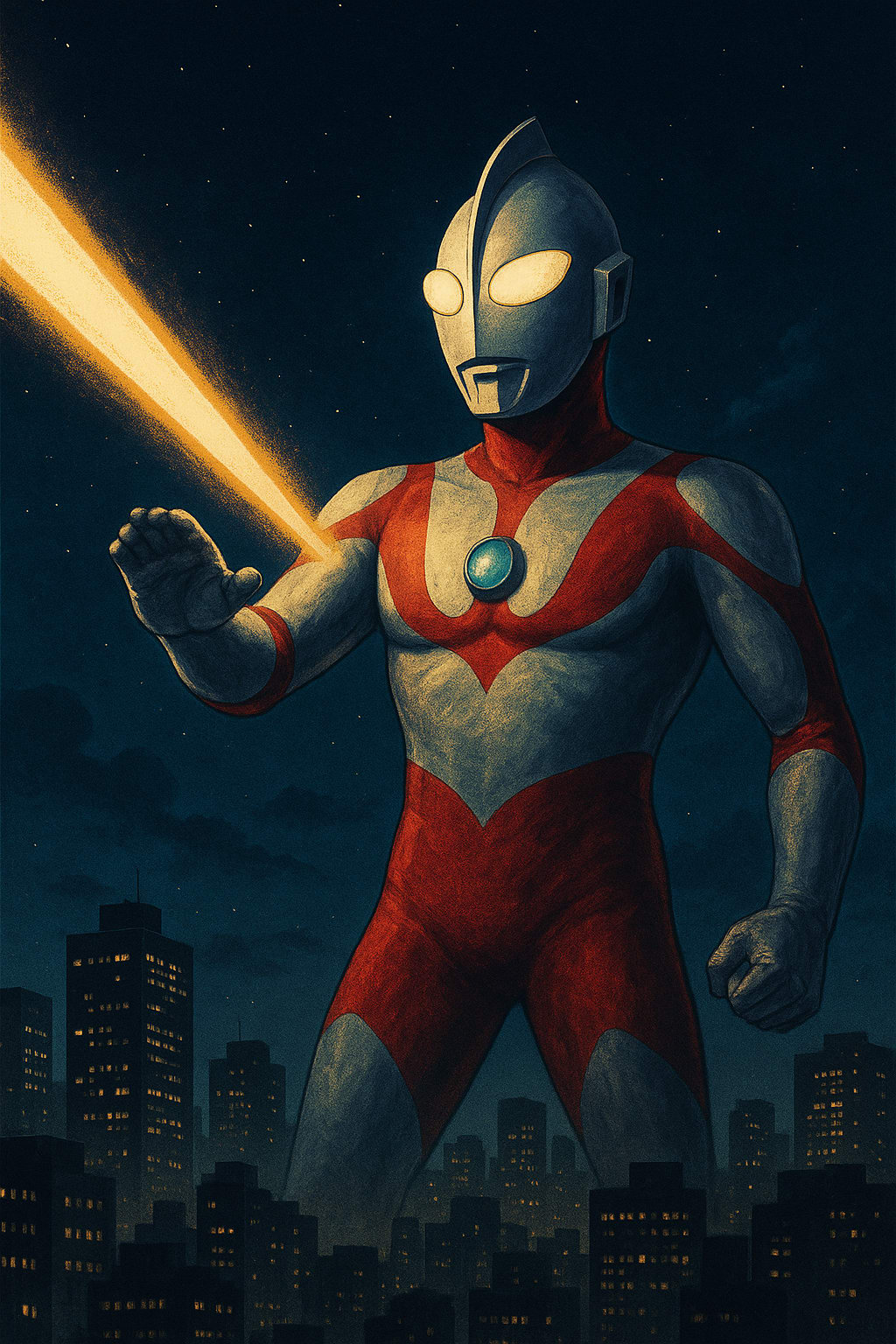
How a Silver Giant Shaped Japanese Pop Culture and Beyond
When you think of Japanese superheroes, one name towers above all others—Ultraman. Since his debut in 1966, this silver-and-red giant has battled monsters, inspired countless children, and become a cultural icon not only in Japan but across the globe. While Western audiences often compare him to Superman or the Power Rangers, Ultraman is a unique creation with a legacy that continues to evolve nearly six decades later.
⸻
🌟 Origins of Ultraman
Ultraman was created by Eiji Tsuburaya, the legendary special effects director behind the original Godzilla (1954). His goal was to bring sci-fi adventure to television with a new kind of hero—a being from space who merges with a human host to defend Earth from monstrous threats.
The first series, Ultraman (1966–1967), introduced Hayata, a member of the Science Patrol, who fuses with the alien Ultraman to protect humanity. The show’s blend of giant monster battles, futuristic gadgets, and moral lessons captured the imagination of a generation.
⸻
👊 The Formula That Works
At its core, every Ultraman story follows a familiar yet thrilling formula:
1. A mysterious monster (kaiju) threatens Earth.
2. Human defense teams try to fight back but struggle.
3. The human host transforms into Ultraman, growing to a giant size.
4. After an intense battle—often capped with the iconic Specium Ray—Ultraman triumphs.
This structure combines action, suspense, and optimism, offering both children and adults a satisfying narrative where good prevails.
⸻
🌍 Ultraman’s Expanding Universe
The original series was just the beginning. Over the decades, Ultraman has grown into an enormous franchise, with dozens of sequels, spin-offs, movies, and even anime adaptations. New Ultramen are introduced every generation—each with updated suits, powers, and stories that reflect the times.
Some notable successors include:
• Ultraseven (1967): A darker, more mature take on the hero.
• Ultraman Tiga (1996): Revitalized the franchise for the Heisei era.
• Ultraman Zero (2009): A fan-favorite with a rebellious streak.
• Shin Ultraman (2022): A modern film reinterpretation that brought Ultraman to a new global audience.
⸻
🎭 More Than Just Battles
What makes Ultraman stand out from other superhero franchises is its balance between spectacle and humanity.
• Each episode often reflects social anxieties of the time—pollution, nuclear power, alien invasion fears.
• Ultraman himself represents sacrifice, as he shares his life with a human host, sometimes at great personal cost.
• Unlike Western superheroes who often rely on personal strength, Ultraman emphasizes cooperation between humans and aliens, technology and nature.
⸻
🌐 Ultraman’s Global Legacy
Though Ultraman is less well-known in the U.S. compared to anime giants like Dragon Ball or Naruto, his influence is undeniable:
• The creators of Power Rangers openly borrowed the “giant hero vs. monster” format from Ultraman and other tokusatsu shows.
• Filmmakers like Guillermo del Toro (Pacific Rim) cite Ultraman as a major inspiration.
• Today, Ultraman is streaming worldwide, with fans in Asia, Latin America, and beyond rediscovering the hero.
⸻
⚡ Why Ultraman Still Matters
Ultraman is more than just a superhero—he’s a symbol of hope and resilience. In a world filled with uncertainty, his battles remind us that even when danger looms, courage and unity can prevail.
Whether you grew up watching the original on a fuzzy TV or discovered him through Shin Ultraman, the message remains timeless: protect the Earth, respect humanity, and never give up.
About the Creator
Takashi Nagaya
I want everyone to know about Japanese culture, history, food, anime, manga, etc.
Keep reading
More stories from Takashi Nagaya and writers in Pride and other communities.
Hollywood vs. Japan: The Key Differences Between Godzilla on Both Sides of the Pacific
Few fictional creatures have captured the world’s imagination quite like Godzilla. Since his first appearance in Japan in 1954, Godzilla has grown beyond his origins to become a global cultural icon, starring in over thirty films, countless TV appearances, comics, and even video games. But while Japan created and nurtured the King of the Monsters, Hollywood has also put its own spin on Godzilla, reinterpreting him for international audiences.
By Takashi Nagaya6 months ago in Geeks
Hottest in the Office
Dear Rafi, You’re very distracting to work around. For the first second I saw you the other day, I thought you were some type of executive. It took a moment to realize no, you were just the new guy, dressed up for the job he wants. Be still, my heart.
By Gabriel Shames2 days ago in Pride
Rani Vanouska T. Modely : Building a Humanitarian Vision Through Football
In an era defined by rapid visibility and short attention cycles, few figures attempt to build projects designed to outlast their own presence. Rani Vanouska T. Modely belongs to that rare category.
By Mark Walker5 days ago in Pride




Comments
There are no comments for this story
Be the first to respond and start the conversation.