
Hollywood vs. Japan: The Key Differences Between Godzilla on Both Sides of the Pacific
From Nuclear Fears to Box Office Titans—How Two Cultures Reimagined the King of the Monsters

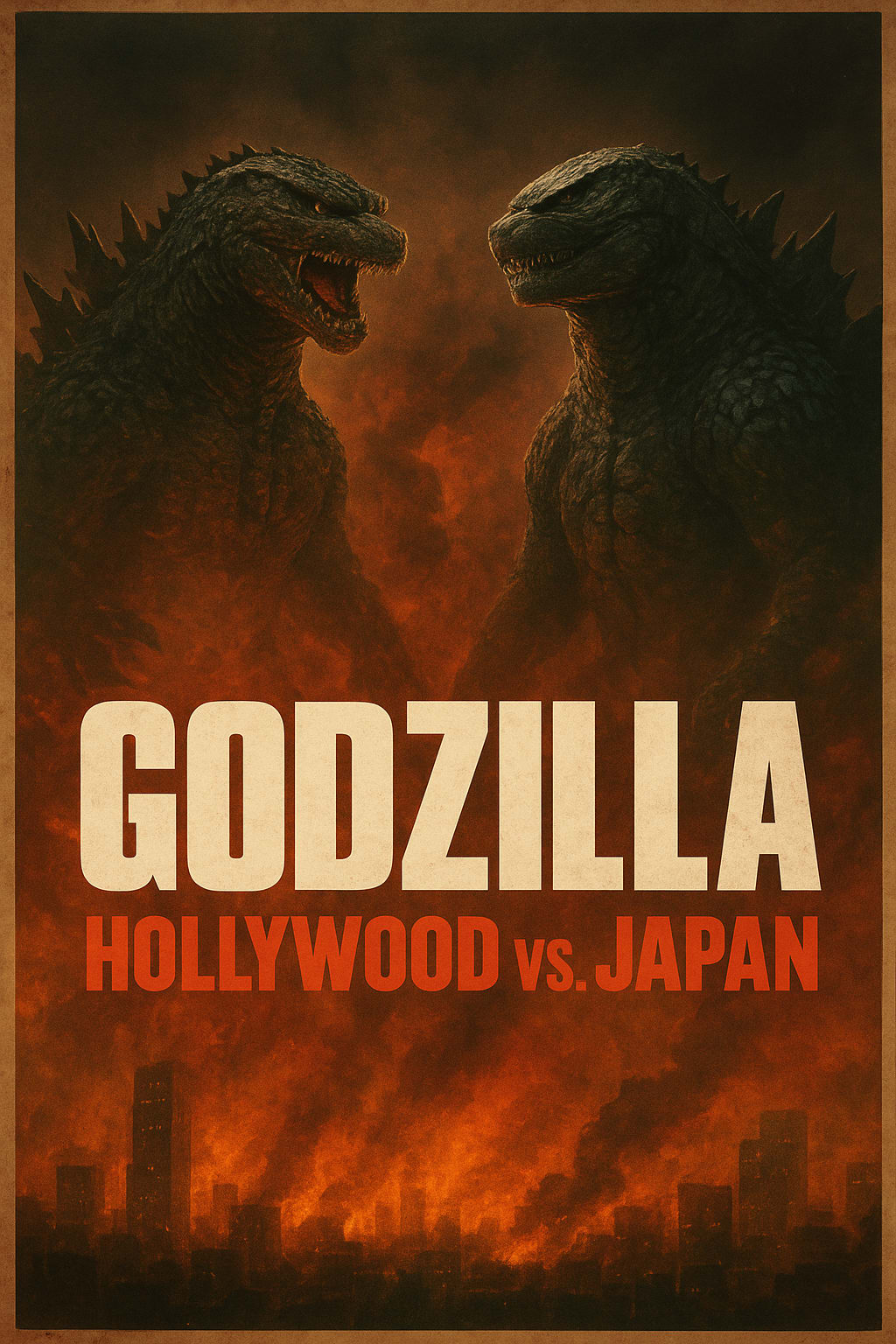
Few fictional creatures have captured the world’s imagination quite like Godzilla. Since his first appearance in Japan in 1954, Godzilla has grown beyond his origins to become a global cultural icon, starring in over thirty films, countless TV appearances, comics, and even video games. But while Japan created and nurtured the King of the Monsters, Hollywood has also put its own spin on Godzilla, reinterpreting him for international audiences.
So what exactly sets Japanese Godzilla apart from the Hollywood versions? The answer lies in their origins, themes, and cultural contexts.
⸻
1. Origins: Nuclear Shadows vs. Monster Blockbusters
When Toho released the original Gojira in 1954, Japan was still reeling from the devastation of Hiroshima and Nagasaki. The monster was not simply entertainment—it was a metaphor. Godzilla embodied the destructive power of nuclear weapons, a reminder of humanity’s hubris. The tone was somber, almost tragic, with Godzilla portrayed as an unstoppable force of nature rather than just a monster.
In contrast, Hollywood’s Godzilla (particularly the 1998 version and Legendary’s MonsterVerse starting in 2014) focuses more on spectacle. While elements of environmental destruction or human irresponsibility appear, the main goal often leans toward thrilling action, epic monster battles, and box office appeal. The metaphorical weight is lighter, replaced with blockbuster entertainment.
⸻
2. Design: Men in Suits vs. CGI Titans
Classic Japanese Godzilla films were famous for suitmation—actors in rubber suits stomping on miniature city sets. This practical approach gave the films a unique charm, making the destruction feel tactile and real despite the limitations. Over time, Japan modernized the designs, as seen in Shin Godzilla (2016), which used advanced visual effects while still maintaining an unsettling, grotesque look.
Hollywood, on the other hand, relies heavily on cutting-edge CGI. Legendary’s Godzilla is massive—often over 120 meters tall—designed to feel awe-inspiring on the IMAX screen. This Godzilla emphasizes realism and grandeur, whereas Japanese Godzilla often balances symbolism with style.
⸻
3. Characterization: Villain, Hero, or Force of Nature?
In Japan, Godzilla has evolved through different eras. Sometimes he is a terrifying villain (1950s-60s), other times a reluctant protector or anti-hero (1970s-80s), and even a full-fledged superhero in certain family-friendly films. This flexibility reflects shifting cultural concerns and audience demands.
Hollywood’s Godzilla tends to stick closer to the role of protector of humanity or a neutral balancing force. In the MonsterVerse, he often battles other monsters like King Ghidorah or Kong, with humans playing secondary roles. This characterization caters to Western audiences who favor clear good vs. evil narratives.
⸻
4. Themes: Cultural Reflections
• Japanese Godzilla: deeply tied to themes of nuclear fear, natural disasters, and government incompetence (Shin Godzilla in particular criticizes slow bureaucratic responses). Godzilla often reflects Japan’s anxieties at the time of production.
• Hollywood Godzilla: tends to emphasize unity against global threats, humanity’s resilience, and grand-scale monster showdowns. It reflects Hollywood’s blockbuster formula—big action, big visuals, and international marketability.
⸻
5. Reception: Domestic vs. Global Appeal
In Japan, Godzilla is a national symbol, much like Mount Fuji or samurai imagery. Every iteration sparks debate and cultural discussion. Films like Shin Godzilla were massive domestic successes, even winning prestigious film awards.
In Hollywood, Godzilla is viewed more as a franchise property, competing alongside other cinematic universes. While the 2014 Godzilla and Godzilla vs. Kong performed well internationally, they lack the layered cultural symbolism of their Japanese counterparts. Instead, they shine as large-scale spectacles designed for global entertainment.
⸻
Conclusion: Two Sides of the Same Monster
Whether stomping through Tokyo in a rubber suit or rendered as a towering CGI titan on the big screen, Godzilla remains an enduring icon. Japan’s Godzilla speaks to the nation’s history, trauma, and resilience, while Hollywood’s Godzilla transforms him into a global blockbuster star.
Both versions coexist, offering fans two different yet equally fascinating ways to experience the King of the Monsters. And perhaps that’s the true power of Godzilla: his ability to transcend borders, cultures, and decades, all while reminding us that nature’s fury can never truly be controlled.
About the Creator
Takashi Nagaya
I want everyone to know about Japanese culture, history, food, anime, manga, etc.
Keep reading
More stories from Takashi Nagaya and writers in Geeks and other communities.
👻 Aliens, Ghosts, and Teen Drama: Why Dandadan Captivates Global Readers
Where Aliens Crash Into Folklore and Comedy Steals the Show Manga has always been a playground for bold ideas, but few series have embraced creative chaos as wholeheartedly as Dandadan. Written and illustrated by Yukinobu Tatsu, this manga throws aliens, yokai, psychic powers, and teenage crushes into the same blender—and the result is an exhilarating mix that refuses to slow down.
By Takashi Nagaya6 months ago in Geeks
A Knight of the Seven Kingdoms Series Review (Season 1)
As one of the biggest properties in fantasy, A Song of Ice and Fire remains immensely popular with audiences. After reaching far into the past with House of the Dragon, a second spin-off was on the cards. A Knight of the Seven Kingdoms serves up a bite-sized slice of action and drama, but it still claims a spot among the best small-screen titles.
By Robert Cain14 days ago in Geeks
How 'A Knight of the Seven Kingdoms' Proves Daenerys' Plan To Retake Westeros Was Never Going To Go As Well As She Thought
Nearly seven years after it aired, the eighth and final season of the phenomenon that was Game of Thrones is still remembered for one of the most divisive TV series endings of all time. Much of the controversy stems from fans believing the ending was too rushed, particularly the scenes in which Queen Daenerys Targaryen, seemingly depicted as a hero for most of the series, succumbs to Targaryen madness and burns many of the innocent commoners of King's Landing in her bid to seize the Iron Throne.
By Kristy Andersonabout 16 hours ago in Geeks



Comments
There are no comments for this story
Be the first to respond and start the conversation.