
The Philosophy of Liberation and Sandinista Resistance
Enrique Dussel, with his Philosophy of Liberation, offers a radical critique of Eurocentric modernity and capitalism, reinterpreting history from the perspective of the oppressed and placing the struggles for the liberation of "peripheral" peoples at the center of philosophical and ethical thought. The Sandinista revolution and the figures of Nora Astorga and Arlen Siu concretely represent this resistance, embodying historical subjects who critique the modern/colonial world-system. These women are not only heroines of the Sandinista struggle but also living examples of the ethical and liberating vision promoted by Dussel.

**Nora Astorga: Liberation as Justice and Resistance**
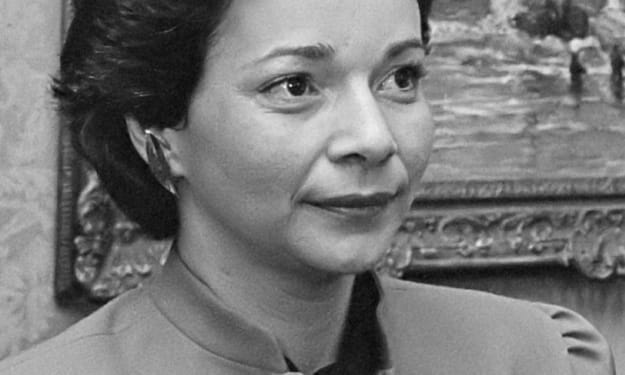
Nora Astorga (1948–1988) was a lawyer, guerrilla fighter, and diplomat, one of the most emblematic figures of the Sandinista National Liberation Front (FSLN). Raised in an affluent family, she chose to dedicate her life to fighting the dictatorship of Anastasio Somoza. Her most famous action was her involvement in the execution of General Reynaldo Pérez Vega, an act that symbolized not only rebellion against the regime but also a denunciation of U.S. imperialist complicity in supporting Somoza.
After the Sandinista revolution's victory in 1979, Nora continued to serve Nicaragua as deputy minister of justice and later as ambassador to the United Nations. She was a powerful voice against U.S. imperialism and a symbol of self-determination, embodying Dussel's ethical vision of a politics based on liberation. Her early death from cancer in 1988 solidified her as a martyr of the revolutionary cause.
**Arlen Siu: Liberation as Culture and Memory**
Arlen Siu (1955–1972), "the guerrilla singer-songwriter," was born in Jinotepe, Nicaragua, to a Chinese family. At a young age, she dedicated herself to writing, music, and activism, using her art to give voice to the suffering and hopes of the Nicaraguan people. Her lyrics were filled with a deep sense of justice and love for freedom. At 18, Arlen joined the Sandinista Front, participating in the armed struggle against Somoza's regime.
She died in 1972 during an ambush, becoming a martyr of the revolution and an inspiration for generations of fighters and artists. Her songs and writings continue to be a cultural and spiritual symbol of the Sandinista struggle, embodying the importance of the cultural dimension in the fight for liberation, as emphasized by Dussel's Philosophy of Liberation.
**Women as Revolutionary Subjects in the Philosophy of Liberation**
Both Nora Astorga and Arlen Siu embody the central role of women in liberation. Dussel's Philosophy of Liberation opposes not only colonial and capitalist domination but also the patriarchal structures that relegate women to the margins of history. Nora and Arlen, through their active participation and sacrifices, show how women can be ethical, political, and cultural subjects of transformation, challenging the dual oppression of gender and class.
Their lives reflect Dussel's vision of a history that belongs to the oppressed, transforming pain and exclusion into revolutionary strength. Nora, with her political skill and international commitment, and Arlen, with her art and sacrifice, demonstrate that liberation is an integral process that intertwines ethics, culture, and resistance.
**Ethics, Memory, and Liberation**
Enrique Dussel's Philosophy of Liberation finds concrete realization in the Sandinista anti-imperialist struggle and the figures of Nora Astorga and Arlen Siu. These women embody Dussel's message that the "others," the marginalized and oppressed, are the true protagonists of history. Nora and Arlen not only challenged the oppressive structures of capitalism and imperialism, but they also left an ethical and cultural legacy that continues to inspire. Through their struggle and sacrifice, they show that liberation is a complex and universal challenge, weaving together politics, culture, memory, and justice.
**The Philosophy of Liberation, the Sandinista Resistance, and the Critique of Western Modernity**
Enrique Dussel, through his Philosophy of Liberation, offers a critical reinterpretation of modernity, unmasking its colonial and capitalist roots. He argues that Western modernity, far from being a neutral and universal process of progress, was born in synchronization with colonial expansion and the systematic exploitation of the Americas, starting from 1492. This first modernity, initiated by Spain and Portugal's conquest of the tropical Atlantic, began the subjugation of local cultures, the plundering of natural resources, and the colonial violence that would establish the modern/colonial world-system.
The Sandinista revolution and the figures of Nora Astorga and Arlen Siu fall within this framework as moments of historical resistance to that system. They embody not only the anti-imperialist struggle of the Nicaraguan people but also a symbolic and concrete opposition to Western modernity as domination, exploitation, and oppression.
**Modernity as Coloniality**
According to Dussel, modernity cannot be understood without recognizing its hidden face: coloniality. While Europe represented itself as the civilizing center and bearer of progress, the "New World" became the space of barbarism to be redeemed and exploited. This process created a global hierarchy between center and periphery, colonizers and colonized, which persists today.
In this context, the Sandinista struggle represents a direct challenge to Eurocentric modernity and global capitalism. Nicaragua, one of the most exploited and impoverished countries in Latin America, became the stage for a resistance that was not limited to local demands but opposed the entire modern/colonial world-system. Women like Nora Astorga and Arlen Siu were key figures in this challenge, carrying forward a struggle that intertwined political, cultural, and ethical dimensions.
**Nora Astorga: Justice Against Coloniality**
Nora Astorga, through her legal, guerrilla, and diplomatic actions, embodies the response to U.S. imperialism, seen by Dussel as the direct heir of European colonialism. The assassination of Somoza's General Reynaldo Pérez Vega was not only an act of rebellion but also a gesture that unmasked the hypocrisy of a global system that justified the violence of the capitalist state against oppressed peoples.
Her political action, later transferred to the diplomatic arena, demonstrated that liberation is not only a matter of armed struggle but also a battle to redefine international relations. In line with Dussel's critique of Eurocentric modernity, Astorga fought for a multipolar world where peripheral peoples could self-determine and break with the hierarchies imposed by coloniality.
**Arlen Siu: Culture and Decolonization**
Arlen Siu, through her songs and militancy, represents a fundamental aspect of Dussel's critique of modernity: the decolonization of the cultural imaginary. Modernity is not only an economic-political system but also a cultural project that seeks to erase local identities and impose a Eurocentric hegemony.
Through her poems and melodies, Arlen gave voice to an oppressed people, creating a symbolic alternative to the dominant narrative. Her works celebrated the cultural roots of Nicaragua and the sacrifice of the martyrs of the revolution, demonstrating that the struggle for liberation is not only a matter of material resources but also a battle for memory, identity, and dignity.
**The Sandinista Struggle and Critique of Modernity**
The Sandinista resistance cannot be separated from the critique of Western modernity. The Somoza regime, supported by the United States, was not simply a local dictatorship but part of a global system that continued the colonial tradition of exploiting the peripheries for the benefit of the center.
As Dussel notes, modernity was born with the "Atlantic triangulation" that made possible the development of mercantile capitalism through the plundering of the Americas and the African slave trade. The Sandinista struggle challenged this historical legacy, proposing an alternative model of development based on social justice, resource redistribution, and human dignity.
**Women as Subjects of Liberation**
Nora Astorga and Arlen Siu are not merely figures of local resistance but embody Dussel's vision of the ethical and historical subject: the oppressed who rebel against the marginality imposed by colonial modernity. Their commitment, which unites politics, culture, and ethics, demonstrates that liberation is not a linear or Eurocentric process but emerges from the periphery, the margins, women, and the excluded.
**Modernity, the Colonization of the Americas, and the Concealment of the Other**
The conquest and colonization of the Americas represent the foundational moment of modernity, a process that, according to thinkers such as Enrique Dussel and Juan José Bautista, is inseparably linked to the subjugation and ontological concealment of the Other. Modernity is not limited to territorial expansion or technological advancement but is configured as a global system that, from its inception, racializes and hierarchizes cultural differences to justify economic, political, and cultural domination.
According to Bautista, modernity/coloniality produced the concept of race as a foundational social category, allowing human beings to be classified according to a hierarchy similar to that used for animals. This classification distinguished human groups as "superior" and "inferior," giving ideological legitimacy to genocide, slavery, and the economic exploitation of indigenous and African populations. As Ramón Grosfoguel emphasizes, the modern/colonial world-system is not only capitalist but also patriarchal, Eurocentric, and Christian-centric, imposing a power model that persists to this day.
**Coloniality and Race: The Persistence of a Power Model**
Race, created as an ontological category by modernity, becomes the tool through which the colonial system classifies and dominates. The indigenous populations of the Americas and African slaves were placed in a position of anthropological and ontological inferiority, thus justifying their economic and political subordination. This process, according to Bautista, inaugurated a new form of global power rooted not only in military force but also in an epistemic and ideological construction that conceals the humanity of the Other.
The "coloniality of power," a concept developed by Aníbal
Quijano, refers to the persistence of this hierarchical system that defines modernity. The modern/colonial world-system is constituted by the continuous exploitation of the peripheral Other, a condition that persists even after the formal end of colonization.
**The Importance of Dussel's Critique of Modernity and Liberation**
The Sandinista revolution, with its Marxist-Leninist foundation and anti-imperialist militancy, represents an alternative to the logic of Western modernity. Figures like Nora Astorga and Arlen Siu exemplify Dussel's argument that liberation is an ethical task that requires breaking free from the dominant colonial discourse. In their lives and deaths, they remind us that the struggle for liberation is a constant battle against the forces of coloniality that continue to shape global power relations.
Through their example, Dussel's Philosophy of Liberation becomes not just an abstract theory but a concrete challenge to the historical processes that continue to subjugate peripheral peoples. Their revolutionary vision affirms that liberation is not a distant ideal but an ongoing practice that must be realized in the face of ongoing imperialist domination.
About the Creator
Keep reading
More stories from Maddalena Celano and writers in Pride and other communities.
Nora Astorga: Icon of Resistance and Political Militancy
The Beginnings of Nora Astorga Nora Astorga was born into a religious middle-class family in Managua. She was the eldest daughter of Segundo Astorga, a lumber exporter and rancher with connections to the powerful Somoza family, and Mierrel Gadea. During her youth, Nora was a devout Roman Catholic, often engaged in charitable works in the poor neighborhoods of the capital.
By Maddalena Celanoabout a year ago in Pride
Hottest in the Office
Dear Rafi, You’re very distracting to work around. For the first second I saw you the other day, I thought you were some type of executive. It took a moment to realize no, you were just the new guy, dressed up for the job he wants. Be still, my heart.
By Gabriel Shames6 days ago in Pride
Alive
The shocking true story of Uruguayan Air Force Flight 571 and the moral horror that saved sixteen lives The crash of Uruguayan Air Force Flight 571 into the Andes Mountains on October 13, 1972, and the subsequent seventy-two-day survival ordeal of the passengers would become one of the most controversial and morally complex survival stories ever recorded, forcing sixteen young men to make the unthinkable decision to consume the flesh of their dead friends and teammates in order to stay alive in one of the most hostile environments on Earth, and the psychological and ethical dimensions of their choice continue to provoke debate and reflection more than fifty years after their rescue shocked the world. The flight was carrying forty-five people including nineteen members of the Old Christians Club rugby team from Montevideo, Uruguay, along with their friends and family members, traveling to Chile for a tournament, and the passengers were young, healthy, optimistic people with their whole lives ahead of them, many of them students from wealthy families who had never experienced real hardship and who could not have imagined that their routine flight would turn into a nightmare of freezing temperatures, starvation, and impossible moral choices that would haunt them forever.
By The Curious Writerabout 15 hours ago in Pride
A Transparent Look at Vocal Challenges and Top Stories
Almost three years ago, we shared a resource article that served as a place for people to suggest new challenge prompts. We thought it would be a good idea to refresh that thread, and take the opportunity to answer a few common questions about top stories, how challenges are judged and how submissions are reviewed.
By Vocal Curation Team4 days ago in Resources



Comments (1)
Hello, just wanna let you know that if we use AI, then we have to choose the AI-Generated tag before publishing 😊