
Nora Astorga: Icon of Resistance and Political Militancy
Nora Astorga Gadea de Jenkins (1948–1988) was an extraordinary figure in the history of Nicaragua and Latin America, symbolizing resistance, political commitment, and feminist militancy. Her life, marked by courageous choices and dedication to social justice, serves as a luminous example of the fight against oppression and imperialism.
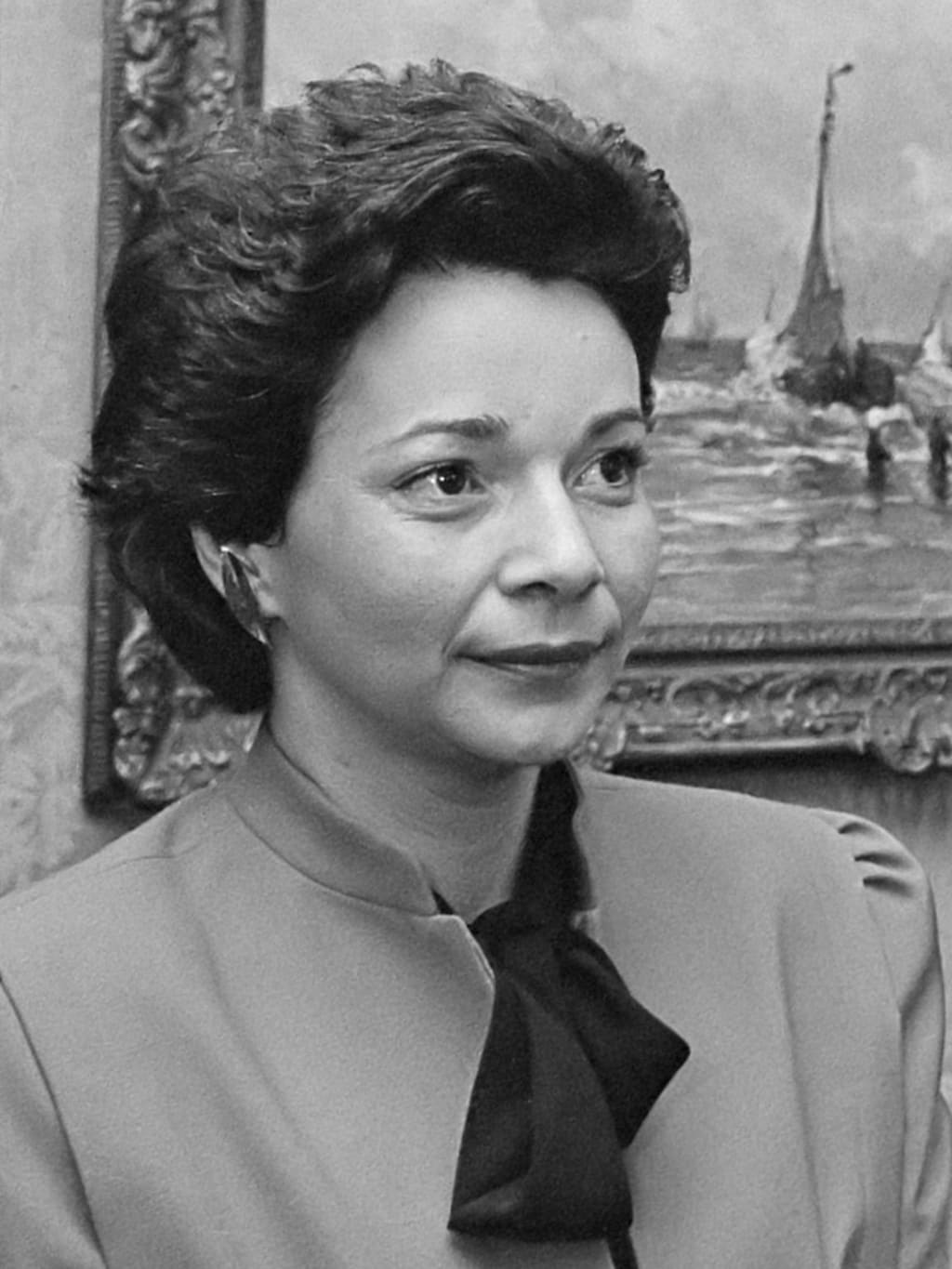
The Beginnings of Nora Astorga
Nora Astorga was born into a religious middle-class family in Managua. She was the eldest daughter of Segundo Astorga, a lumber exporter and rancher with connections to the powerful Somoza family, and Mierrel Gadea. During her youth, Nora was a devout Roman Catholic, often engaged in charitable works in the poor neighborhoods of the capital.
Despite her privileged upbringing, Nora showed a rebellious spirit from a young age. It is said that during her school years, she often challenged the rigid rules and prejudices of the Catholic educational institutions she attended, surprising teachers and classmates with her critical thinking.
In 1967, to her family's surprise, she announced her support for Fernando Agüero against Anastasio Somoza Debayle in the presidential elections. Concerned for her safety and hoping to “straighten her out,” her parents sent her to study medicine in the United States. However, animal dissections deeply disturbed her, causing her to abandon her studies after two years. Reflecting on her experience in Washington, D.C., Nora stated:
“What impressed me most about the United States were the social contrasts and especially the racism. I had never seen such racism in Nicaragua... [my] political awareness was born then.”
Personal Life and Marriage
At the age of 22, she married Jorge Jenkins, a student activist, with whom she had two children. The couple spent a year in Italy, where Nora studied banking law and computer programming while her husband pursued anthropology. The marriage lasted five years, during which Nora led a double life: mother of two children and corporate lawyer for one of Nicaragua’s largest construction companies, while secretly working for the Sandinista revolutionaries.
Later, Nora had two more children with José María Alvarado, a prominent member of the Sandinista National Liberation Front (FSLN).
Revolutionary Commitment
Astorga returned to Nicaragua to study law at the Universidad Centroamericana in Managua. During her university years, she became involved in the Sandinista movement and, from 1969 to 1973, was responsible for organizing safe houses and transportation for revolutionary leader Oscar Turcios.
After journalist Pedro Chamorro’s assassination in 1978, she fully embraced the armed struggle against the Somoza regime. She remarked:
“I finally understood that armed struggle was the only solution. You can’t respond with a flower to a rifle... either I took up arms and fully committed, or I wouldn’t change anything.”
The Case of General Pérez Vega
The event that made Nora famous was the attempted kidnapping of General Reynaldo Pérez Vega, deputy commander of the National Guard. On March 8, 1978, Astorga invited the general to her apartment, implying she would fulfill his advances. However, three FSLN members burst into the apartment to capture him. Pérez Vega resisted and was killed; his body was later found wrapped in a Sandinista flag.
Nora commented on her involvement:
“It wasn’t murder. He was too much of a monster… I don’t feel guilty for three reasons. First, we intended to kidnap him, not kill him. Second, I wasn’t present at the time of his death. And third, he represented repression.”
After the incident, Nora fled to the jungle, becoming the subject of a nationwide manhunt. She later joined the revolutionaries, appearing in newspapers wearing jungle uniforms and carrying an AK-47 assault rifle. Some accounts suggest the 1978 operation involving Pérez Vega was meticulously planned over months. Nora demonstrated extraordinary strategic and acting skills, maintaining an impeccable façade that completely deceived the general, despite the personal tensions she faced due to the operation's danger.
Historical Context: The Somoza Dictatorship and the Sandinista Struggle
In the 1960s and 1970s, Nicaragua was ruled by the Somoza dynasty dictatorship, backed by the United States. In this context, the Sandinista National Liberation Front (FSLN), inspired by General Augusto C. Sandino, emerged as a revolutionary movement. Nora Astorga, from a privileged family, chose to abandon her privileges to join the Sandinista struggle.
Revolutionary Militancy: Strategy and Sacrifice
A lawyer and corporate executive, Nora used her position to infiltrate Somoza’s circles of power, getting close to key figures like General Reinaldo Pérez Vega, known as "El Perro" (The Dog). In 1978, she lured the general into a strategic trap that culminated in his capture and execution, destabilizing the regime. This event marked Nora’s departure from her bourgeois identity in favor of the revolutionary cause.
“When a woman decides, no human force can stop her,” she declared.
Code Name
During her clandestine activities with the Sandinista Front, Nora used the code name “Victoria.” This pseudonym, meaning "victory," reflected her unwavering optimism and confidence in the possibility of overthrowing the Somoza regime.
Diplomatic Transition: Nicaragua’s Voice at the United Nations
With the triumph of the Sandinista Revolution in 1979, Nora embarked on a new path as a diplomat. In 1983, she was appointed ambassador to the United Nations, where she defended Nicaragua’s sovereignty against U.S. aggression. Her speeches, characterized by eloquence and determination, highlighted the contradictions of U.S. foreign policy.
Her tenure coincided with the escalation of the Cold War when the U.S. financed the Contras to destabilize the Sandinista government. Despite smear campaigns against her, Nora maintained her dignity and commitment.
As Vice Minister of Justice after the Sandinistas took power in 1979, she oversaw the trials of approximately 7,500 members of Somoza’s deposed regime. In 1984, the Sandinista government proposed her as ambassador to the U.S., but the Reagan administration rejected her due to her involvement in General Pérez Vega’s death.
Astorga then became Nicaragua’s ambassador to the United Nations in March 1986, a position she held until her death in 1988.
A Legacy of Resistance
Nora Astorga not only represented Nicaragua but also embodied the revolutionary potential of women in the struggle for equality. With her elegance and personal style, combined with unwavering commitment, she left a profound mark on her country and the world.
About the Creator
Keep reading
More stories from Maddalena Celano and writers in Pride and other communities.
BEYOND SILENCE: TOWARDS A FEMINIST CRITIQUE OF HISTORICAL NARRATIVES
Recovering these experiences and integrating them into official accounts not only enriches our understanding of history but also reveals how women have actively participated in movements for civil and social rights. For instance, Angela Davis's book *Women, Race, & Class* (1981) examines the crucial role that women of color played in the suffrage movement, highlighting intersections between gender, race, and class.
By Maddalena Celanoabout a year ago in Pride
“Friendship or Kindness”
The Court of Satan They were all five standing with their heads bowed. Satan’s disciples had captured them and brought them before the court of Satan. All five were confused, wondering what crime had led them to this dark place. The courtroom was silent, except for the occasional sinister laugh echoing from behind a black curtain.
By Sudais Zakwan4 days ago in Pride
The Devil's Cut
“Comrade, finally you’re awake.” The voice was smooth, sensual. A flickering incandescent bar was all that lit the white, sterile room. All Vladimir remembered was everything going black. He tried to move his arms and found them strapped to the gurney.
By Matthew J. Fromm4 days ago in Fiction


Comments
There are no comments for this story
Be the first to respond and start the conversation.