
The PERSON Who Never Told a lie In His entire Life
MUHAMMAD (saw)

In the golden heart of Arabia, amid the sands of Makkah, a light was born not to illuminate just a single land, but the entire world. Prophet Muhammad (peace and blessings be upon him) came into a society divided by tribal wars, choked by ignorance, and drowned in injustice. But he came not to condemn, rather to uplift — with words as soft as a breeze and a heart vast enough to hold the burdens of all.
From the earliest days, his character spoke louder than any sermon. Even before revelation touched his soul in the solitude of Cave Hira, he was known as Al-Ameen — the trustworthy. People handed him their wealth, secrets, and disputes because they knew he never lied, never cheated, never raised his voice in arrogance. But his mission was only beginning.
When the angel Jibreel first descended with the command, “Read!”, Muhammad (SAW) was overwhelmed — not by the command itself, but by the weight of what was to come. He didn’t rush into the streets demanding allegiance. Instead, he went home, trembling, and sought comfort from his beloved wife Khadijah (RA). That was the mark of his ikhlaaq — always humble, always reflective, never boastful.
As his message began to spread, it wasn’t just the words of the Qur’an that softened hearts — it was his actions. One day, an old woman would regularly throw garbage on him as he passed her house. She hated what he stood for — truth, equality, justice. But when she fell ill, he noticed her absence and visited her, carrying food and prayers. She wept. Not from guilt, but from witnessing a man whose kindness defeated her hatred. That was his way — he didn’t win people through argument, but through mercy.
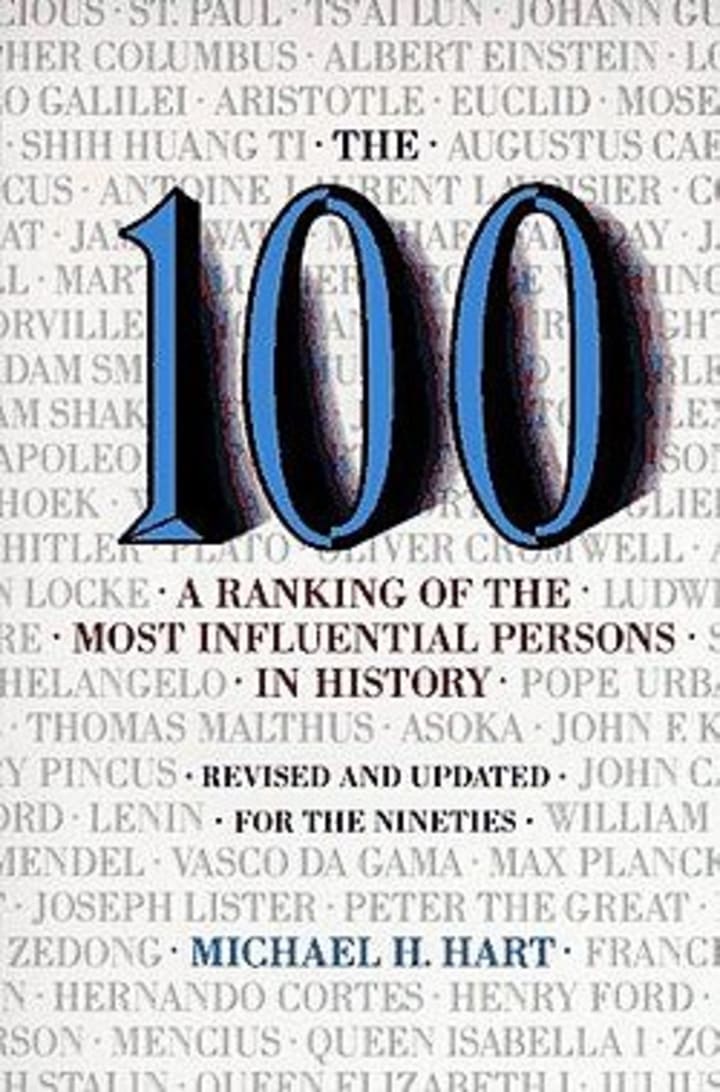
The book consists of 100 entries as well as an appendix of Honorable Mentions.
Founders and shapers of successful religions were among the most influential in Hart's view, as these shaped many people's lives quite strongly over a long period of time. The first person on Hart's list is the Islamic prophet Muhammad.[7][8] Hart asserted that Muhammad was "supremely successful" in both the religious and secular realms, being responsible for both the foundations of Islam as well as the Early Muslim conquests uniting the Arabian Peninsula and eventually a wider caliphate after his death.
He taught that no Arab is better than a non-Arab, that a rich man and a poor man stand shoulder to shoulder in prayer, that a smile is charity, and that the strongest is not the one who overpowers others, but the one who controls himself in anger. These weren’t just teachings — they were the compass by which he lived.
Even in war, when most would seek revenge, Muhammad (SAW) showed restraint. After facing years of torment from the Quraysh — being mocked, beaten, driven out, and even having his beloved companions killed — he returned to Makkah not with a sword in hand, but with forgiveness on his lips. Standing before his enemies, he asked, “What do you think I will do with you today?” They stood in fear. But he said, “Go, for you are free.” That was his victory — not of conquest, but of character.
One of his most powerful qualities was his ability to make every person feel valued. Whether you were a king or a slave, an elder or a child, he gave you his full attention. He never interrupted, never belittled, never turned his face away. People said they felt like they were the most important in his eyes — even though he was the most important man in theirs.
He showed us how to walk with purpose but also with gentleness. He played with children, helped his wives with chores, mended his own shoes, and fed the poor with his own hands. He was the leader of an Ummah, yet never wore pride on his shoulders.
He was also a man who wept. Not out of weakness, but out of love. He cried for his companions. He cried for those who came after him — including you and me. He once stood in the darkness of night, praying until his feet swelled, and when asked why he did so even after Allah had forgiven all his past and future sins, he replied, “Should I not be a thankful servant?”
What makes his story motivational isn’t just the miracles, or the victories, but the way he responded to hardship. He buried six of his seven children. He was starved in a boycott. He was pelted with stones in Ta’if until his blood filled his sandals. And yet, he prayed for the guidance of those who hurt him. That was his strength — not to avoid pain, but to turn pain into prayer.
His final sermon was not a farewell to his people, but a legacy to humanity. He stood on the plain of Arafah and said, “I have left among you that which, if you hold fast to it, you will never go astray — the Qur’an and my Sunnah.”
The Prophet Muhammad (SAW) did not build marble palaces, or leave behind treasure chests. He left behind a legacy of mercy, justice, patience, and love. His ikhlaaq was not something written in books — it was lived in every breath, every smile, every silent act of kindness.
And today, if we carry even a spark of that light — in how we speak, how we forgive, how we serve — we too become part of the lantern that lights the path in this world of shadows.
Hart's Top 10 (from the 1992 edition)
Rank Name Time frame Image Occupation
1 Muhammad c. 570–632 Spiritual & Political leader
2 Isaac Newton 1643–1727 Scientist
3 Jesus 4 BC–33 AD Spiritual leader
4 Gautama Buddha 563–483 BC Spiritual leader
5 Confucius 551–479 BC Philosopher
6 Paul the Apostle 5–67 AD Christian apostle
7 Cai Lun 50–121 AD Inventor of paper
8 Johannes Gutenberg c. 1400–1468 Inventor of the printing press
9 Christopher Columbus 1451–1506 Explorer
10 Albert Einstein 1879–1955 Scientist
About the Creator
The Manatwal Khan
Philosopher, Historian and
Storyteller
Humanitarian
Philanthropist
Social Activist
Keep reading
More stories from The Manatwal Khan and writers in Pride and other communities.
The Letter from the Mountains
Afghanistan, 1984 The wind howled like a wounded animal through the narrow mountain pass, carrying with it the scent of dust, gunpowder, and burning memories. Private Alexei Mikhailov sat alone, his back pressed against the jagged stone of an outcrop, his rifle resting loosely across his lap. The stars above the Afghan sky seemed so much colder than the ones over Novosibirsk.
By The Manatwal Khan10 months ago in Pride
“Friendship or Kindness”
The Court of Satan They were all five standing with their heads bowed. Satan’s disciples had captured them and brought them before the court of Satan. All five were confused, wondering what crime had led them to this dark place. The courtroom was silent, except for the occasional sinister laugh echoing from behind a black curtain.
By Sudais Zakwan3 days ago in Pride



Comments
There are no comments for this story
Be the first to respond and start the conversation.