
The Letter from the Mountains
Russian Soldiers


Afghanistan, 1984
The wind howled like a wounded animal through the narrow mountain pass, carrying with it the scent of dust, gunpowder, and burning memories. Private Alexei Mikhailov sat alone, his back pressed against the jagged stone of an outcrop, his rifle resting loosely across his lap. The stars above the Afghan sky seemed so much colder than the ones over Novosibirsk.
He took a crumpled piece of paper from his breast pocket, one he had hidden from the rain, the mud, and even his comrades. His hands, calloused and bruised, trembled as he smoothed it out on his knee. With a broken pencil, he began to write.
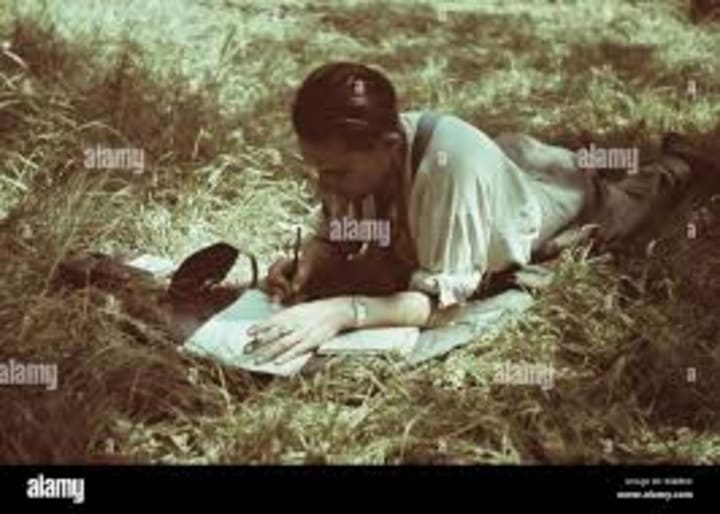
“Mama, Papa… Anya,”
I don’t know if this letter will reach you. The last one I sent never got a reply, but I pray this one does. If you're reading this, then I’m alive. For now.
Every day here feels like a year. The mountains are beautiful but cruel. They stare at us like silent witnesses to everything we do. We patrol villages where no one speaks our language, and yet their eyes tell stories—of fear, of hatred, and sometimes, of hope.
Today, I saw something that broke me.
We were clearing a small village near Khost. It was quiet—too quiet. A boy, no older than Misha, walked toward us with a smile on his face. He waved a cloth, like a flag of peace. I smiled back. I thought of my little brother running to me after school.
Then the world exploded.
The boy had been used. There was nothing left of him but a mark in the dust and the screams of my friends. Two of my brothers didn’t get up. Ever.
I helped carry their bodies down the mountain in silence.
He paused, eyes burning, the wind whipping tears from the corners before they could fall.

“Mama,”
I remember the soup you made with potatoes and dill. The warmth of the kitchen. Your hands, always so gentle, never letting go of mine when I had nightmares. I have them again now—louder, more real.
Tell Anya to keep painting. I carry that little drawing she gave me—a sun over green hills. I look at it every day. It reminds me there is still beauty, even here.
Papa, I understand you now. When you told me war is not about medals but about memories you can’t wash off. You were right. I wear them like shadows.
Do you remember when I left? The snow was just starting to fall, and you said, “Come home with honor.” I didn’t understand then. I think I do now. Honor is not in killing. It’s in staying human.
Sometimes I worry I’m forgetting how.
The fire crackled nearby. A few of the other soldiers laughed quietly around it, but the laughter was thin, stretched like worn cloth. Alexei turned his eyes back to the letter.
“If I don’t come back,”
Please don’t be angry. I did not come here to be a hero. I came because I thought I could make a difference. I came because I believed I had to. Now… I just want to come home.
I want to hear Misha’s laugh again. I want to watch Anya chase the cat around the garden. I want to sit at the kitchen table, with Papa’s radio playing that same old Soviet jazz, and you, Mama, humming along while you knit.
That’s my victory. That’s all I want.
But if I cannot return, I want you to know that I tried to stay good. I helped where I could. I held the hand of a dying friend today, and I told him he wasn’t alone. He smiled with blood in his mouth and said, “Tell my mother I wasn't afraid.”
Please… if I fall, remember me with love, not sorrow. Plant something in my name. A tree, maybe. Something that grows, something that breathes.
Because war takes so much, Mama. It steals faces, names, dreams. But it cannot take your love from me. That is my last strength.

He folded the letter carefully, pressed it to his lips, and tucked it back into his shirt. His breath fogged the cold air as he stood up and looked toward the horizon, where the mountains met the stars.
Tomorrow would come, whether he wanted it to or not.
But tonight, he had written his soul into a letter—and for now, that was enough.
—End—
About the Creator
The Manatwal Khan
Philosopher, Historian and
Storyteller
Humanitarian
Philanthropist
Social Activist
Keep reading
More stories from The Manatwal Khan and writers in Pride and other communities.
The PERSON Who Never Told a lie In His entire Life
In the golden heart of Arabia, amid the sands of Makkah, a light was born not to illuminate just a single land, but the entire world. Prophet Muhammad (peace and blessings be upon him) came into a society divided by tribal wars, choked by ignorance, and drowned in injustice. But he came not to condemn, rather to uplift — with words as soft as a breeze and a heart vast enough to hold the burdens of all.
By The Manatwal Khan10 months ago in Pride
The Pride Flag and the Diversion
For nearly a decade, the LGBTQIA Pride Flag rippled in the wind at Christopher Park, a kaleidoscope of color staked into the soil of America’s first national monument to LGBTQIA+ liberation. That flag came down this week. Federal officials, citing new guidance from the Trump Administration, silently lowered the rainbow flag from its pole across the street from the Stonewall Inn. The birthplace of the modern gay rights movement now flies only the United States flag.
By Tim Carmichael26 days ago in Pride
Daddy Patterns - Son of my Enemy
Distraught and bewildered, landowner Reginald Whitmore watched his son Maximilian burning with fever and delirious in his hospital bed in Ironwood Village. He had arrived a few moments earlier with his wife, thinking it was some kind of prank when he received the phone call, but now he was facing his youngest son in a critical, truly dangerous condition, when just a few hours earlier he had been perfectly healthy. Maximilian had returned to the Whitmore mansion just five days ago, and everything pointed to him spending a peaceful and productive summer there, trying, among other things, to repair his relationship with his father as much as he could. Reginald was diligently trying to make Maximilian's stay at Whitmore Vale as pleasant and safe as possible, as he had a secret intention to ask him to settle there permanently. The nurses removed Reginald's companions from the room, leaving only him and his wife inside. At the same time, Reginald threatened the medical staff to take good care of his son. "This is not just about my son's health. Your life is also on this bed," he said to the head doctor. "We are doing our best, sir," he replied. Maximilian, in his frenzy, had clenched the bed sheet in his fist and, with his eyes closed, was muttering incomprehensible words.
By Aurelian Everhartabout 24 hours ago in Pride



Comments (1)
Nicely done — a clear and well-written piece.