
The Nasty Gender Identity Question
Question to the Masses on Social Media


January 26, 2024. We are less than a week into Trump America and have witnessed a significant number of changes to our country and way of life. Trump completes one of his campaign promises to attack the most vulnerable and marginalized group in America: the LGBTQ+ community by signing his executive order claiming there are only two genders, the one assigned at birth. This gender is unchangeable. However, how is someone’s gender identity a threat to our country?
I posted this question on a social media app to generate responses from users to understand both sides of the argument. One commenter claimed it caused them to experience an identity crisis because with all the labels and changes to definitions they became unsure what gender they are. Simply put: if you identify as a male, then you’re male. If you’re non-binary, then you’re non-binary. Most advocates for self-expression of gender identity say, “you are what you are.” They know there are studies proving gender to be a social construct built from societal norms of gender roles. According to the gender norms of the society you follow, there are days you feel masculine and days you feel feminine. There is no definitive definition of what you feel. If how you live and present yourself in your daily life leans more to the societal definition of masculine, then you’re male, should you choose to identify as such. Yes, you can identify as a masculine female. It’s your self-expression.
Many of the commenters felt that gender identity is forced on them. How is it being forced on you? Is there someone in your home, workplace, school, church, etc. demanding you make a choice on your gender? Are you in a “choose or die” situation? I’m confused by this comment. If you claim you’re male, then you’re male. No one is trying to tell you otherwise, unless others bullying you based on your physical appearance or interests (spoiler: marginalized people experience this daily). You are free to be who you want to be as long as you do not create harm unto others. Asking for your gender identity is a sign of respect. Perhaps change the way you view this question.
What about those nasty pronouns? Most intellectual people will continue to be appalled at the unreasonable anger towards a component of the English language. Pronouns. “Well, I don’t use pronouns. I don’t believe in them.” That statement alone garnishes three pronouns: “I” twice and “them.” People arguing against pronouns will continue to use them in conversation, contradicting their own claim. “Have you seen Mary? She looks great today!” Pronouns are identifiers of the subject in a sentence. We have been using them once we began language acquisition. Elementary school grammar focuses on using pronouns. Why is this a triggering topic? How can you say you’re a compassionate person, but refuse to show respect to someone because of their gender identity? When a person asks for pronouns, they are showing respect for you and how you identify.
One of my favorite comments from this question is “I don’t mind what someone identifies as, I just don’t want it around my kids.” I can empathize with this comment. Many people want to keep their children protected from anything harmful. Which is why children at not allowed to play outside and must stay indoors near their parents’ side, right? No child should play with violence inducing toys, or watch/play any video content with violence. We must protect the children! What is worse than violent video content and school shootings? Someone’s gender identity. Let me be very explicit here: people who claim they don’t want their children around it are really saying children are incapable of learning to accept different people. However, children actually learn to accept different people better than most adults. It can be dangerous when parents refuse to allow their child(ren) to form an opinion different from their own. It is the same ideology as race. Forbidding a child to interact with someone from a different racial background is feeding bigotry. Apply that same phrase to gender.
Let me close with the most talked about issue regarding gender identity: safe spaces. What about the bathrooms? What about people who use it to enter safe spaces for women? The issues is rarely about trans-men entering male bathrooms, but always trans-women using women’s bathrooms. When a trans-woman uses the bathroom, she is not thinking about attacking her fellow bathroom user. She is thinking about attacking the porcelain pot. Cis-women should never fear a trans-woman because a trans-woman is already entering the bathroom in fear. Will other women attack them? Will there be a group of men ready to cause physical harm towards her upon departure? We talk about safe spaces, but where is the safe space for trans-women? One political party is already attacking them in America by creating bills upon bills restricting their rights and health care. Even comedians continue to use them as a punchline. Let’s be honest: if a man wants to assault a woman in the bathroom, he does not need to transition, or pretend to be a woman to do it (especially if doing so will garnish more unwanted attention to him). Nor is a sign on a door going to stop him from entering. Drop the transphobia and look at this debate from a different perspective: those who are really in danger.
To answer the initial question of how someone’s gender identity affects a person negatively. It’s simple: it doesn’t. If you feel it does, then you need to educate yourself and what gender is. There are many books and articles on gender to help you gain a better understanding. People who are free to express their gender are happier being their authentic self and no executive order is going to erase, or change, who they are. Open your mind and heart and let people be themselves (oooo, a pronoun). Who knows, you may find your next best friend within them.
Author’s Note: After writing this post, it came to my attention that before 1933 Germany had a thriving LGBTQ community, including trans-people. When Adolf Hitler began to rise to power, this marginalized community was the first to be attacked. Of course we don’t read about this in mainstream history books, because America continues to have difficulty accepting the truth: trans-people belong and always existed. Time and time again, advocates of trans-people have to reiterate this same message. As I always say to my students, don’t take my word for it, perform an honest google search for yourself on the history of trans and Germany BEFORE Hitler. You can start with this link: History of Trans in Germany 1933
About the Creator
Iris Harris
An aspiring novelist. I enjoy writing ghost, horror, and drama. Occassionally, I dabble with some essays. You can find more of my work with the link below:
Reader insights
Outstanding
Excellent work. Looking forward to reading more!
Top insight
Expert insights and opinions
Arguments were carefully researched and presented
Keep reading
More stories from Iris Harris and writers in Pride and other communities.
Meta Yields to the Right
Meta CEO, Mark Zuckerberg recently announced META (Facebook, Instagram, and Threads) will no longer use fact checkers and rely on a community notes to report information. Zuckerberg announced the decision after meeting with President-elect Trump. However, what Zuckerberg did not announce was overturning protection for LGBTQ+ community, women, and BIPOC. In other words, META users will be able to attack these marginalized groups with no consequences. Since the announcement, many users on Threads have already begun looking for an alternative social media space, or deleting their accounts from all social media. However, it is vital we stay on these apps and continue to make our presence known in the META-verse.
By Iris Harrisabout a year ago in Pride
The Pride Flag and the Diversion
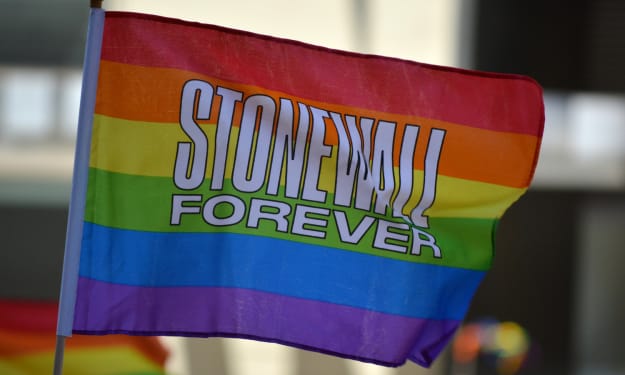
For nearly a decade, the LGBTQIA Pride Flag rippled in the wind at Christopher Park, a kaleidoscope of color staked into the soil of America’s first national monument to LGBTQIA+ liberation. That flag came down this week. Federal officials, citing new guidance from the Trump Administration, silently lowered the rainbow flag from its pole across the street from the Stonewall Inn. The birthplace of the modern gay rights movement now flies only the United States flag.
By Tim Carmichael20 days ago in Pride
Pearl
1980 something. we all hung out at Pearl and you and i were nothing special, or so i thought. i mean we all danced, drenched in our own sweat, our own saline solution of fear, too many beers, shots, laughter, tears, fucks in the bathroom and i don't know when we began to be afraid. do you?
By ROCK aka Andrea Polla (Simmons)6 days ago in Fiction


Comments (3)
Well said. Educating others on gender identity is very important and needed. I don't understand why people say it's forced on them, which I find I laughable and ridiculous.
As always, you put your points across so eloquently. Far more eloquently than I can right now. What a dumpster fire of a year and it's only January.
Iris, no comment I put here will be able to address this. Hope you're doing okay in light of everything and what it seems to portend. Worrying times.