
Thankful for the Children: What Kids Teach Us About Gender, Identity, and Radical Honesty
We underestimate children.

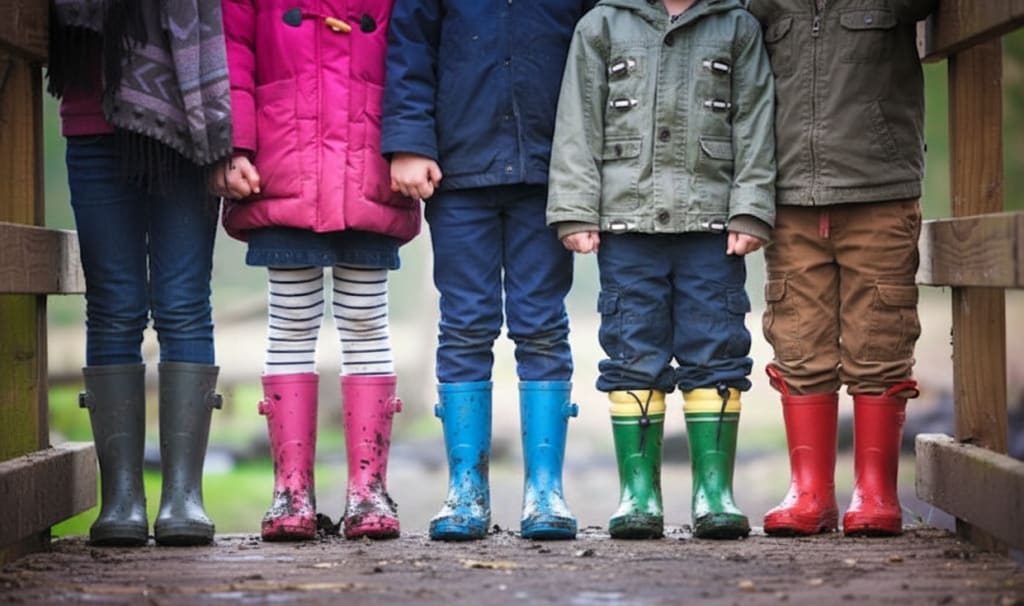
We assume they won’t understand.
We assume they’ll be confused.
We assume we must protect them from complexity.
But what if it’s the other way around?
What if children understand more about identity, truth, and humanity than most adults ever will?
“I Thought You Were…”
When strangers notice my wedding ring, they often smile and say, “Love is love,” followed by, “Did you two get married right after gay marriage was legalized?”
I calmly respond, “My wife and I were married two years ago.”
There’s always a pause.
A visible mental recalculation.
Then the confession:
“I thought you were a gay man.”
“Close,” I reply. “I’m trans.”
If that doesn’t spark further confusion — “Wait, MTF? FTM?” — the reactions are usually predictable:
• “Wow, I never would have guessed.”
• “Good job.”
• “You look real.”
Real.
As if authenticity is something earned.
As if identity is performance.
As if existence requires validation.
These comments may be intended as compliments. But beneath them lives something quieter — diminishing, comparing, erasing.
Adults complicate what children simplify.
The Question Adults Fear — But Kids Don’t
A family member once asked, “What should the kids call you? Is aunt okay, or should we go with uncle?”
I gently reminded them that I sign cards “Bibi KP” and encourage the children to use my chosen name.
They hesitated.
“But what if that gets confusing for them? What do we say if they ask questions?”
“The truth,” I answered.
It has been four years.
Honesty has yet to confuse their children.
Not once.
No identity crisis.
No existential spiral.
No trauma born from pronouns.
Children ask questions.
You answer honestly.
They accept it.
They move on.
It’s adults who linger in discomfort — not kids.
“You’re a Man!”
In a classroom one day, a student pointed at an advertisement on the screen.
“Why does it keep showing you pads and tampons?” he laughed. “You’re a man! We’re all men in here!”
Without hesitation, I replied evenly, “I still get my period. Lots of men do.”
He blinked.
“Oh. Right. Sorry.”
Head lowered. Conversation over.
I didn’t explain non-binary identity. I didn’t unpack gender theory. I didn’t deliver a lecture.
The truth was enough.
The topic was dropped.
Let me repeat that:
The topic
was
dropped.
No outrage.
No debate.
No argument.
Just acceptance.
Children process new information without attaching ego to it. They aren’t invested in being “right.” They’re invested in understanding.
That’s the difference.
Adults Are Taught Fear. Kids Are Taught Humanity.
Children are not born afraid of gender diversity, sexual orientation, or pronouns.
They are taught fear.
They are taught discomfort.
They are taught to categorize.
They are taught to question what once made sense.
Before that conditioning takes hold, their worldview is expansive. Flexible. Curious.
When a child hears, “Some men get periods,” they don’t panic.
They adjust.
When a child learns someone is transgender or non-binary, they don’t debate biology.
They ask: “Okay. What do you want to be called?”
And that’s it.
The awe and openness of childhood is not ignorance. It’s clarity.
Why Children Understand Gender Better Than We Think
Search data shows rising interest in topics like:
• Understanding transgender identity
• How to explain gender identity to kids
• Talking to children about pronouns
• Supporting LGBTQ+ family members
The assumption behind many of these searches is the same: “How do we simplify this for children?”
But maybe the better question is:
How do we simplify this for adults?
Because children do not struggle with complexity — they struggle with dishonesty.
When we withhold truth, they sense it.
When we project shame, they absorb it.
When we model fear, they learn it.
But when we speak plainly —
“This is who I am.”
“This is my name.”
“This is my body.”
They nod and continue building their Lego tower.
Radical Honesty Isn’t Radical to Kids
We often say we need to “protect children.”
Protect them from what?
From words?
From vocabulary?
From reality?
The irony is that children are far more resilient than adults give them credit for. What harms them is not knowledge — it’s tension.
It’s the whispering.
It’s the awkward pauses.
It’s the side glances and half-answers.
Children don’t need perfectly polished explanations.
They need consistency and truth.
When a child asks, “Why does your body work differently?” and you answer honestly, you’re not confusing them.
You’re modeling integrity.
The Inner Child We Forgot
Somewhere between childhood and adulthood, many of us lose something essential.
Curiosity becomes suspicion.
Questions become accusations.
Learning becomes debate.
We trade wonder for certainty.
But children remind us what it looks like to approach difference without ego.
They remind us that identity is not a threat.
They remind us that shared humanity is not erased by nuance.
Imagine if adults responded to difference the way children do:
“Oh. Okay.”
And then continued loving.
We Should Fear Less — And Learn More
Instead of worrying how children will handle the truth, maybe we should ask:
Why are adults so uncomfortable with it?
Why does honesty feel disruptive?
Why does difference feel destabilizing?
Children show us another way.
A way rooted in openness.
In flexibility.
In empathy without performance.
If we protected anything, let it be that.
Protect their awe.
Protect their shared humanity.
Protect their ability to accept without comparison.
Because once adulthood teaches them insecurity, fear, and categorization, it becomes much harder to unlearn.
And perhaps the most powerful lesson in all of this is simple:
Children do not need us to shield them from identity.
They need us to model authenticity.
They need us to trust them with the truth.
They get more than we think.
Always have.
About the Creator
Adil Ali Khan
I’m a passionate writer who loves exploring trending news topics, sharing insights, and keeping readers updated on what’s happening around the world.
Keep reading
More stories from Adil Ali Khan and writers in Pride and other communities.
Is Pedro Pascal Gay
The question “Is Pedro Pascal gay?” is a persistent fixture in online searches and fan discussions. It’s a query that, on its surface, seeks a simple label for a complex individual. Yet, the reality of the answer and the cultural forces that fuel the question reveals far more about our relationship with celebrity, sexuality, and the right to privacy in the digital age than it does about Pascal himself.
By David Femboy3 days ago in Pride



Comments
There are no comments for this story
Be the first to respond and start the conversation.