
Royal Thai Army in Focus: The #กองทัพบก Trend and the Thai-Cambodian Border Crisis
Escalating Tensions and Nationalist Sentiment in the 2025 Border Conflict
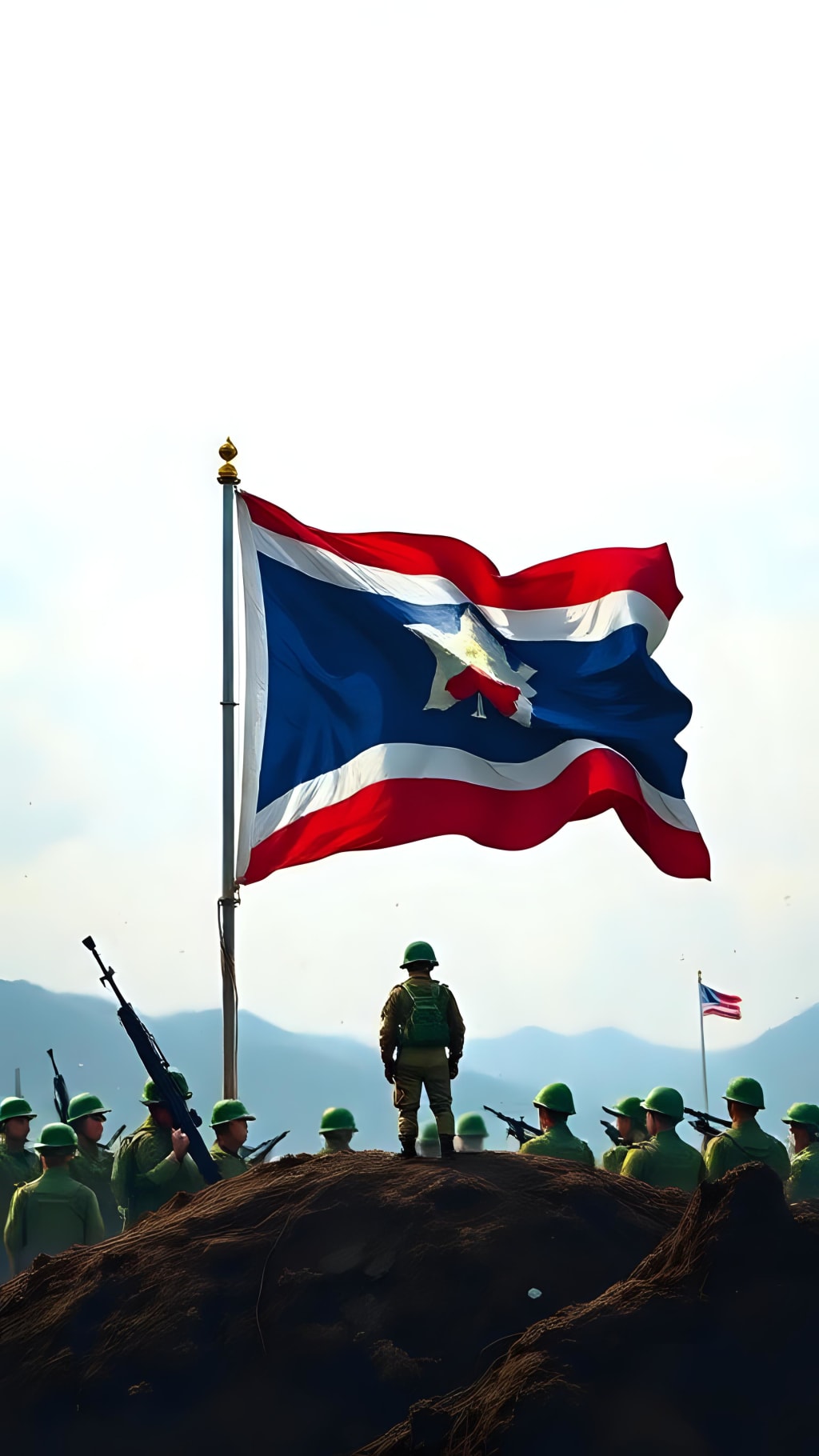
The hashtag #กองทัพบก, which translates to "Royal Thai Army" in English, has been trending on X due to escalating tensions along the Thai-Cambodian border in July 2025. This trend reflects public and regional attention to a series of violent clashes between the Royal Thai Army and Cambodian forces, rooted in a long-standing territorial dispute. The conflict, centered around disputed border areas like the Ta Muen Thom and Preah Vihear temples, has led to significant military actions, diplomatic fallout, and civilian casualties. This essay provides a detailed examination of the #กองทัพบก trend, exploring the causes, developments, implications, and broader context of the Thai-Cambodian border conflict as of July 24, 2025, based on recent reports and posts on X.Background of the Thai-Cambodian Border DisputeThe Thai-Cambodian border dispute dates back over a century, primarily stemming from a 1907 map drawn during French colonial rule, which Cambodia uses to claim certain territories, while Thailand contests its accuracy. The most contentious areas include the regions around the Preah Vihear temple, awarded to Cambodia by the International Court of Justice (ICJ) in 1962, and the Ta Muen Thom temple, both located in the Dangrek Mountains along the 508-mile shared border. These disputes have periodically flared into violence, with notable clashes in 2008–2013, including a 2011 conflict that killed around 20 people. The current escalation, which began in May 2025 with the death of a Cambodian soldier in the Emerald Triangle (a tri-border area with Laos), has reignited nationalist sentiments and military tensions.
Recent Developments in July 2025The #กองทัพบก trend gained momentum following intense military clashes on July 24, 2025, near the Ta Muen Thom temple in Thailand’s Surin province and Cambodia’s Oddar Meanchey province. According to reports, the conflict erupted early Thursday morning when both sides accused each other of initiating hostilities. Thai authorities claim Cambodian troops fired first, using heavy weapons like BM-21 rocket launchers, targeting Thai villages and a hospital, resulting in at least 11 civilian deaths and one Thai soldier’s death. Cambodia, conversely, alleges that Thai forces violated a prior agreement by advancing on the temple and laying barbed wire, prompting a defensive response.
Thailand escalated its response by deploying an F-16 fighter jet, which bombed a Cambodian military target, marking a rare use of air power in the conflict. The Thai military also reported destroying two Cambodian regional military support units and capturing two Cambodian tanks near Sattahom. Cambodia condemned these actions as “reckless and brutal military aggression,” with former Prime Minister Hun Sen stating that two Cambodian provinces, Oddar Meanchey and Preah Vihear, were shelled by Thai forces. Both nations have since closed border crossings, downgraded diplomatic ties, and recalled ambassadors, with Cambodia expelling Thailand’s envoy and Thailand sealing its border to all travelers.
The Royal Thai Army has been at the forefront of these operations, with its actions driving the #กองทัพบก hashtag’s prominence. Posts on X highlight the army’s deployment of troops, drones, and armored vehicles, as well as its accusations of Cambodian violations, including the alleged use of landmines. A notable incident involved five Thai soldiers injured by a landmine on July 23, which Thailand claims was newly laid by Cambodia, a charge Cambodia denies, asserting that Thai forces planted the mines. The Thai army has condemned Cambodia for violating international law, including the Geneva Convention, by targeting civilians and using heavy weaponry indiscriminately.
Military and Diplomatic ResponsesThe Royal Thai Army, under the leadership of General Phana Khlaeoplotthuk, has taken a firm stance, announcing combat readiness and closing four border checkpoints, including Ta Muen Thom and Ta Krabey. The army’s deputy spokesperson, Colonel Richa Suksuwanont, emphasized that airstrikes targeted only military objectives, refuting Cambodian claims of civilian attacks. Thailand’s acting Prime Minister, Phumtham Wechayachai, stated that negotiations could only proceed after hostilities cease, rejecting Cambodia’s call for an urgent UN Security Council meeting. Cambodia’s Prime Minister Hun Manet, backed by his influential father Hun Sen, has appealed to the UN and the ICJ, arguing that Thailand’s actions threaten regional stability.
Both nations have reinforced their military presence, with Thailand deploying six F-16 jets and Cambodia mobilizing BM-21 rocket launchers. The Thai army has also accused Cambodia of using drones for surveillance, escalating tensions further when Thai forces shot down four unidentified drones over Chanthaburi province. Diplomatic efforts, such as a May 29 meeting between Thai and Cambodian army chiefs, aimed to de-escalate tensions, but these have largely failed, with Cambodia insisting on ICJ intervention and Thailand favoring bilateral talks through the Joint Boundary Committee.
Public Sentiment and Social MediaThe #กองทัพบก trend reflects a surge in nationalist sentiment in Thailand, amplified by the Royal Thai Army’s visible role in the conflict. X posts reveal a mix of support and concern among Thai citizens. For instance, a user (@majorbrainpain
) expressed pride in their son’s deployment with the Thai army, while others (@whattheppe
, @PolitlcsGlobal
) highlighted the escalating violence and its impact on civilians, including forest fires and damage to public infrastructure. Thai authorities have urged citizens to refrain from sharing sensitive information, such as images of refugee camps or military positions, to prevent aiding Cambodian forces. In Cambodia, Hun Sen’s social media posts have rallied nationalist support, urging citizens to trust the armed forces.
The conflict has displaced over 40,000 people, primarily in Thailand’s Surin, Si Sa Ket, and Ubon Ratchathani provinces, with evacuees seeking shelter in government centers. Cambodian residents, like farmer Chhan Rorn Yon in Preah Vihear, have expressed fear of further violence, with some taking refuge in pagodas. The human toll, including the deaths of an 8-year-old boy and a 15-year-old in Thailand, has intensified public outrage and fueled the #กองทัพบก trend as a symbol of Thailand’s military response.
Broader ImplicationsThe Thai-Cambodian border conflict has significant regional and political ramifications. The Association of Southeast Asian Nations (ASEAN), chaired by Malaysia, has called for de-escalation, with Malaysian Prime Minister Anwar Ibrahim offering mediation. China, a key ally of both nations, has expressed concern and urged its citizens in Cambodia to avoid the border. The conflict risks destabilizing Southeast Asia, a region that values harmony under ASEAN’s 1976 Treaty of Amity and Cooperation.
In Thailand, the crisis has domestic political consequences. Prime Minister Paetongtarn Shinawatra faces criticism for her handling of the dispute, particularly after a leaked phone call with Hun Sen suggested leniency toward Cambodia. This has led to her suspension and calls for resignation, with nationalist groups and coalition partners accusing her of undermining the Royal Thai Army’s authority. The conflict also highlights the fragility of Thailand’s coalition government, strained by historical ties between the Shinawatra family and Cambodia’s Hun family.
Challenges and Future OutlookThe #กองทัพบก trend underscores the Royal Thai Army’s central role in a conflict that shows no immediate signs of resolution. Historical disputes, nationalist fervor, and mutual accusations of provocation complicate diplomatic efforts. Cambodia’s push for ICJ adjudication contrasts with Thailand’s preference for bilateral talks, creating a stalemate. The use of heavy weapons, landmines, and airstrikes raises concerns about compliance with international law, with both sides alleging violations. The economic impact is also significant, with Cambodia banning Thai imports and Thailand restricting cross-border trade, affecting local economies and regional stability.
The conflict’s escalation, driven by military actions and amplified by social media, risks further civilian casualties and displacement. While ASEAN and international actors like China advocate for peace, the lack of trust between Thailand and Cambodia, compounded by domestic political pressures, makes de-escalation challenging. The Royal Thai Army’s combat readiness and Cambodia’s retaliatory measures suggest that the situation may worsen before improving, as noted by analysts like Phil Robertson and Thitinan Pongsudhirak.
About the Creator
Keep reading
More stories from Faheem ullah and writers in Pride and other communities.
Trump Demands Tech Firms Prioritize U.S. Al Jobs
In July 2025, former U.S. President Donald Trump, during a high-profile AI Summit in Washington, D.C., made a bold call for American technology companies to prioritize U.S. workers over foreign labor, particularly from countries like India and China. This directive was part of a broader push to enhance American dominance in artificial intelligence (AI) and secure economic and national security through domestic innovation and job creation. Trump’s remarks, coupled with three executive orders and an “AI Action Plan,” underscored his administration’s focus on reshaping the tech industry’s labor practices, reducing reliance on global outsourcing, and fostering a nationalist approach to technological development. This essay explores the context, implications, and potential impacts of Trump’s demands, analyzing the motivations behind his policies, the economic and geopolitical factors at play, and the broader consequences for the tech industry, American workers, and global markets.Context and BackgroundTrump’s statements came at a time when the U.S. was engaged in a fierce global race to lead in AI, a technology with profound implications for economic competitiveness, national security, and societal transformation. The AI Summit, co-hosted by the Hill and Valley Forum and the “All-In” podcast, brought together tech industry leaders, policymakers, and Trump administration officials to discuss strategies for advancing U.S. AI capabilities. Trump’s remarks targeted major tech giants like Google, Microsoft, Meta, and Amazon, accusing them of pursuing “radical globalism” by outsourcing jobs to countries like India and China while benefiting from American freedoms and markets. He argued that this practice had left millions of Americans feeling “distrustful and betrayed,” emphasizing the need for “patriotism and national loyalty” from Silicon Valley. The backdrop to Trump’s demands is rooted in decades-long concerns about outsourcing in the tech industry. American companies have historically relied on foreign labor, particularly through programs like the H-1B visa, to fill specialized roles in software development, engineering, and AI research. Countries like India have been major beneficiaries, with Indian IT professionals constituting a significant portion of the U.S. tech workforce. Trump’s critique aligns with his broader “America First” agenda, which seeks to prioritize domestic job creation and reduce dependence on foreign labor and manufacturing. His administration’s actions build on earlier policies, such as the 2019 executive order on “Maintaining American Leadership in Artificial Intelligence,” which emphasized AI innovation rooted in American values and economic priorities. The Executive Orders and AI Action PlanAt the AI Summit, Trump signed three executive orders aimed at bolstering U.S. AI leadership while addressing labor and regulatory concerns:Expediting AI Infrastructure Development: This order focuses on streamlining permitting processes for AI-related infrastructure, such as data centers and supercomputers. By revising regulations like the National Environmental Policy Act (NEPA), the administration aims to reduce compliance costs and accelerate construction, addressing the massive energy demands of AI systems. Boosting Exports of U.S.-Made AI Technologies: The second order promotes the export of American AI tools to allied nations, positioning the U.S. as a global leader in secure-by-design AI solutions. This includes leveraging institutions like the International Development Finance Corporation and the Export-Import Bank to facilitate market access for U.S. firms. Banning Federal Procurement of Biased AI Systems: The third order prohibits federal agencies from contracting with AI companies whose systems exhibit “partisan bias,” defined as promoting ideologies like diversity, equity, and inclusion (DEI), critical race theory, or other progressive frameworks. This reflects Trump’s broader cultural critique of “woke AI” and aims to ensure AI models align with what he describes as “American values.” The accompanying “AI Action Plan” further outlines a deregulatory framework to foster innovation, reduce bureaucratic barriers, and prioritize American job creation. It calls for a single federal standard for AI regulation, limiting state-level laws deemed “burdensome” to the industry. The plan also emphasizes countering China’s growing influence in AI, criticizing previous restrictions on AI exports under the Biden administration as overly restrictive and alienating to U.S. allies. Motivations Behind the PolicyTrump’s demand for tech firms to prioritize U.S. AI jobs is driven by a combination of economic, political, and geopolitical factors:Economic Nationalism: Trump’s “America First” philosophy seeks to revitalize domestic industries by bringing jobs back to the U.S. The tech sector, a cornerstone of the American economy, is seen as a critical battleground. By pressuring companies to hire locally, Trump aims to create high-paying jobs, particularly in AI-related fields like data science and engineering, which are projected to grow significantly. For instance, the Stargate initiative, a private-sector-led project involving OpenAI, SoftBank, and Oracle, is expected to create over 100,000 jobs through a $500 billion investment in AI infrastructure. Geopolitical Competition: The global AI race, particularly against China, is a central concern. Trump’s policies aim to counter China’s state-driven AI model by accelerating U.S. innovation and restricting Chinese access to advanced AI technologies, such as chips and foundation models. This includes closing loopholes that allow Chinese firms to use U.S.-based cloud computing services for AI development. Political Appeal: Trump’s rhetoric resonates with his political base, which has long viewed globalization and outsourcing as threats to American workers. By targeting tech giants and their reliance on foreign labor, Trump taps into populist sentiments, positioning himself as a defender of the American workforce against corporate elites. His criticism of “radical globalism” and calls for patriotism appeal to voters disillusioned with the tech industry’s practices. Implications for the Tech IndustryTrump’s demands pose both opportunities and challenges for U.S. tech companies:Opportunities: The deregulatory approach and expedited permitting processes could reduce costs and accelerate the development of AI infrastructure. Companies like Microsoft and Amazon, which dominate the cloud computing market, stand to benefit from increased investment and relaxed environmental regulations. The focus on exports also enhances their global competitiveness, particularly in emerging markets. Challenges: The push to prioritize U.S. workers could strain companies reliant on foreign talent. The H-1B visa program, which Trump’s administration has targeted for restrictions, is a critical pipeline for skilled workers in AI and tech. Reducing access to this talent pool may lead to labor shortages, higher costs, and delays in innovation. Additionally, the ban on “biased” AI systems could complicate federal contracts for companies like OpenAI and Google, requiring them to adjust their models to meet vague standards of impartiality. Impact on American WorkersThe policy’s focus on domestic job creation could benefit American workers in the short term, particularly those with skills in AI, data science, and engineering. The Stargate initiative and other investments promise thousands of high-paying jobs, including blue-collar roles in data center construction and maintenance. However, the tech industry’s reliance on foreign talent suggests that a sudden shift away from outsourcing could create gaps in the workforce, as the U.S. struggles to produce enough qualified professionals to meet demand. Critics argue that Trump’s immigration policies, including restrictions on H-1B visas, may exacerbate these challenges by limiting access to global talent. Global and Environmental ConcernsTrump’s policies have sparked concerns about their global and environmental implications. The emphasis on fossil fuels to power AI data centers, including a $70 billion investment tied to oil and gas, has drawn criticism from climate advocates who argue it undermines efforts to combat global warming. The United Nations has called for tech firms to transition to renewables by 2030, a goal at odds with Trump’s strategy. Internationally, the push for U.S.-made AI exports and restrictions on foreign labor could strain relations with allies like India, a key partner in tech outsourcing. The European Union’s stricter AI regulations, such as the AI Act, may also create friction with Trump’s deregulatory approach, potentially limiting U.S. firms’ access to European markets.
By Faheem ullah6 months ago in Writers
“Friendship or Kindness”
The Court of Satan They were all five standing with their heads bowed. Satan’s disciples had captured them and brought them before the court of Satan. All five were confused, wondering what crime had led them to this dark place. The courtroom was silent, except for the occasional sinister laugh echoing from behind a black curtain.
By Sudais Zakwan5 days ago in Pride
A Dart at Dusk
Seconds ago, the sullen sun set on the two of us… my exuberant furry companion and me. A fresh breeze embraces us, delivering welcome relief from the day’s oppressive heat. His typical stumbling and staggering along — apace with a sloth — has turned into trip-trapping, high-stepping, almost skipping along.
By Angie the Archivist 📚🪶5 days ago in Petlife


Comments
There are no comments for this story
Be the first to respond and start the conversation.