
Trump Demands Tech Firms Prioritize U.S. Al Jobs
Trump's "America First" AI Agenda: Reshaping Tech Labor and Global Competition
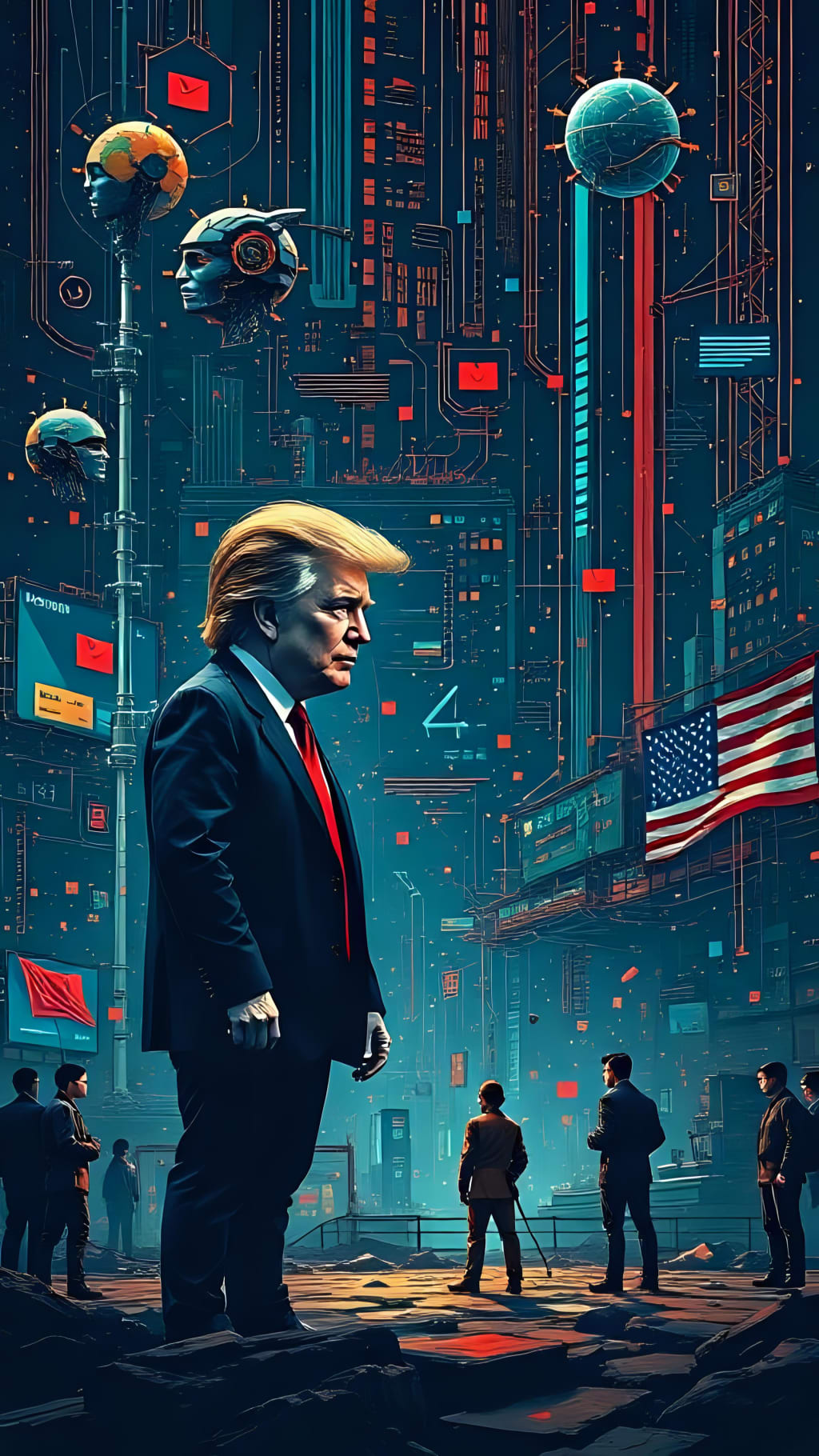
In July 2025, former U.S. President Donald Trump, during a high-profile AI Summit in Washington, D.C., made a bold call for American technology companies to prioritize U.S. workers over foreign labor, particularly from countries like India and China. This directive was part of a broader push to enhance American dominance in artificial intelligence (AI) and secure economic and national security through domestic innovation and job creation. Trump’s remarks, coupled with three executive orders and an “AI Action Plan,” underscored his administration’s focus on reshaping the tech industry’s labor practices, reducing reliance on global outsourcing, and fostering a nationalist approach to technological development. This essay explores the context, implications, and potential impacts of Trump’s demands, analyzing the motivations behind his policies, the economic and geopolitical factors at play, and the broader consequences for the tech industry, American workers, and global markets.Context and BackgroundTrump’s statements came at a time when the U.S. was engaged in a fierce global race to lead in AI, a technology with profound implications for economic competitiveness, national security, and societal transformation. The AI Summit, co-hosted by the Hill and Valley Forum and the “All-In” podcast, brought together tech industry leaders, policymakers, and Trump administration officials to discuss strategies for advancing U.S. AI capabilities. Trump’s remarks targeted major tech giants like Google, Microsoft, Meta, and Amazon, accusing them of pursuing “radical globalism” by outsourcing jobs to countries like India and China while benefiting from American freedoms and markets. He argued that this practice had left millions of Americans feeling “distrustful and betrayed,” emphasizing the need for “patriotism and national loyalty” from Silicon Valley.
The backdrop to Trump’s demands is rooted in decades-long concerns about outsourcing in the tech industry. American companies have historically relied on foreign labor, particularly through programs like the H-1B visa, to fill specialized roles in software development, engineering, and AI research. Countries like India have been major beneficiaries, with Indian IT professionals constituting a significant portion of the U.S. tech workforce. Trump’s critique aligns with his broader “America First” agenda, which seeks to prioritize domestic job creation and reduce dependence on foreign labor and manufacturing. His administration’s actions build on earlier policies, such as the 2019 executive order on “Maintaining American Leadership in Artificial Intelligence,” which emphasized AI innovation rooted in American values and economic priorities.
The Executive Orders and AI Action PlanAt the AI Summit, Trump signed three executive orders aimed at bolstering U.S. AI leadership while addressing labor and regulatory concerns:Expediting AI Infrastructure Development: This order focuses on streamlining permitting processes for AI-related infrastructure, such as data centers and supercomputers. By revising regulations like the National Environmental Policy Act (NEPA), the administration aims to reduce compliance costs and accelerate construction, addressing the massive energy demands of AI systems.
Boosting Exports of U.S.-Made AI Technologies: The second order promotes the export of American AI tools to allied nations, positioning the U.S. as a global leader in secure-by-design AI solutions. This includes leveraging institutions like the International Development Finance Corporation and the Export-Import Bank to facilitate market access for U.S. firms.
Banning Federal Procurement of Biased AI Systems: The third order prohibits federal agencies from contracting with AI companies whose systems exhibit “partisan bias,” defined as promoting ideologies like diversity, equity, and inclusion (DEI), critical race theory, or other progressive frameworks. This reflects Trump’s broader cultural critique of “woke AI” and aims to ensure AI models align with what he describes as “American values.”
The accompanying “AI Action Plan” further outlines a deregulatory framework to foster innovation, reduce bureaucratic barriers, and prioritize American job creation. It calls for a single federal standard for AI regulation, limiting state-level laws deemed “burdensome” to the industry. The plan also emphasizes countering China’s growing influence in AI, criticizing previous restrictions on AI exports under the Biden administration as overly restrictive and alienating to U.S. allies.
Motivations Behind the PolicyTrump’s demand for tech firms to prioritize U.S. AI jobs is driven by a combination of economic, political, and geopolitical factors:Economic Nationalism: Trump’s “America First” philosophy seeks to revitalize domestic industries by bringing jobs back to the U.S. The tech sector, a cornerstone of the American economy, is seen as a critical battleground. By pressuring companies to hire locally, Trump aims to create high-paying jobs, particularly in AI-related fields like data science and engineering, which are projected to grow significantly. For instance, the Stargate initiative, a private-sector-led project involving OpenAI, SoftBank, and Oracle, is expected to create over 100,000 jobs through a $500 billion investment in AI infrastructure.
Geopolitical Competition: The global AI race, particularly against China, is a central concern. Trump’s policies aim to counter China’s state-driven AI model by accelerating U.S. innovation and restricting Chinese access to advanced AI technologies, such as chips and foundation models. This includes closing loopholes that allow Chinese firms to use U.S.-based cloud computing services for AI development.
Political Appeal: Trump’s rhetoric resonates with his political base, which has long viewed globalization and outsourcing as threats to American workers. By targeting tech giants and their reliance on foreign labor, Trump taps into populist sentiments, positioning himself as a defender of the American workforce against corporate elites. His criticism of “radical globalism” and calls for patriotism appeal to voters disillusioned with the tech industry’s practices.
Implications for the Tech IndustryTrump’s demands pose both opportunities and challenges for U.S. tech companies:Opportunities: The deregulatory approach and expedited permitting processes could reduce costs and accelerate the development of AI infrastructure. Companies like Microsoft and Amazon, which dominate the cloud computing market, stand to benefit from increased investment and relaxed environmental regulations. The focus on exports also enhances their global competitiveness, particularly in emerging markets.
Challenges: The push to prioritize U.S. workers could strain companies reliant on foreign talent. The H-1B visa program, which Trump’s administration has targeted for restrictions, is a critical pipeline for skilled workers in AI and tech. Reducing access to this talent pool may lead to labor shortages, higher costs, and delays in innovation. Additionally, the ban on “biased” AI systems could complicate federal contracts for companies like OpenAI and Google, requiring them to adjust their models to meet vague standards of impartiality.
Impact on American WorkersThe policy’s focus on domestic job creation could benefit American workers in the short term, particularly those with skills in AI, data science, and engineering. The Stargate initiative and other investments promise thousands of high-paying jobs, including blue-collar roles in data center construction and maintenance. However, the tech industry’s reliance on foreign talent suggests that a sudden shift away from outsourcing could create gaps in the workforce, as the U.S. struggles to produce enough qualified professionals to meet demand. Critics argue that Trump’s immigration policies, including restrictions on H-1B visas, may exacerbate these challenges by limiting access to global talent.
Global and Environmental ConcernsTrump’s policies have sparked concerns about their global and environmental implications. The emphasis on fossil fuels to power AI data centers, including a $70 billion investment tied to oil and gas, has drawn criticism from climate advocates who argue it undermines efforts to combat global warming. The United Nations has called for tech firms to transition to renewables by 2030, a goal at odds with Trump’s strategy.
Internationally, the push for U.S.-made AI exports and restrictions on foreign labor could strain relations with allies like India, a key partner in tech outsourcing. The European Union’s stricter AI regulations, such as the AI Act, may also create friction with Trump’s deregulatory approach, potentially limiting U.S. firms’ access to European markets.
About the Creator
Keep reading
More stories from Faheem ullah and writers in Writers and other communities.
"Defiant Hearts: The Tragic Love Story of Sheetal and Zarak"
The tragic love story of Sheetal and Zarak, a young couple from Balochistan, Pakistan, is a harrowing tale of love, defiance, and the brutal consequences of challenging deeply entrenched cultural norms. Their story, which unfolded in a remote area of Balochistan and culminated in their execution in July 2025, has become a symbol of resistance against the pervasive issue of honor killings in parts of South Asia. Drawing from various sources, including news reports and social media discussions, this narrative reconstructs their story, contextualizes the cultural and social forces at play, and reflects on the broader implications of their deaths. The Love Story of Sheetal and Zarak Sheetal, a 24-year-old woman, and Zarak, a 32-year-old man, were members of different sub-clans within Baloch tribal communities in Balochistan, a region known for its rugged terrain and deeply rooted tribal traditions. The couple fell in love and chose to marry by their own will, an act that, in many parts of the world, is celebrated as an expression of personal freedom and partnership. However, in their community, a love marriage—referred to as "pasand ki shadi" (marriage by choice)—was viewed as a direct affront to family and tribal honor, particularly when it defied arranged marriage norms dictated by patriarchal structures. Their marriage, which took place approximately two years before their deaths, was conducted lawfully through a Nikah, an Islamic marriage contract, which Sheetal later defended in her final moments by declaring, "I have performed Nikah, I have not committed Zina" (Zina referring to illicit sexual relations in Islamic law). This statement underscored their commitment to each other within the bounds of their faith, emphasizing that their union was legitimate and not a transgression. Yet, their decision to marry for love enraged Sheetal’s family and tribal elders, who saw it as a violation of their authority and a stain on their collective honor. The Deception and the Execution After their marriage, Sheetal and Zarak faced ongoing tension with their families, particularly Sheetal’s, who viewed their union as an unforgivable act of rebellion. In a deceptive gesture of reconciliation, the couple was invited to what was described as a family gathering, ostensibly to resolve disputes. Instead, this was a calculated trap orchestrated by a tribal jirga, an informal council of male elders that holds significant sway in rural Balochistan, often operating outside Pakistan’s formal legal system despite being declared illegal by the Supreme Court in 2004 for settling criminal cases. The couple was taken to Chittail Maidan, a barren, desolate field in a remote mountainous area of Balochistan, far from the reach of immediate legal intervention. Here, they were surrounded by 19 armed men, including five with loaded guns, in a convoy of vehicles. Among them were Sheetal’s relatives—fathers, brothers, uncles, and cousins—who had gathered to carry out the jirga’s verdict. The scene was one of chilling premeditation, with the couple isolated and defenseless. Sheetal, holding a Quran, walked toward what she knew was her place of execution, displaying extraordinary courage in the face of certain death. In her final moments, Sheetal’s defiance shone through. According to reports, she faced her killers without pleading for mercy, stating, “You only have permission to shoot. Do not touch my body.” This powerful declaration, captured in a viral video that later sparked national outrage, was both an assertion of her bodily autonomy and a condemnation of the violence about to be inflicted upon her. She was shot nine times, her life extinguished in a hail of bullets that stripped away her love, dignity, and existence. Zarak, his hands tied, was next, enduring 18 bullets in a prolonged and brutal execution, seemingly intended as a warning to others who might dare to follow their path. Cultural and Social Context The murder of Sheetal and Zarak is a stark illustration of the honor killing crisis in Pakistan, particularly in Balochistan, where tribal customs often supersede national law. Honor killings, as noted in a 2023 Human Rights Watch report, claim an estimated 1,000–1,500 lives annually in Pakistan, though the actual number is likely higher due to underreporting. These acts are frequently tied to cultural notions of family honor, especially in rural and tribal areas, where love marriages challenge patriarchal control over family alliances. Women, in particular, bear the brunt of this violence, as their choices are seen as direct threats to male authority. The concept of “honor” in this context is deeply rooted in tribal traditions that prioritize collective reputation over individual rights. A love marriage, especially one that defies family approval, is perceived as a betrayal that dishonors the entire clan. The jirga’s decision to execute Sheetal and Zarak was not merely a punishment for their actions but a public reassertion of tribal authority, intended to deter others from similar acts of defiance. The use of a “razinama” (compromise agreement), mentioned in some accounts, highlights a troubling legal loophole in some regions, where families settle murder cases through private agreements, often evading significant legal consequences. Sheetal’s final words, “You only have permission to shoot,” have resonated widely, becoming a symbol of resistance against this oppressive system. Her statement, coupled with her assertion of a legitimate marriage, challenged the false narrative of immorality used to justify their killings. The video of the incident, which circulated widely on social media, exposed the brutality of the act and sparked a national conversation about the clash between traditional norms and individual freedoms. Aftermath and Public Response The viral video of Sheetal and Zarak’s execution, which surfaced around Eid ul Azha in 2025, triggered widespread outrage across Pakistan. The footage, showing the couple surrounded by armed men speaking Brahui, brought renewed attention to the crisis of honor-based violence. Balochistan’s Chief Minister, Sarfraz Bugti, responded by ordering immediate action, and a terrorism case was filed against the perpetrators, with the state acting as the complainant due to the reluctance of local families to come forward. One suspect was arrested, and 11 others, including a tribal leader, were detained by the Levies and Counter-Terrorism Department, with more arrests expected. The public response, amplified by social media, framed Sheetal’s defiance as a powerful rebuke of the “rotten system” of tribal justice. Activists and commentators highlighted her courage, with posts on X comparing their story to tragic love tales like Sohni and Mahiwal, suggesting that their love would endure in collective memory despite their deaths. The incident has reignited debates about the need for stronger legal enforcement against jirgas and the cultural practices that perpetuate honor killings. Broader Implications The story of Sheetal and Zarak is not an isolated tragedy but a reflection of systemic issues in regions where tribal councils wield unchecked power. The persistence of jirgas, despite their illegality, underscores the state’s struggle to assert legal authority in remote areas where tribal loyalties dominate. The case also highlights the gendered nature of honor-based violence, with women like Sheetal facing disproportionate punishment for exercising agency over their lives. Comparisons to historical love stories, such as Layla and Majnun, reveal a recurring motif of forbidden love punished by societal norms. Unlike the poetic romance of Layla and Majnun, however, Sheetal and Zarak’s story is grounded in a brutal reality, where love is met with violence rather than mystical longing. Their deaths serve as a stark reminder of the need for cultural and legal reforms to protect individual rights, particularly for women, in the face of entrenched patriarchal traditions. Conclusion Sheetal and Zarak’s love story is a testament to the power of love and the devastating consequences of defying rigid cultural norms. Their choice to marry for love was an act of courage in a society where such decisions are often met with violence. Sheetal’s final stand—holding the Quran, asserting her marital rights, and demanding respect for her bodily autonomy—challenges the hypocrisy of those who kill in the name of honor. Their deaths, captured in a haunting video, have sparked a national reckoning, demanding justice and reform. As their story echoes across Pakistan and beyond, it leaves behind a legacy of resistance and a call to dismantle the systems that equate love with dishonor.
By Faheem ullah8 months ago in Humans
March 15, 2026
Merriam Webster - Word of the day: Tranche refers to a division or portion of a whole. World Contact Day is commemorated every year on March 15. It is a unique observance held globally to focus on communicating with extraterrestrial life and exploring the possibility that intelligent beings may exist beyond Earth. World Contact Day inspires people to invoke their curiosity and spend time thinking about the universe and the mysteries surrounding it. What is the “Ides of March”? According to the Roman calendar, the Ides are a monthly occurrence. In March and other months with 31 days, the Ides always falls on the 15th; it falls on the 13th in months with 30 days. The Ides traditionally marked the arrival of the new Moon and was cause for celebration. The word “Ides” is derived from Latin, meaning “to divide.” Mothering Sunday in 2026 falls on Sunday, March 15. Mothering Sunday, celebrated in the United Kingdom and Ireland, occurs on the fourth Sunday of Lent, which is exactly three weeks before Easter. Unlike the fixed-date Mother's Day in countries like the United States, Canada, and Australia, Mothering Sunday’s date changes each year according to the Christian liturgical calendar. On March 15, 2026, several notable observances and events are celebrated: Dumbstruck Day: A day to express frustration. Everything You Think is Wrong Day: A day to challenge and celebrate wrong beliefs. International Day Against Police Brutality: A day to raise awareness and advocate against police violence. My look at today, March 15, 2026 below:
By Denise E Lindquistabout 19 hours ago in Writers
Your Partner Doesn't Understand Your Writing Life. That's Okay.
My partner has never read 1 Lovelock Drive. Not because he doesn't care, but because I asked him not to. The book draws from personal experience and the thought of him reading certain scenes, knowing which emotional truths came from our life and which were invented, felt like standing naked in the kitchen during breakfast.
By Ellen Frances5 days ago in Writers



Comments
There are no comments for this story
Be the first to respond and start the conversation.