
BEYOND SILENCE: TOWARDS A FEMINIST CRITIQUE OF HISTORICAL NARRATIVES
Understanding power dynamics within society requires a critical analysis of historical and cultural narratives that often exclude or marginalize women’s experiences. It is essential to recognize that the stories told and the voices heard in constructing cultural identities are not neutral; rather, they reflect a series of patriarchal power structures. A leading figure in this field is an intellectual who has dedicated their career to examining how gender relations influence knowledge production and historical construction. They highlight the need to question traditional sources of knowledge and challenge the often implicit assumptions dominating historical narrative. This critical approach aligns with thinkers such as Judith Butler, who, in her book *Gender Trouble* (1990), proposes that gender is not a fixed reality but a social construct, a set of practices that can be reshaped and rewritten. Women’s voices, often silenced in historical narratives, are essential for a fuller understanding of society.
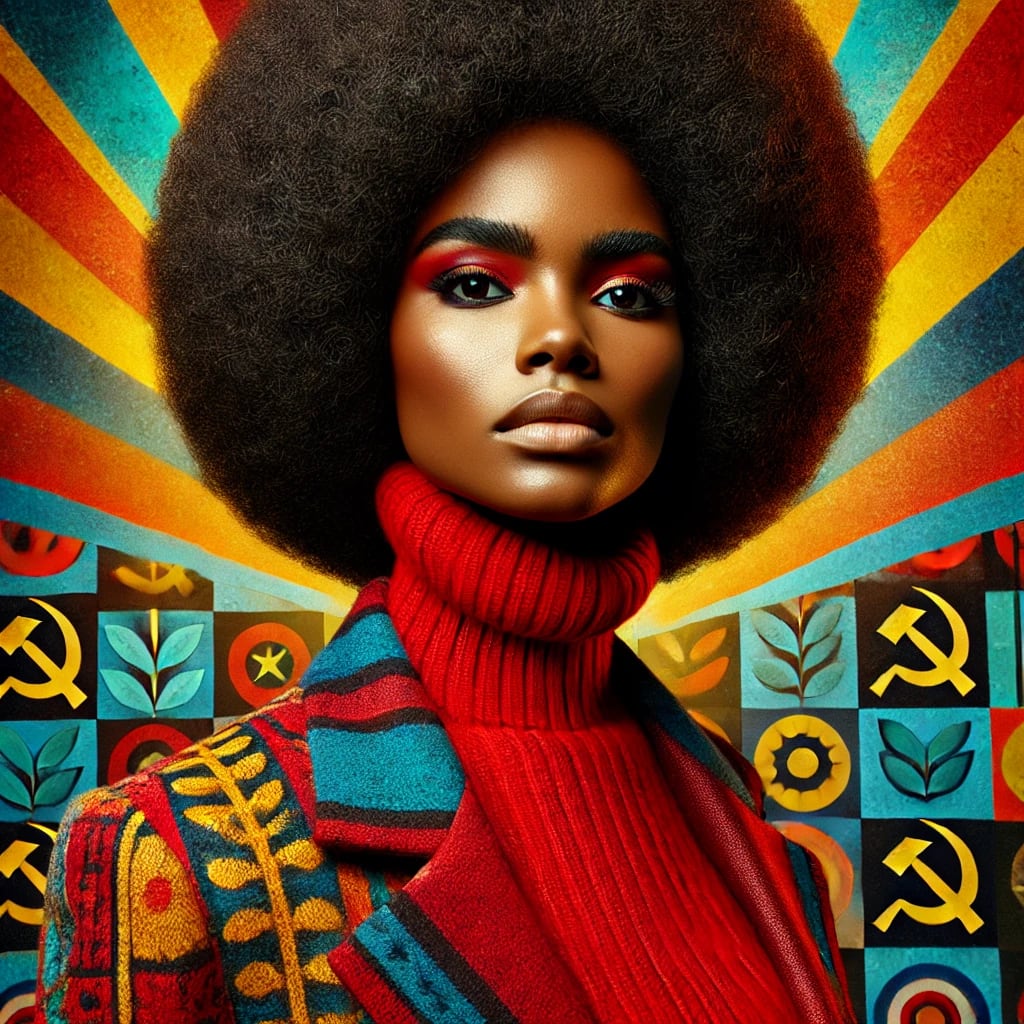
Recovering these experiences and integrating them into official accounts not only enriches our understanding of history but also reveals how women have actively participated in movements for civil and social rights. For instance, Angela Davis's book *Women, Race, & Class* (1981) examines the crucial role that women of color played in the suffrage movement, highlighting intersections between gender, race, and class.
Furthermore, it is necessary to consider the role of social movements and feminist organizations in constructing alternatives to dominant narratives. Women have not merely endured injustice passively; they have fought for visibility and recognition of their rights. Authors like bell hooks, in her essay *Ain't I a Woman?* (1981), discuss how African American women have faced dual oppression, both as women and as people of color, and how their experiences have been overlooked in both feminist and racial discourses.
In this context, it is crucial not only to question existing power structures but also to broaden the scope of inclusion. Feminist proposals should not be viewed as mere calls for greater representation but as tools for social transformation that seek to dismantle oppressive hierarchies. Feminist analysis must embrace a plurality of voices, recognizing the diversity of experiences among women of different ethnicities, classes, and cultural backgrounds.
Feminist critique must also question how women are represented in the media and popular culture, pushing for more authentic and less stereotyped portrayals. Laura Mulvey’s work, *Visual and Other Pleasures* (1989), analyzes how traditional cinema has constructed a visual narrative that objectifies women, urging a reinterpretation of representational models.
In summary, achieving true social justice requires an inclusive approach that embraces the experiences of women and minorities, breaking away from the traditional narratives that have dominated to date. Only through critical analysis and valuing diverse voices can we hope to build a more just and equitable society, where every individual has the right to be heard and respected.
**Bibliography**
- Davis, Angela. *Women, Race, & Class*. Random House, 1981.
- Hooks, Bell. *Ain't I a Woman? Black Women and Feminism*. South End Press, 1981.
- Mulvey, Laura. *Visual and Other Pleasures*. Palgrave Macmillan, 1989.
About the Creator
Keep reading
More stories from Maddalena Celano and writers in Pride and other communities.
The Feminine Exiled, Exploited, and Violated in the Name of “Sacred” Obedience: A Typically “Catholic” Problem
Clarifying Preamble Although I grew up in a Catholic family, I never truly felt part of that tradition. From a young age, I perceived Catholicism not as a living spiritual inheritance, but as a closed institutional system—strongly exclusionary, subordinated to established power, and steeped in a clerical patriarchy that suffocates rather than guides. An authority that doesn’t forge but weakens, that doesn’t accompany but crushes.
By Maddalena Celano6 months ago in Pride
“Friendship or Kindness”
The Court of Satan They were all five standing with their heads bowed. Satan’s disciples had captured them and brought them before the court of Satan. All five were confused, wondering what crime had led them to this dark place. The courtroom was silent, except for the occasional sinister laugh echoing from behind a black curtain.
By Sudais Zakwan5 days ago in Pride
Center Stage with Paul Stewart
*** I'm keen to republish the interviews I did for my series with Vocal creators. It's been a few years and I thought it might be nice to revisit these wonderful conversations. I'll be releasing them one at a time for a few weeks/months.
By Heather Hubler4 days ago in Interview



Comments
There are no comments for this story
Be the first to respond and start the conversation.