
Is femboy a slur
Is "Femboy" a Slur? Understanding the History, Debate, and Respectful Use


In the ever-evolving landscape of gender identity and expression, language becomes a powerful, and often contentious, battleground. The term "femboy" has surged in popularity across internet culture, fashion, and social media. Yet, a critical and emotionally charged question persists: Is "femboy" a slur? The answer is not a simple yes or no, but a nuanced exploration of context, intent, community reclamation, and the critical difference between self-identification and labeling others.
Deconstructing the Term: What Does "Femboy" Mean?
At its most literal, "femboy" (a portmanteau of "feminine" and "boy") describes a person, typically one who identifies as male or was assigned male at birth, who expresses their gender in ways traditionally coded as feminine. This can encompass clothing, makeup, mannerisms, and aesthetics. The term generally implies a deliberate and joyful embrace of femininity as part of one's gender presentation, distinct from being a transgender woman. For many, it's a specific and valid identity under the broad umbrella of gender non-conformity.

The Historical Shadow: Origins as a Weapon
To understand the slur debate, we must confront the term's problematic past. Long before its modern, self-identifying usage, "femboy" and similar phrases existed in online fetish communities and, more damagingly, as a pejorative used to bully, demean, and harass. It was wielded against gay men, transgender women, and any person perceived as violating rigid masculine norms. It was a word charged with mockery, often linking femininity in men/boys with weakness or absurdity.

This history is not ancient; it's living memory for many in the LGBTQ+ community. For some, hearing "femboy" instantly recalls a time of trauma, bullying, or invalidation. This is the core of the argument for viewing it as a slur: its use as a tool of oppression.
The Power of Reclamation: Owning the Label
However, language is dynamic. A central tenet of LGBTQ+ history is the reclamation of slurs as acts of empowerment. Words like "queer," once purely hateful, have been reclaimed by vast segments of the community as a proud, unifying identifier. A similar process is underway with "femboy."

Over the past decade, primarily through online platforms like TikTok, Reddit, and Instagram, individuals began adopting "femboy" for themselves. They built communities, shared fashion tips, and discussed their experiences, stripping the term of its derogatory power and infusing it with pride, solidarity, and a distinct identity. For these individuals, "femboy" is not a slur it is an accurate and affirmative description of who they are.
The Crucial Divide: Identity vs. Label
This brings us to the most important distinction in this debate: self-identification versus external labeling.
As a Self-Identity: When a person chooses to call themselves a femboy, it is an act of autonomy. It is valid, empowering, and should be respected.
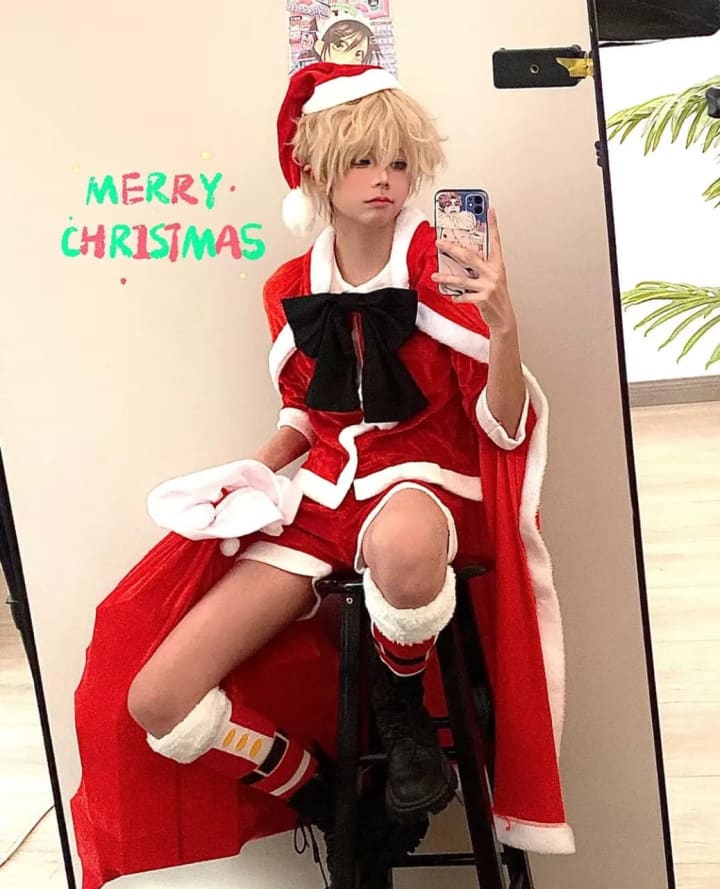
As an External Label: When someone assigns the term "femboy" to another person without their consent, it veers into dangerous territory. You are making an assumption about their gender identity, their expression, and their preferred terminology. This is especially harmful when applied to transgender women, as it can be used to misgender and invalidate their identity (implying they are merely "feminine men").
Calling a transgender woman a "femboy" is unequivocally a slur and an act of transphobia.
The Transgender Community's Valid Concerns
The friction often arises at the intersection of the femboy identity and the transgender community. Some transgender women express discomfort with the term, as it can blur lines for outsiders and potentially fuel misunderstanding about what it means to be trans. The concern is that a culture increasingly familiar with "femboys" might mistakenly conflate them with transgender women, reducing womanhood to mere presentation.

This is not a condemnation of femboys, but a plea for clarity, education, and respect for boundaries. It highlights why context and individual preference are paramount.
So, Is It a Slur? A Situational Answer
The verdict is entirely situational:
YES, it can be a slur when:

It is used to insult, bully, or degrade someone.
It is assigned to someone without their consent.
It is deliberately used to misgender a transgender woman or non-binary person.
It is spoken with malicious or fetishizing intent.
NO, it is not a slur when:
An individual proudly uses it to describe their own gender expression and identity.
It is used within consenting communities where the meaning is mutually understood and affirmed.
It is discussed in a respectful, educational context (like this article).
About the Creator
David Femboy
David here. Sharing my authentic femboy journey the outfits, the lessons, the life. For anyone exploring gender expression. Let’s redefine masculinity together. 💖
Keep reading
More stories from David Femboy and writers in Pride and other communities.
Is astolfo a femboy
In the vast and colorful world of anime, few characters spark as much curiosity and debate as Astolfo from the Fate series. With their cheerful personality, knightly valor, and unmistakably feminine presentation, a single question perpetually follows them: Is Astolfo a femboy?
By David Femboy3 months ago in Pride
The Pride Flag and the Diversion
For nearly a decade, the LGBTQIA Pride Flag rippled in the wind at Christopher Park, a kaleidoscope of color staked into the soil of America’s first national monument to LGBTQIA+ liberation. That flag came down this week. Federal officials, citing new guidance from the Trump Administration, silently lowered the rainbow flag from its pole across the street from the Stonewall Inn. The birthplace of the modern gay rights movement now flies only the United States flag.
By Tim Carmichael24 days ago in Pride



Comments
There are no comments for this story
Be the first to respond and start the conversation.