
Intervention
live like you were dying
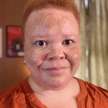


A maxim I live by is to give people their flowers while they're still alive.
One of the greatest influences I have had in my life was a man named Chris Hallam. "Hallam," as I knew him, offered friendship and guidance at a critical point in my life. His time and energy were more than I ever deserved.
This is how I met Hallam.
In my final year of college at The Ohio State University in the early 2000s, I was a resident advisor in student housing for the second year in a row. My previous year as an RA was admittedly shaky, with extreme social anxiety and awkwardness making me less than popular with my residents and barely decent at my job. It was a miracle I was even invited back.
Also, I was a committed evangelical Christian, having been "born again" my very first week at the university. The evangelicalism I bought into was charismatic and fairly conservative, though tempered slightly by the reality of attending a public university. Within my first three years, I became a student officer in campus ministry and was a member of a nearby storefront church. Needless to say, I was quite immersed in evangelical culture at the time.
While I was hardcore about loving God, following Jesus, and doing what I believed was right, I struggled with some concepts of my chosen faith. One of these was how to respond to LGBTQ+ people.
See, I empathized with the idea that people don't ask to love who they love or identify with a gender not assigned at birth. I even dated someone in high school who later turned out to be gay. Repression doesn't make someone straight, and I knew that all too well.
On the other hand, I was aware that my faith, as it had been taught to me, was homophobic and transphobic. Of course, that was not how we presented it, but that's what it was. And I was in a faith tradition that was not receptive to independent thought, especially not from a twenty-something black woman.
At the beginning of my fourth and final year at OSU, I was assigned the same building and floor as I had the year before. As someone who struggled with change, it was a bit of a relief. Our hall director would also remain the same, which I was thankful for as we got along well.
But there would be changes. My coworkers would be changing. Also, the assistant hall director from the year before had taken a position at another university, so we were assigned a new one.
Prior to residents moving into the halls, we had two weeks of RA training. The first few days of training, we hung out as a group. Hallam, our new AHD, was outgoing and interesting. Only two years my senior, his energy was magnetic, and he was quite fun to be around.
I remember him driving us around in his car on a sunny September day. We were on our way to some training event on the other side of campus. The windows were down and the cool breeze felt wonderful. We were all just chatting about anything and everything.
During training, each staff member introduced themselves, sharing interests and facts about themselves that they found important. When it was my turn, I shared that I was a "born-again" Christian and involved in campus ministry.
That evening, once the workshops and team activities were over and we retired to our dorm rooms, I got a visitor. Hallam came to my open door and sat on the floor in the doorway.
He said, "When you said earlier that you're a born-again Christian...at first it made me feel uncomfortable."
The reason was that he was gay.
He was open about his sexual orientation and shared this earlier in our training. On my end, though, it was a revelation I didn't think too much about. As far as I was concerned, being an RA was a job, and I understood that proselytizing at work was a boundary I should not cross. I had been assigned gay residents, and been around other gay people. Their presence didn't bother me, and I never pushed my beliefs onto them.
He then asked, "When I mentioned that I'm gay, did that bother you?"
I answered, "No."
Honestly, it didn't. But as we continued to talk, I shared my beliefs that were not so tolerant of gay people, but of course, "Love the sinner, hate the sin."
Looking back with over twenty years of hindsight, this conversation may have been ill-advised. For him, to disclose his personal feelings to a junior colleague about their religion may be considered unprofessional. For me, to share that some of my beliefs were intolerant would make me unsafe, given my role.
But that night, none of that was a consideration. Hallam met me where I was, and we were honest with each other from the beginning. And this honesty built the foundation of a friendship that changed my life.
Early into the school year, my hall director, receiving a once-in-a-lifetime professional opportunity, went on a temporary leave of absence that lasted several months. This left Hallam as the acting hall director for most of the year. That meant that he was now my supervisor, and we would interact more often.
Over the course of the year, we took the opportunity to ask each other meaningful questions, share details about each other's lives, and just have fun together.
A lot of the specifics are lost to time, but as the late poet Maya Angelou once said:
I've learned that people will forget what you said, people will forget what you did, but people will never forget how you made them feel.
Hallam showed me two important things - one at the time, and one much, much later.
First, I learned what allyship looks like. Allyship is a process, not an identity. It's not something we are, it's something we do. It's a moving target, and we don't always get it right. That's okay. The important part is being open to being wrong and making honest and deliberate efforts to do better. Allyship is not about ourselves.
I wish I could say that after graduation and entering a PhD program at another institution, my thoughts completely changed. That wasn't the case, at least not right away. Disavowing my regressive beliefs was a process a few more years in the making. But my friendship with Hallam was a turning point - an intervention - that set me in the right direction. Eventually, I no longer believed that being LGBTQ+ was a sin.
When some of my family and friends began coming out, I fully accepted them as they were. It didn't take them coming out for me to change my mind, I was already there, and in large part, I have Hallam to thank for that. I also have him to thank for the amazing people that are in my life now.
That said, their coming out was the final straw that led to my deconstruction from evangelicalism. While I still consider myself a Christian, it's a reconstructed Christianity that looks a lot different than it once did. It's one of affirmation and service, rather than one of intolerance and marginalization. These days, I can’t imagine cosigning to the type of faith that bears the “rotten fruit” of othering others. And I can't be a part of an institution that does not also welcome and affirm them wholeheartedly.
I ran into Hallam a couple of times over the years and kept in touch on social media. In the intervening time, he moved on to an institution close to where I now lived, promoted to associate director of housing. I was happy for him - he more than earned it.
Once, when seeing him out and about, we had a chance to chat briefly and catch up. He told me that he had fought skin cancer, but it was in remission.
Some time later, though, the cancer returned. It was aggressive and it became terminal.
When learning of Hallam's terminal illness, I reached out to him and told him how many years previously, he truly changed my life, and how thankful I was to know him. He appreciated me reaching out and letting him know, as it lifted his spirits.
The second thing he showed me is how to live a life that makes others remember you fondly. He showed me how to make a real difference in other people's lives - how to make such an outsized impact on this planet in half the time the average human gets. He lived as if he were dying before that became his reality.
Chris Hallam died in July 2019, at only forty years old, after a valiant battle with cancer.
He gave of himself to so many folks he came across, and the loss was truly felt far and wide. Yet, his spirit lives on in those of us who had the good fortune to know him.
About the Creator
Jaye Pool
Jaye Pool is a short story writer and the author of indie exvangelical litfic novels Make Me Free and To Die Is Gain. Subscribe to her newsletter here. She is also the creator & host of Potstirrer Podcast.
Reader insights
Nice work
Very well written. Keep up the good work!
Top insights
Easy to read and follow
Well-structured & engaging content
Eye opening
Niche topic & fresh perspectives
Excellent storytelling
Original narrative & well developed characters
Compelling and original writing
Creative use of language & vocab
Heartfelt and relatable
The story invoked strong personal emotions
On-point and relevant
Writing reflected the title & theme
Expert insights and opinions
Arguments were carefully researched and presented
Masterful proofreading
Zero grammar & spelling mistakes
The Pride Flag and the Diversion
For nearly a decade, the LGBTQIA Pride Flag rippled in the wind at Christopher Park, a kaleidoscope of color staked into the soil of America’s first national monument to LGBTQIA+ liberation. That flag came down this week. Federal officials, citing new guidance from the Trump Administration, silently lowered the rainbow flag from its pole across the street from the Stonewall Inn. The birthplace of the modern gay rights movement now flies only the United States flag.
By Tim Carmichael21 days ago in Pride


Comments (8)
What a beautiful tribute, Jaye. I think stories like these are so important, how people can have an impact on others, even just with the conversations we have. Kindness truly rules all ❤️ Amazing story ❤️❤️ [4/5]
It’s so important to appreciate people while we can. Hallam sounds like an amazing friend who made a real difference in your life.
I truly enjoyed everything you said in this story.
Good organization of the piece!
I was very moved by your candor and Hallam's story. Your story gives hope that goodness and allyship are possible to obtain despite so much adversity and strife in this world. Namaste
well done
Great story and love the maxim
That's such a beautiful memorial in words. I am sure he loves that. I'm happy to subscribe to your work. Peace.