
The Lion and the Lamb
A Tale of Unexpected Friendship

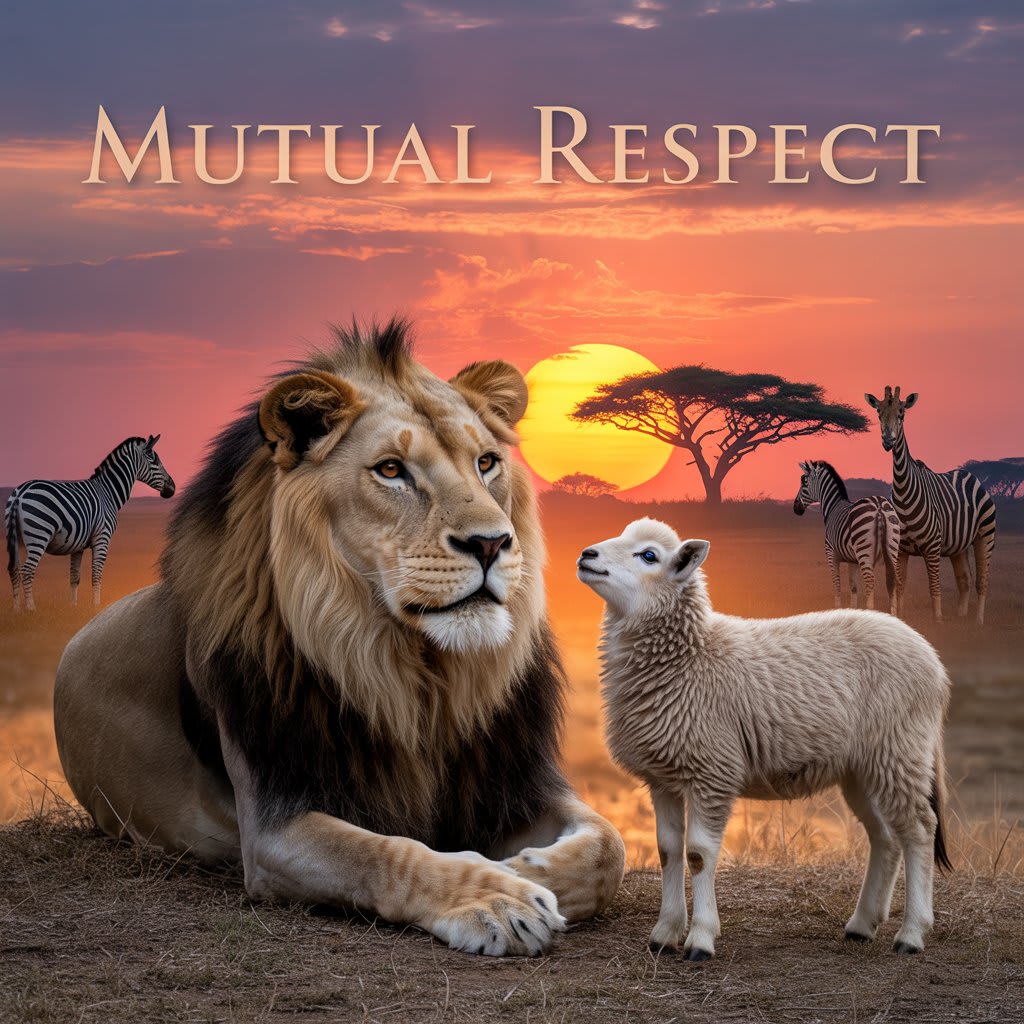
In the heart of the vast African savannah, where the sun painted gold across the tall grasses and the winds whispered through the trees, lived a lion named Kumo. He was the strongest and most feared creature in the region—his roar could silence the sky, and his shadow made even the boldest animals freeze.
Kumo was not cruel, but he was a predator. He hunted to survive, ruled his territory with strength, and trusted no one. The animals respected him, but none dared get close. Solitude was the way of kings, he believed.
In a quiet corner of that same land, near a hill covered with wildflowers, lived a young sheep named Luma. She was gentle, soft-spoken, and curious beyond reason. While the other sheep stayed within their herds, wary of the dangers that roamed beyond the hills, Luma often wandered off—drawn by the rustling trees, the fluttering birds, and the mystery of the world.
One morning, Luma wandered farther than she ever had before. The sun was still low, and a golden haze hung in the air. She found herself in unfamiliar territory, where the grasses grew wild and the earth smelled different.
Suddenly, a low growl froze her in place.
She turned, heart pounding, and saw him—Kumo, the lion, sitting beneath an acacia tree, eyes fixed on her. The air grew still.
“I did not expect breakfast to walk so calmly to my feet,” he rumbled, his voice deep and gravelly.
Luma trembled but stood her ground. “If you must eat me,” she said softly, “at least let me speak my last words.”
Kumo raised a brow. “Speak, then. I rarely grant such mercy.”
Luma took a deep breath. “Why do you hunt us without ever knowing us? I have always wanted to ask a lion that.”
The question was so unexpected, so calm and fearless, that Kumo tilted his head.
“Because I am a lion. And lions eat sheep. That is the order of things.”
“But what if there’s more to life than that order?” Luma asked. “What if we spoke first? What if we shared the sun and the grass before the fear came?”
Kumo said nothing at first. No one had dared speak to him this way. No one had seen him as anything more than a beast of muscle and claws.
“Go,” he said finally. “Before I change my mind.”
And so Luma left—slowly, cautiously—but she turned back once, smiled, and nodded her head in gratitude.
Over the weeks that followed, Luma returned to that tree, always at a safe distance. At first, Kumo ignored her. But slowly, they began to speak.
They spoke of the stars, the wind, the patterns of the birds. Kumo told stories of battles and storms. Luma told tales of dreams and songs sung by the hills. They were different in every way—strength and softness, silence and chatter, instinct and wonder—but they listened to each other.
Kumo found himself waiting for her visits. He did not understand why, but the fire of his hunger no longer flared when he saw her. Instead, something else stirred—something quieter. Respect. Curiosity. Even warmth.
The other animals whispered of the lion who no longer hunted like before. Some said he had grown weak. Others feared something unnatural was at play. But neither Kumo nor Luma cared.
Then came the drought.
The grass turned brittle, the waterholes dried, and prey grew scarce. Hunger returned, sharp and cruel. Kumo fought the urge, but his body weakened. He became irritable, distant.
One day, as Luma approached, she found Kumo collapsed beneath the tree, breathing shallowly.
“You need food,” she said, eyes wide with worry. “I’ll find something.”
“There is nothing left,” he murmured. “Perhaps this is the way it ends. A lion, too proud to eat his friend, starves in silence.”
Tears welled in Luma’s eyes. “You won’t die. I won’t let you.”
She ran—not away, but toward the distant lands where she had never dared go. Through thorns and heat and dust, she searched. And after hours, she returned—with berries, roots, and a small bundle of herbs the old goat once said helped sickness.
She placed them before him, and he ate. Slowly, strength returned.
Kumo looked at her, truly looked. “Why would you do this for me? I am the lion. You are the sheep. We are not meant to care for each other.”
Luma smiled through her tears. “Maybe that’s the part we were meant to change.”
Seasons passed. The rains returned. The land healed, and so did the lion.
From that day on, Kumo no longer hunted as he once did. He found new ways to live—slower, wiser ways. And at his side, always, was Luma.
They became a symbol in the savannah—of what could happen when strength listens, and gentleness speaks.
And under that same acacia tree, where predator met prey, a new kind of story was written—not in tooth or hoof, but in trust.
About the Creator
wilson wong
Come near, sit a spell, and listen to tales of old as I sit and rock by my fire. I'll serve you some cocoa and cookies as I tell you of the time long gone by when your Greats-greats once lived.
Keep reading
More stories from wilson wong and writers in Potent and other communities.


Comments
There are no comments for this story
Be the first to respond and start the conversation.