
Cannabis Legalization: A Global Snapshot of Where It Stands and What's Next
Understanding the legal status, trends, and future of global cannabis reform.


Cannabis has been used for hundreds of years. Originally, it was unregulated and only available to those living in areas where it was grown. Advanced commerce and trade expanded cannabis use, leading to more regulation and, in some areas, even criminalization.
It wasn’t until the mid-to-late 2000s that countries started decriminalizing and even legalizing cannabis use. 2018 was a turning point as the WHO began studying cannabis for medical uses. This opened up countries from Europe to South America to relax their stances on cannabis. Today, dozens of nations have either decriminalized or legalized cannabis use in some capacity, and the future for cannabis legalization looks bright.
Different Types of Cannabis
There are two main types of cannabis derived from the Cannabis sativa plant: indica and sativa. Indica is largely known as the calming strain, while sativa is known for its more energizing effects. There are also hybrid strains that combine the two to produce strains that both relax and provide energy. When it comes to legalization, whether items are indica or sativa products has no relevance to their legalization. What often matters more is the CBD or THC content.
CBD Legalization
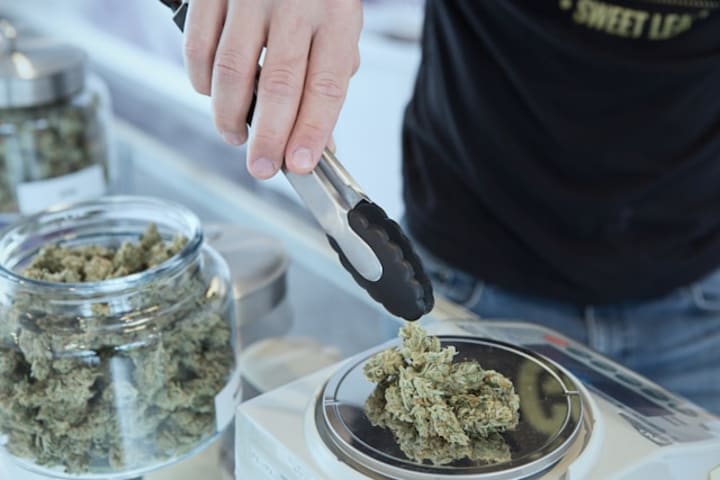
CBD is one of the non-psychoactive cannabinoids found in cannabis. It’s usually extracted as an oil and then added to food, drinks, lotions, and other items. CBD is said to reduce discomfort and inflammation, lessen worries, and improve sleep. Many people think of it as the legal cannabis compound, yet that’s not specifically true nationally or internationally.
In the US, thanks to the 2018 Farm Bill, hemp-derived CBD products containing less than 0.3% THC are legal at the federal level. While many CBD products contain no THC, it’s possible for some to contain more than 0.3%. For that reason, some of these products, such as those derived from marijuana instead of hemp, may be illegal at the federal level. Despite this federal Bill, some states still criminalize all CBD use.
Internationally, CBD products have a similar fate to those in the US. Countries that criminalize marijuana-derived CBD may allow for hemp-derived versions. However, many countries in Asia and Africa, and a handful in South America, outlaw any cannabis use, including all forms of CBD.
Delta-8 THC Legalization
Delta-8 THC is a unique cannabinoid as it’s derived from hemp yet has psychoactive effects. It’s one of over 100 cannabinoids found in cannabis. Unlike CBD, Delta-8 is not extracted directly from the cannabis plant. It begins as hemp-derived CBD and undergoes a process called isomerization to refine and isolate it.
Since Delta-8 is hemp-derived, it’s legal nationally if the product contains less than 0.3% Delta-9 THC. Yet, unlike CBD, Delta-8 is much more restricted on a state-to-state basis. Internationally, Delta-8’s legality ranges from fully legal to decriminalized to illegal. Countries like Luxembourg and Malta are more permissive, while Latin America, Italy, France, and Germany are among the countries that prohibit its use.
THC-A Legalization
Another common cannabinoid with varied legal status is THC-A. Like CBD, THC-A occurs naturally in cannabis, but it requires a careful process for extraction. To extract THC-A, growers must monitor flowers, harvest them at the right moment, and carefully dry and cure them. Although THC-A is non-psychoactive, it becomes psychoactive when heated.
In the US, THC-A has a similar status to Delta-8. At a national level, it’s legal as long as it's hemp-derived and the product contains less than 0.3% THC. Since THC-A is non-psychoactive on its own, some states are more permissive in its use.
Internationally, THC-A is legal in a few countries and decriminalized in others. Most of Europe and a number of countries in North and South America seem open to recreational THC-A use. However, many Middle Eastern and Asian countries still prohibit its use and may even imprison individuals for it.
The Future of Cannabis Legalization
While there is cannabis misinformation both online and offline, campaigns to combat this false information are working. In the US, multiple states have legalized cannabis for medical and recreational use, and more are expected to follow. Public opinion is a major force in this changing tide as more Americans favor legalization. The cannabis industry continues to grow with this growing acceptance as more Americans are buying and using cannabis.
Global cannabis legalization is a more complex future to predict. Many European countries have introduced or passed legislation to legalize its use. Some have even piloted programs to regulate cannabis sales. Some Eastern European countries have also loosened restrictions. However, the international rise of more conservative-leaning leadership threatens that progress.
The state of cannabis today is very different than even ten years ago. In the past decade, there has been substantial progress in legalization. That progress seems to be slowing, but has not stalled. Doors remain open to decriminalization and legalization in many countries, with the prospect of more to follow. Although more incremental, the next five to ten years promise more progress towards global legalization.
About the Creator
Jamie Rooney
Jamie Rooney is a project manager with a passion for alternative health and sexual wellness. When he's not advocating for inclusive sexual health, he's exploring the world of natural remedies and holistic wellness.
Keep reading
More stories from Jamie Rooney and writers in Potent and other communities.
A Guide to U.S. Hemp Laws and Legal Loopholes
Hemp laws in the U.S. keep changing. That makes it hard to keep up, whether you're a consumer, cultivator, or brand. One state welcomes hemp-derived products, while another enforces strict limits. On top of that, federal guidelines don't always line up with what the states allow. It's confusing, yes. And it’s also easy to make the wrong call if you are not paying attention.
By Jamie Rooney9 months ago in Potent
How Can I Stop Receding Hairline
The first time I noticed it, I thought it was the lighting. I was seventeen, standing in the bathroom before school, pushing my hair back the way I always did. The corners at my temples looked… different. Slightly higher. Slightly thinner.
By Emma Smith3 days ago in Potent
The Hidden Power of Mindfulness
Unlocking the secrets of mindfulness Minds race these days- tapping defenses, tangled in studies, caught in what- ifs or what was. Life slips forward into hereafter or back into history, nearly noway staying right then. Only when everything slows does attention settle on now. That settling? It has a name some call awareness. Curiosity grows around it recently- what it really means keeps coming up.
By Abdul Lateefabout 5 hours ago in Potent
Magic
Note from the Author: I want to let you know that this is an unusual story, and it has been written purely from whatever is in my unconscious mind, because before I start writing, I get into a flow state that reaches my unconsciousness. I also write in my subconscious mind, which is like a mid-flow state between the conscious and unconscious mind.
By Denise Larkin6 days ago in Fiction


Comments (1)
Cannabis legalization's evolving. I remember when it was all hush-hush. Now, with different types and CBD regs, it's a whole new ballgame.