
When the World Watched
The George Floyd Moment That Changed America”
Introduction
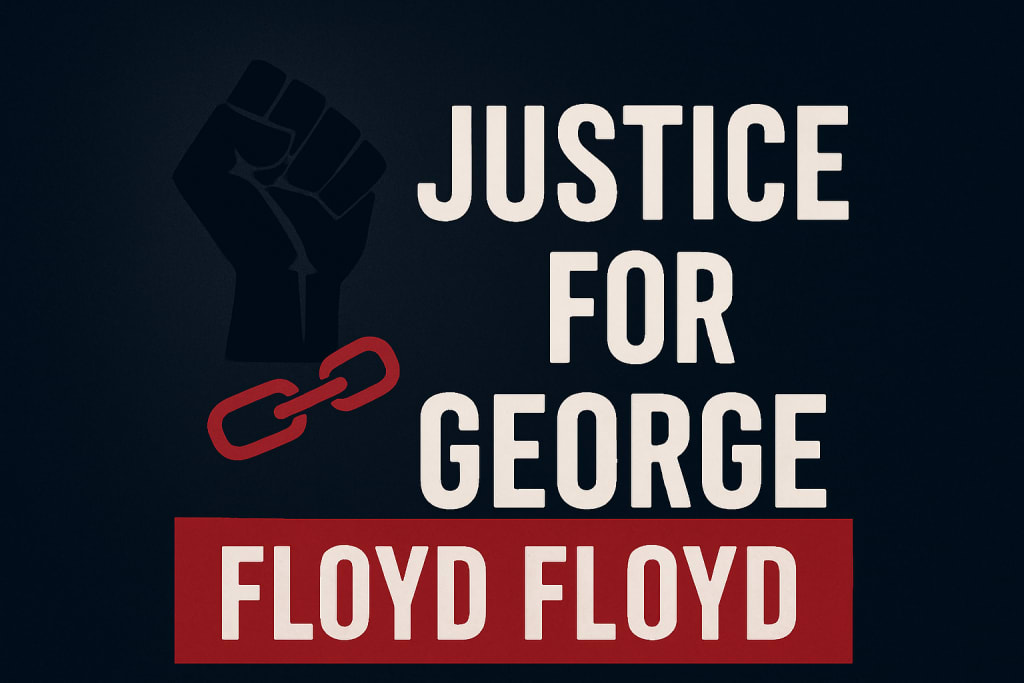
On May 25, 2020, a single tragic event in Minneapolis, Minnesota, captured the attention of not just Americans, but the whole world. George Floyd, an unarmed Black man, was killed during an arrest by police officer Derek Chauvin, who knelt on his neck for over nine minutes. This moment, caught on video, became more than another headline—it became a catalyst, a spark that ignited global reckoning on systemic racism, police brutality, and justice. In the years since, the George Floyd case has remained central to conversations about race, law enforcement, America’s history—and its future.
The Event
George Floyd was arrested for allegedly using a counterfeit $20 bill at a convenience store. During the arrest, officer Chauvin pressed his knee into Floyd’s neck while two other officers kept Floyd pinned, even as he cried out “I can’t breathe.” Passersby pleaded for the officers to lift off, but their pleas were ignored. Eventually, Floyd became unresponsive and later died in police custody.
The video of the arrest, recorded by a bystander, quickly spread across social media. The imagery was harrowing: Floyd’s face pressed into the street, passive yet pleading. The world saw. The world reacted. For many, it echoed centuries of injustice, but for others, it opened their eyes in ways no protest, no speech, no policy proposal ever could.
Immediate Aftermath
Protests erupted in Minneapolis almost overnight. But by the end of the week, demonstrations had spread across the United States and then internationally. Cities large and small saw marches, rallies, vigils. The phrase Black Lives Matter, already used, surged in visibility. Legacy media and social platforms filled with conversations of accountability, justice, reform.
Legally, the case moved quickly: Derek Chauvin was arrested and later convicted of second-degree unintentional murder, third-degree murder, and second-degree manslaughter. Civilians, activists, and legal experts debated everything—from qualified immunity to police funding, from training protocols to city-management of law enforcement.
Broader Impacts
Policy Changes and Proposals
After George Floyd’s death, many U.S. cities and states introduced or passed legislation aimed at police reform. These included bans on chokeholds, increased oversight, body camera requirements, and limits on use of force. Conversations about defunding the police or reallocating budgets became mainstream. Some places implemented changes; others stalled. The movement forced political leaders at all levels to respond.
Cultural Shift
The event wasn’t just legal or political—it was deeply cultural. It led to memorials, art, songs, protests, literature. Companies reviewed their diversity and inclusion commitments. Monuments tied to racist history were challenged or removed. Discussions about systemic racism entered spaces (corporate, educational, entertainment) where they’d been largely ignored or sidelined before. The imagery of police violence and public outcry altered how many saw public safety, power, and justice.
Media & Social Media’s Role
The video of George Floyd’s death revealed how powerful—and dangerous—witnessing can be. Social media allowed citizens to document in real time. Witnesses, bystanders, activists, and citizens all became part of an unfolding narrative. The ability to record and distribute changed the dynamic: no longer was public perception mediated only through institutions or mainstream media. The public had a voice.
Challenges & Criticism
As big as the movement was, it was not without challenges. Critics argued that protests sometimes turned violent, that reform was only cosmetic in many places, or that racial tensions increased without clear policy outcomes everywhere. Some viewed “defunding the police” as too extreme; others said incremental reforms failed to address deep systemic issues like mass incarceration, economic inequality, or educational disparities. Moreover, sustaining public attention and political will proved difficult—news cycles are fast, and many stories fade once headlines move on.
Why It Resounded So Deeply
Because the event was caught on video: seeing was believing for many who had never felt the weight of racial injustice in that visceral way.
Because it intersected with other crises: racial inequity, the COVID-19 pandemic (which disproportionately impacted communities of color), economic instability, and political division. The timing made it felt urgent.
Because it exposed what many felt but could not articulate: that police violence wasn’t an isolated incident—it was part of patterns, systemic issues, stories uncounted.
Reflections: What Has Changed, What Hasn’t
It’s been several years since that day in Minneapolis. What has shifted?
Some legal reforms have passed.
Public awareness is higher: many more people know about systemic racism, implicit bias, the legacy of redlining, etc.
Many organizations, from schools to corporations, now incorporate racial justice, equity trainings, and policy reviews.
But there are also places where progress has lagged:
In many jurisdictions, police budgets remain large, and accountability remains complex.
The legal system’s protections for officers (like qualified immunity) are still under debate.
Economic and health disparities remain stark.
Conclusion
The death of George Floyd marked a turning point—not an end. It showed that a moment of injustice, witnessed, shared, and felt, can catalyze a movement. It forced America to look in the mirror. It raised questions about who we are and what we value. It demanded not just change, but reflection: about history, privilege, and the cost of silence.
For many, the journey toward justice continues. The protests, policies, conversations, art, and advocacy that followed are proof that when people demand better, even centuries of wrong can be challenged. Some wounds heal slowly. Some changes take generations. But the George Floyd moment remains a testimony: that even amid grief, people can be stirred to action—and that action matters.
About the Creator
Fawad Khan
I’m Fawad Khan a passionate speaker and researcher sharing journals, fiction, history, education, current affairs, and English literature. With deep research and clear voice, I bring knowledge to life. Learn,grow, and stay informed with me.
Keep reading
More stories from Fawad Khan and writers in Poets and other communities.
Who was Usama Bin Ladin
Introduction Osama bin Mohammed bin Awad bin Laden, commonly known as Osama bin Laden, remains one of the most infamous figures in modern history. As the founder and leader of al-Qaeda, he orchestrated some of the deadliest terrorist attacks in the world, including the September 11, 2001 attacks on the United States. His life story is a mixture of wealth, ideology, rebellion, and violence. From his privileged upbringing in Saudi Arabia to his transformation into a global symbol of jihad, bin Laden’s journey reflects the intersection of politics, religion, and extremism in the late 20th and early 21st centuries.
By Fawad Khan5 months ago in History



Comments
There are no comments for this story
Be the first to respond and start the conversation.