
Walt Whitman (1819–1892): A Pioneer of American Poetry
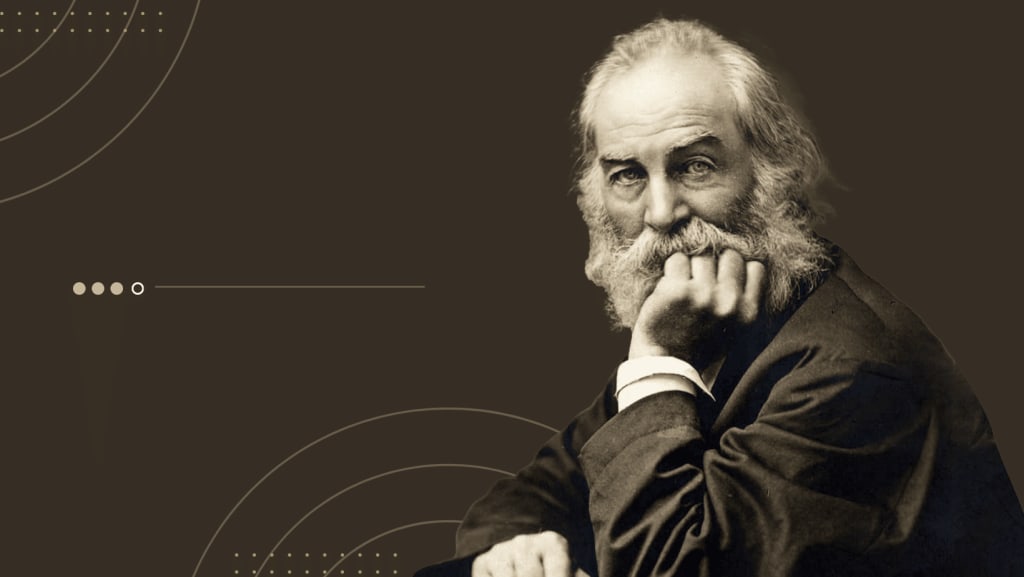
Walt Whitman, often referred to as the "Father of Free Verse," is one of the most influential poets in American history. His groundbreaking work, Leaves of Grass, redefined poetry, transcended literary conventions, and celebrated the expansive spirit of democracy, nature, and humanity. Born on May 31, 1819, in West Hills, New York, Whitman’s life and poetry embody the essence of 19th-century America, a period marked by rapid transformation, political upheaval, and cultural growth.
Early Life and Influences
Whitman was the second of nine children in a working-class family. His formal education ended at age 11, but he was an avid reader and self-taught intellectual. He worked as a printer, teacher, and journalist, all of which shaped his understanding of language, people, and society. These experiences also exposed him to the contradictions of the American Dream—poverty, slavery, and class struggles—elements that later permeated his poetry.
The vibrant and bustling life of cities like New York profoundly influenced Whitman’s worldview. He observed humanity in all its forms, celebrating its diversity and interconnectedness in his work. Additionally, the transcendentalist philosophies of Ralph Waldo Emerson and Henry David Thoreau deeply impacted his thinking, encouraging him to explore themes of individuality, nature, and the divine within the self.
Leaves of Grass: A Revolutionary Work
Whitman first published Leaves of Grass in 1855, a slim volume of 12 untitled poems. The book was revolutionary, both in its content and form. Unlike traditional poetry that adhered to strict rhyme and meter, Whitman employed free verse, a style that allowed for organic rhythms and unstructured expression. His poetic voice was bold, expansive, and deeply personal, breaking away from the formalities of European poetic traditions.
The first edition featured a preface where Whitman proclaimed that America needed its own unique literary voice. In the poem "Song of Myself," he wrote:
"I celebrate myself, and sing myself,
And what I assume you shall assume,
For every atom belonging to me as good belongs to you."
This declaration of unity and individuality encapsulates Whitman’s vision of democracy—a society where all individuals are interconnected, equal, and celebrated for their unique contributions.
Over his lifetime, Whitman revised and expanded Leaves of Grass several times, turning it into a lifelong project. By the final edition in 1892, the collection contained nearly 400 poems, showcasing a vast range of themes, including nature, sexuality, spirituality, and political commentary.
Themes in Whitman’s Poetry
1. Democracy and Unity
Whitman believed in the democratic ideal, celebrating the common man and the collective spirit of humanity. His poetry reflects his vision of America as a melting pot of cultures, voices, and experiences. He embraced diversity and sought to capture the universal human experience. In "I Hear America Singing," he highlights the individuality of workers—mechanics, carpenters, and mothers—each contributing to the harmony of the nation.
2. Nature and the Cosmos
Nature is a recurring theme in Whitman’s poetry, symbolizing renewal, growth, and the interconnectedness of all life. His reverence for the natural world is evident in poems like "Out of the Cradle Endlessly Rocking," where he portrays the sea as a living, breathing entity. Whitman saw humanity as an integral part of the natural order, a belief that echoes the transcendentalist idea of unity between man and nature.
3. The Body and Sexuality
Whitman’s exploration of the human body and sexuality was groundbreaking and controversial for his time. He celebrated the physical and sensual aspects of existence, viewing them as sacred and inseparable from the soul. In poems like "A Woman Waits for Me" and "I Sing the Body Electric," he challenges societal taboos, presenting the body as a source of beauty, pleasure, and spiritual connection.
4. War and Human Suffering
The American Civil War deeply affected Whitman, who worked as a volunteer nurse in military hospitals. This experience brought him face-to-face with the horrors of war and the resilience of the human spirit. Poems like "The Wound-Dresser" and "When Lilacs Last in the Dooryard Bloom'd" reflect his compassion for the wounded and his grief over the assassination of President Abraham Lincoln.
Legacy and Impact
Whitman’s radical approach to poetry was not immediately embraced. Critics of his time often dismissed Leaves of Grass as indecent and lacking literary merit. However, his influence grew steadily, and by the late 19th century, he was hailed as a literary pioneer. His work inspired countless poets, including Allen Ginsberg, Langston Hughes, and Pablo Neruda, and laid the foundation for modern American poetry.
Whitman’s themes of democracy, individuality, and interconnectedness remain relevant today. His celebration of diversity and inclusivity resonates in contemporary discussions about identity, equality, and human rights. His work is studied in schools and universities worldwide, and his influence extends beyond literature into philosophy, art, and politics.
A Poet for All Time
Walt Whitman’s poetry continues to captivate readers with its boldness, humanity, and universal appeal. He was a poet of contradictions—both an optimist and a realist, a celebrant of individuality and a champion of collective unity. His ability to find beauty in the ordinary and his unwavering belief in the potential of humanity make him a timeless figure in the world of literature.
As Whitman himself wrote in "Song of Myself":
"I am large, I contain multitudes."
These words encapsulate not only his poetic philosophy but also his enduring legacy as one of America’s greatest poets. Whitman’s voice, though rooted in the 19th century, speaks to the human spirit across generations, inviting readers to embrace the complexity and beauty of life.
About the Creator
Mr Ali
Hello EveryOne..!!



Comments (1)
What a great pioneer! Great work’