
The West's "Progress": A Golden Cage or a Spiritual Void?
Iqbal's Prophetic Warning: Why Your Civilization Might Be Its Own Worst Enemy.
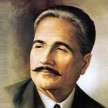

The shimmering facade of Western civilization has long captivated the world. From technological marvels to democratic ideals, it promises a pathway to unparalleled advancement. Yet, amidst this dazzling display, a profound voice from the East dared to offer a starkly different perspective. Allama Muhammad Iqbal, the visionary poet-philosopher, looked beyond the superficial gleam and issued a **prophetic warning**: the very foundations of this "advanced" society, built on material pursuits, might ultimately lead to its spiritual and moral decay.
Iqbal, deeply steeped in both Eastern mysticism and Western thought (having studied law and philosophy in Europe), was uniquely positioned to dissect the West's trajectory. He wasn't simply an outsider looking in; he engaged with Western intellectuals, devoured their literature, and observed their societal structures firsthand. What he saw was a civilization rapidly escalating in material power but simultaneously plummeting into a spiritual abyss. For Iqbal, the West's pursuit of **unbridled materialism** and its detachment from deeper, transcendent values was not a sign of progress, but a recipe for self-destruction.
He famously penned a couplet that resonates with an eerie prescience even today:
---
> **"Tumhari tehzeeb apne khanjar se aap hi khudkushi karegi,"**
> **"Jo shaakh-e-nazuk pe aashiyana banega, na-paayedar hoga."**
>
> *(Your civilization will commit suicide with its own dagger,)*
> *(A nest built on a fragile branch will not be lasting.)*
This isn't just poetic flourish; it's a profound philosophical statement. Iqbal suggests that the very tools and philosophies driving Western advancement – hyper-individualism, unchecked consumerism, the reduction of human worth to economic output, and the erosion of communal and spiritual bonds – are the "daggers" that will ultimately lead to its undoing. The "fragile branch" symbolizes a foundation lacking moral fortitude and spiritual depth, no matter how sturdy it appears on the surface.
Consider the relentless pursuit of economic growth above all else. Iqbal observed how this focus led to the **dehumanization of labor** and the commodification of life itself. In his view, a society that measures success solely by GDP, stock market indices, and technological innovation risks losing its soul. He critiqued the industrial revolution's byproduct: a vast underclass living in poverty and destitution, serving as the hidden cost of the elite's opulence. He saw the "glittering prizes" of Western progress being bought at the expense of human dignity and environmental health.
Moreover, Iqbal was deeply concerned by the rise of **secularism** that often bordered on **nihilism**. While recognizing the need for reason and scientific inquiry, he believed that completely divorcing society from a spiritual framework would lead to a moral vacuum. When traditional sources of meaning and purpose are discarded without adequate replacements, what remains? Often, it's a sense of aimlessness, a surge in mental health crises, and a desperate search for fleeting pleasures to fill an inherent void. He argued that the spiritual dimension is not a relic of the past but an essential component for a flourishing human society. Without it, individuals and nations drift, becoming susceptible to extreme ideologies or simply succumbing to a numbing apathy.
This isn't an anti-Western diatribe from a pre-modern mind. Iqbal was an intellectual giant who absorbed and critically analyzed the Enlightenment's ideals. His critique stemmed from a place of deep concern for humanity's future, not from ignorance. He saw the potential for greatness within Western civilization but also its inherent weaknesses, particularly its tendency to overemphasize the material at the expense of the transcendent.
As we navigate the complexities of the 21st century, facing unprecedented challenges like climate change, social fragmentation, and the pervasive anxieties of a hyper-connected world, Iqbal's words serve as a potent reminder. Is the current model of "progress" sustainable? Are we building a future on solid ground, or on a "fragile branch" that threatens to break under its own weight?
In the coming articles of this series, we will delve deeper into specific facets of Iqbal's critique, exploring his views on Western democracy, capitalism, the erosion of spiritual values, and the call for a renewed sense of "khudi" (selfhood) as an antidote. Prepare to see the Western world through the eyes of a master thinker who, decades ago, foresaw many of the dilemmas we grapple with today.
About the Creator
Iqbal
Iqbal was a visionary poet


Comments (1)
With the compliments of: William Wordsworth, WB Yeats, J. Milton, R. Descartes, Dante. Earth is sick, and Heaven is weary with the hollow words, which states and kingdoms utter when they talk of truth and justice. Turning and turning in the widening gyre, the falcon cannot hear the falconer; Things fall apart; the centre cannot hold; Mere anarchy is loosed upon the world. So yet a nobler task awaits thy hand, for what can war but endless war still breed till truth and right from violence be freed, and publick faith clear'd from the shameful brand of publick fraud. Throw out all your beliefs and start over! For as I turned, there greeted mine likewise, what all behold who contemplate aright, that's Heaven's revolution through the skies.