
"The Waste Land" by T.S. Eliot
This modernist masterpiece is a complex and layered exploration of the fragmentation and disillusionment of post-World War I society.

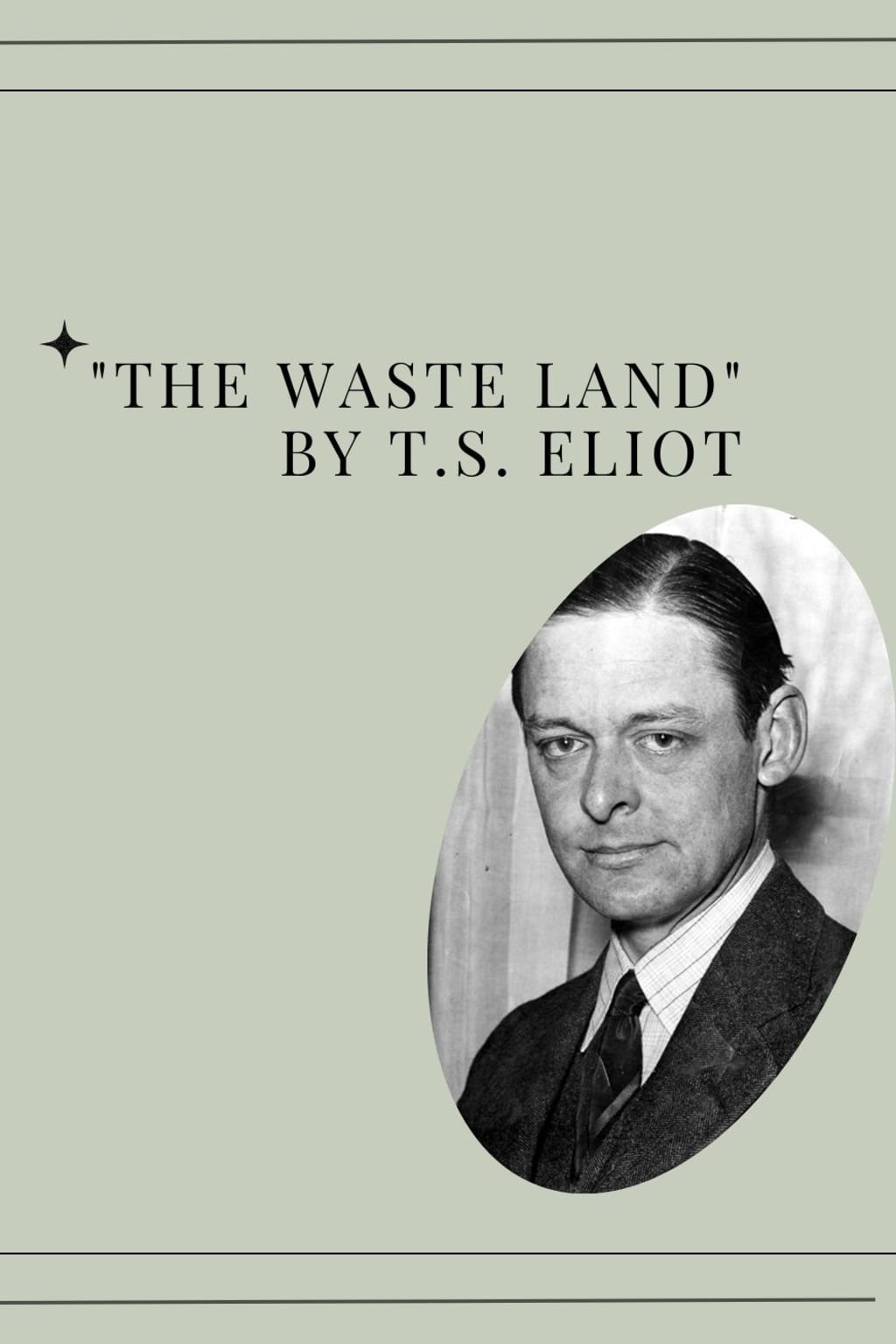
T.S. Eliot's "The Waste Land" is a seminal work of modernist poetry, which has continued to fascinate readers and critics since its publication in 1922. It is a complex and multifaceted work, which reflects the fragmentation and disillusionment of post-World War I society, as well as the author's own personal crisis of faith.
T.S. Eliot was a poet, playwright, and literary critic who lived from 1888 to 1965. He was one of the most important figures of the modernist movement in English literature. Here are some key facts about his life and work:
ABOUT AUTHOR ;
Early Life and Education
. Eliot was born in St. Louis, Missouri in 1888.
. He studied at Harvard University, where he earned both a bachelor's and a master's degree.
. He also spent a year studying philosophy at the Sorbonne in Paris.
Early Career
. After completing his studies, Eliot worked as a teacher and a bank clerk.
. He also began publishing poetry in literary magazines.
"The Love Song of J. Alfred Prufrock"
. Eliot's breakthrough came with the publication of his poem "The Love Song of J. Alfred Prufrock" in 1915.
. The poem, which is now considered a modernist classic, introduced Eliot's distinctive style and themes.
"The Waste Land"
. Eliot's most famous work is the long poem "The Waste Land," which was published in 1922.
. The poem is considered a landmark of modernist literature for its innovative use of language and fragmented structure.
. "The Waste Land" also reflects Eliot's disillusionment with modern society and his personal crisis of faith.
Later Career
. Eliot continued to write poetry throughout his life, as well as plays and literary criticism.
. He became a British citizen in 1927 and lived most of his adult life in England.
. Eliot was awarded the Nobel Prize in Literature in 1948.
Legacy
. Eliot is considered one of the most important poets of the twentieth century.
. His work has had a profound influence on subsequent generations of poets and writers.
"The Waste Land" remains a challenging and rewarding work that continues to be studied and appreciated by readers and scholars alike.
The poem is divided into five parts, each of which explores a different aspect of modern life.
PART I;
"The Burial of the Dead,"
Sets the bleak tone for the rest of the poem, describing a lifeless landscape where nothing grows and the only sound is the dry wind. The speaker laments the loss of vitality and meaning in modern life, suggesting that even the springtime brings no renewal or rebirth.
PART II,
"A Game of Chess,"
Presents a series of fragmented conversations and monologues that explore the theme of failed communication. Characters struggle to connect with each other, either because of their own limitations or because of the barriers imposed by society. The section also includes the memorable monologue of the "Unreal City," which paints a vivid and haunting portrait of modern urban life.
PART III,
"The Fire Sermon,"
It is a meditation on desire and disillusionment, taking its title from a Buddhist scripture that emphasizes the transience of all things. The section is notable for its sensual language and vivid imagery, which evoke the pleasures and pitfalls of human desire.
PART IV,
"Death by Water,"
Presents a stark image of a drowned sailor, representing the fragility of human life and the inevitability of death. It also connects to the larger theme of water, which appears throughout the poem as a symbol of both renewal and destruction.
PART V,
"What the Thunder Said,"
It is a chaotic and apocalyptic section that brings the poem to a dramatic conclusion. It includes references to Hinduism, Christianity, and Arthurian legend, creating a collage of images and voices that suggest the breakdown of language and meaning, and the impending collapse of civilization.
Throughout the poem, Eliot employs a range of literary techniques, including allusions to literary and cultural works, fragmentation and juxtaposition, and multiple voices and perspectives.
These techniques reflect the fragmentation and complexity of modern life, as well as the difficulty of communication and connection in a rapidly changing world.
"The Waste Land" also reflects Eliot's own personal crisis of faith, as he struggled with his Christian upbringing and searched for a new sense of spiritual meaning. The poem includes references to various religious traditions, as well as themes of redemption and renewal, suggesting that even in the darkest of times, there is always hope for renewal and rebirth.
Overall, "The Waste Land" is a challenging and complex work that rewards careful reading and analysis. It is a testament to Eliot's vision and artistry, as well as his ability to capture the zeitgeist of his time.
Its themes of disillusionment, fragmentation, and the search for meaning and connection remain relevant today, making it a timeless masterpiece of modernist poetry.
Thnak You



Comments
There are no comments for this story
Be the first to respond and start the conversation.