
“The Letters I Never Sent”
A poet writes letters to people who once changed her life — but never actually mails them.


The Letters I Never Sent
By [Ali Rehman]
The first letter began with a lie.
Dear Michael,
I’ve forgiven you.
Lena stared at the words until the ink began to blur. Forgiven him? That wasn’t true — not yet. Maybe not ever. But that’s how most of her poems started too: with lies that wanted to be true.
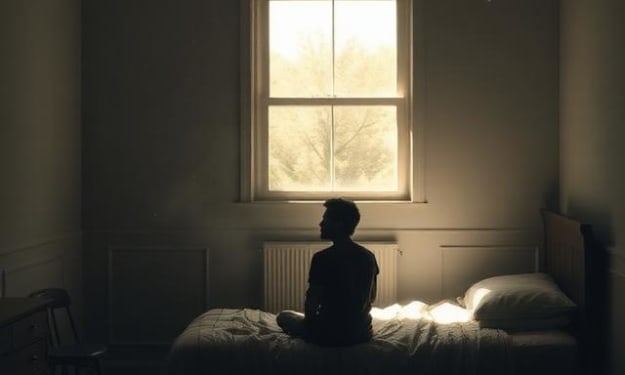
It was raining outside, the kind of steady drizzle that made the whole city look like it was dissolving. Her small apartment smelled faintly of coffee and paper. Around her, dozens of envelopes sat in uneven stacks — letters to no one, addressed to everywhere.
She had written them for years. Letters she would never send.
Michael had been her first editor, the one who told her that poetry was “a nice hobby,” not a career.
She had been twenty-one, trembling in his office with her thin notebook and her fragile hope.
He had skimmed three poems, chuckled, and said, “They’re fine, but you’re not Sylvia Plath.”
She had nodded, thanked him politely, and gone home to cry until her tears blurred the ink on every page she’d written.
That night, she promised herself two things: she’d never show him her work again — and she’d never stop writing, no matter who told her to.
Now, years later, her poems filled magazines he’d probably never read.
But she still wrote to him sometimes — not out of anger anymore, but out of gratitude for the wound that made her sharper.
Dear Michael,
You were wrong. But thank you for being wrong in such a loud, cruel way that I had to prove you false.
She folded the paper, sealed it, and placed it on the growing pile.
The second letter was harder.
Dear Sara,
You taught me how to breathe.
Sara had been her best friend in college — the kind of person who lit up every room and made everyone feel like they belonged there. They used to sneak out at midnight, running barefoot down the street, laughing until their lungs hurt.
Then one morning, Sara was gone.
A car accident.
A call from the police.
A silence that never stopped echoing.
For months afterward, Lena couldn’t write. Every word felt meaningless without someone to read it out loud beside her, feet swinging off the balcony rail, wind in their hair.
But one evening, she found a small note tucked inside one of Sara’s old sketchbooks:
“If I ever leave too soon, promise me you’ll keep writing for both of us.”
Lena did.
Every poem since then had been, in some way, a letter to Sara.
Now she wrote again:
Dear Sara,
I kept the promise. Every line is still half yours. Sometimes I think you whisper them back to me when I’m stuck. I still listen.
She pressed her palm to the paper and smiled through her tears.
That letter went on top of Michael’s.
The third letter was the one she never thought she’d write.
To him.
Dear David,
I almost believed you loved me.
He had been charming — all dark hair and easy words, the kind of man who could turn an apology into a poem and make it sound sincere.
He said he loved her writing, that she “made the world feel smaller, safer.”
He said he’d stay forever.
He said a lot of things.
When she caught him lying — not once, but twice — he’d simply said, “It’s what writers do. We make things up.”
It broke something in her that had taken years to rebuild.
Now she wrote:
Dear David,
You taught me that words can lie. But you also taught me to mean mine. I hope someday you read a poem and feel a quiet ache — the kind that doesn’t go away even when you turn the page.
This one she didn’t seal.
She folded it neatly and tucked it inside her journal. Some ghosts deserved to stay closer.
Lena brewed another cup of coffee and looked at the pile of unsent letters.
Each one was a story she’d survived.
Each one was a wound that had finally stopped bleeding.
She wasn’t sure why she never mailed them. Maybe because she didn’t need to.
Maybe because writing was always more about healing than being heard.
The fourth letter came to her unexpectedly.
Not to someone who hurt her — but to someone who had quietly saved her.
Dear Unknown Reader,
You’ll never know me, but you’ve seen me — in poems, in pages, in quiet moments when you felt a line and didn’t know why.
You are why I keep writing.
Every time I think my words don’t matter, I imagine someone like you — holding them, reading them, breathing them in.
She didn’t cry this time. She smiled.
That letter, she pinned above her desk. It was a reminder that not all silence was empty.
Weeks later, Lena had a poetry reading at a small bookstore downtown. The lights were soft, the crowd small but warm. She read one of her newest poems — a simple piece about letters and ghosts and love that never found its address.
Afterward, an older woman approached her and said softly, “Your poem… it felt like it was written for me.”
Lena smiled. “Maybe it was.”
That night, when she got home, she wrote one final letter.
Dear Me,
You made it through everything they said you wouldn’t. You kept writing when no one was listening. You learned to forgive, to remember, to stay.
You don’t need to send any of these letters anymore. You already did — every time you put a poem into the world.
She folded the letter, placed it in an envelope, and wrote two words on the front:
“Already Sent.”
Then she turned off the light, sat by the window, and listened to the rain again — the sound of the world writing back.
About the Creator
Ali Rehman
please read my articles and share.
Thank you
Keep reading
More stories from Ali Rehman and writers in Poets and other communities.


Comments
There are no comments for this story
Be the first to respond and start the conversation.