
The Garden Where Verses Bloom
How a Quiet Poet Turned Forgotten Words into Living Inspiration
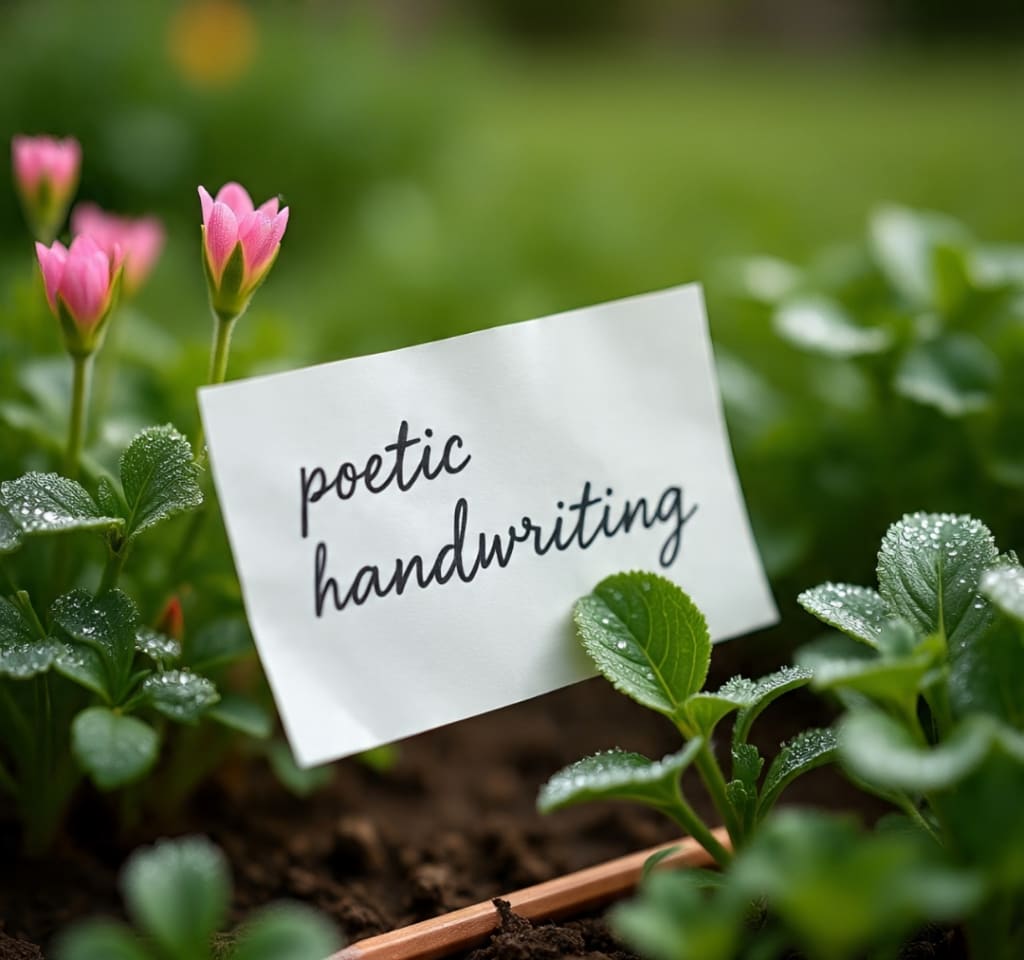
The garden behind the old public library was not famous, not even well-kept. The walls were chipped, the grass grew unevenly, and the flowers bloomed only where they pleased. Yet every afternoon, a poet named Miran visited that quiet corner. He didn’t come for beauty—he came because words seemed to grow there.
Miran was a poet who rarely shared his poems. He wrote with love and honesty, but his voice felt too small for the loud world. Every time he tried to post a poem online, he deleted it. Every time he held his notebook, he tucked it away before anyone could notice. His poems were his garden of thoughts, but he feared that no one would want to see them.
One day, Miran brought his notebook to the wooden bench as usual. But a sudden gust of wind swept several pages into the garden bed. They scattered among the flowers—his handwritten lines resting next to petals and leaves. He rushed to pick them up, heart pounding. These were meant to stay hidden.
Yet when he reached for one page, he paused.
A small daisy had bent just enough to look as if it were reading his words.
It seemed silly, but Miran felt something warm in his chest. He whispered, “Maybe you’re my first reader.”
Instead of picking up the scattered poems, he left them there. Every day afterward, he placed a page beside a flower. He never signed his name, never told who wrote it. He simply let the poems rest in the sunlight, wind, and rain.
Weeks passed, and the garden changed.
People began to notice the small sheets tucked under leaves or pinned softly to branches by twigs. A librarian posted one inside the building. A student copied a verse into her notebook. Someone wrote on social media: “Whoever writes these poems, thank you. They brighten my day.”
The garden started to fill with visitors—quiet ones. They came to read, to think, to breathe. No one knew the poet, yet everyone felt his presence.
Miran watched from the bench, humbled and amazed. His words were no longer hiding. They belonged to others now—growing through them like small seeds.
One morning, he found something new on the bench: a notebook, blank except for a single sentence on the first page.
“Your words helped mine grow. Will you help others grow too?”
The handwriting was unfamiliar. Miran smiled. A garden of poems was blooming in more hearts than his.
He opened his own notebook and wrote:
Poetry is not a voice begging to be heard.
It is a seed planted in silence,
waiting to bloom where someone needs it most.
For the first time, he signed his name beneath a poem. Not because he wanted fame, but because he wanted poets to know:
Their words matter.
That day, Miran began leaving signed pages around the garden. Soon, others left their poems too—folded papers beneath pebbles, verses tied to branches, lyrics written on fallen leaves. The forgotten garden became a living library of inspiration.
People no longer came to read one poet. They came to share, to grow, to bloom.
And the garden, once unnoticed, became a place where poetry lived—not on shelves or phones—but in open air, like flowers reaching toward the sun.
About the Creator
Keep reading
More stories from Muhammad Saad and writers in Poets and other communities.
The Echoes of Silent Quills
In a quiet corner of the city, beyond the hum of bustling streets, there existed a room that few knew about—a sanctuary for words. Here, notebooks lay open like resting birds, and quills waited patiently in inkwells, as if poised for flight. This was the place where the voices of poets gathered, not to compete, but to echo, resonate, and awaken.
By Muhammad Saad 4 months ago in Poets



Comments
There are no comments for this story
Be the first to respond and start the conversation.