
The Clock That Forgot Time
a poem about a broken clock that keeps reminding its owner of moments lost and moments worth remembering.
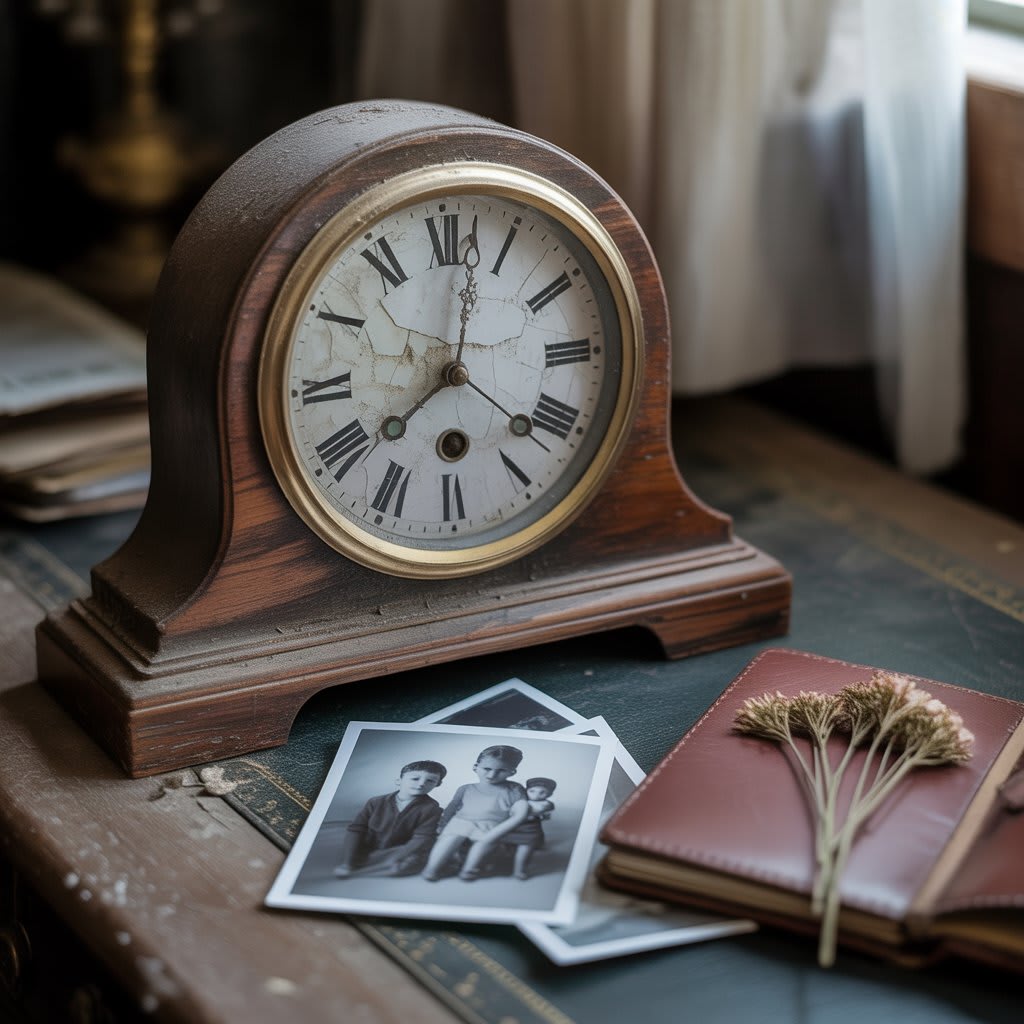
In the quiet corner of my study, there sits an old clock.
Its wooden frame is scarred by years of dust and sunlight, its brass pendulum sways no more. The hands are stuck at 3:17, as though the world ended in that moment and the clock refused to admit otherwise.
I call it the clock that forgot time.
It no longer ticks, no longer tells me when to sleep or wake. Yet somehow, it speaks more than all the loud devices flashing numbers at me. My phone reminds me what hour it is. My watch reminds me what deadline I’ve missed. But the broken clock whispers of what once was.
---
Sometimes, I stare at it too long, and my mind drifts back.
At 3:17, years ago, I was sitting on the front porch with my grandfather. He told me stories about how the world was simpler when patience was not a lost virtue. He spoke slowly, like the turning of seasons, and I listened as though his words were leaves falling into my palms. That moment, too, has stopped — sealed forever inside the clock’s unmoving hands.
At 3:17, another year, I stood under a tree in the rain, waiting for someone who never arrived. The water blurred my vision, but I remember the sting of absence sharper than the sting of cold. That hour, too, lives inside the broken gears.
At 3:17, long before all of this, a child — me — laughed so hard he dropped his ice cream on the pavement. My mother bent down, wiped the tears of joy and sadness from my cheeks, and bought me another one. That sweetness lingers, melting still.
The clock remembers for me.
---
It is strange how something that no longer works still performs its duty. A clock is meant to tell the present, to drag us forward minute by minute. But mine tells only the past, pulling me back, again and again, to fragments I thought I had forgotten.
I think perhaps that is a gift.
Because sometimes, in rushing forward, I forget the texture of yesterday. I forget the voices that shaped me, the absences that scarred me, the joys that made me whole. The broken clock keeps them alive, like pressed flowers inside an old book — fragile, fading, yet eternal.
---
One evening, a friend asked why I never fixed it.
“Surely,” he said, “you could replace the gears, set the hands moving again.”
But I shook my head. “If I fix it, it will forget.”
Because once repaired, the clock would join the ordinary chorus of timekeepers — ticking, rushing, pushing me toward deadlines and tomorrows. It would lose its peculiar silence, its ability to remind me of the sacred stillness of memory.
I don’t need another ticking machine. I need this pause.
---
Sometimes, I think the clock is a mirror. Not of my face, but of my soul.
We are both stuck at certain hours, aren’t we? Certain griefs, certain joys, certain words never spoken. Parts of us refuse to move on.
And maybe that’s alright. Maybe forgetting time is the only way to remember what truly matters.
---
So, the clock remains — unmoving, unfixable, yet precious.
It does not remind me when to pay bills or when night will fall. Instead, it reminds me of things too easily buried:
a grandfather’s slow wisdom,
a missed meeting under the rain,
a child’s laughter and melting ice cream.
It reminds me that life is not just about hours moving forward, but about moments that refuse to leave.
---
One day, long from now, someone else may find this clock. They may laugh at its uselessness, wonder why I kept it. But perhaps, if they listen closely, they will hear it too — not ticking, not tocking, but whispering:
“Do not rush. Remember.
The best hours are the ones that never pass.”
And maybe, just maybe, they will sit in silence, at 3:17, and remember their own forgotten times.
For that is the true magic of the clock that forgot time.
About the Creator
I wanted to title this something different, but worried that my chosen title might cause problems entering the United States in the future so this is the new title. It's the greatest title. No one has ever written a title better than this. (All titles unrelated to content).
Let me be honest. I am finding this difficult. Now, I like a challenge, a stretch, a bit of an obstacle course. “Write about the decline of the British Empire in the form of a narrative poem in which your protagonist is an artichoke” I read, and flex my fingers. “Write a haiku to evoke the sensation of sibilance using only the first half of the alphabet.” “Well”, I think to myself, “this should be fun.” But “write about a system that isn’t working”? A system that isn’t working? Now? In 2026? ONE system? My favourite system that isn’t working? The sexiest system that isn’t working? The one giving me the most angst day to day? The one giving me the most existential dread? I am, as I say, finding this difficult. I will own that I have contemplated writing a thousand words on why the steady “all on” setting on my fairy lights is the EIGHTH of seven options which must be sequentially activated to get there, because that is a system that some fool came up with and it definitely doesn’t work, and now who is paying the price, eh? But how can I write about my fairy lights when…. When…. When….
By Hannah Moore7 days ago in Humans


Comments
There are no comments for this story
Be the first to respond and start the conversation.