
The Art of Strategic Laziness: Redefining Productivity in a Burnout Culture
How Prioritizing Less, Focusing Deeply, and Embracing Imperfection Unlock True Efficiency
Introduction: The Productivity Paradox
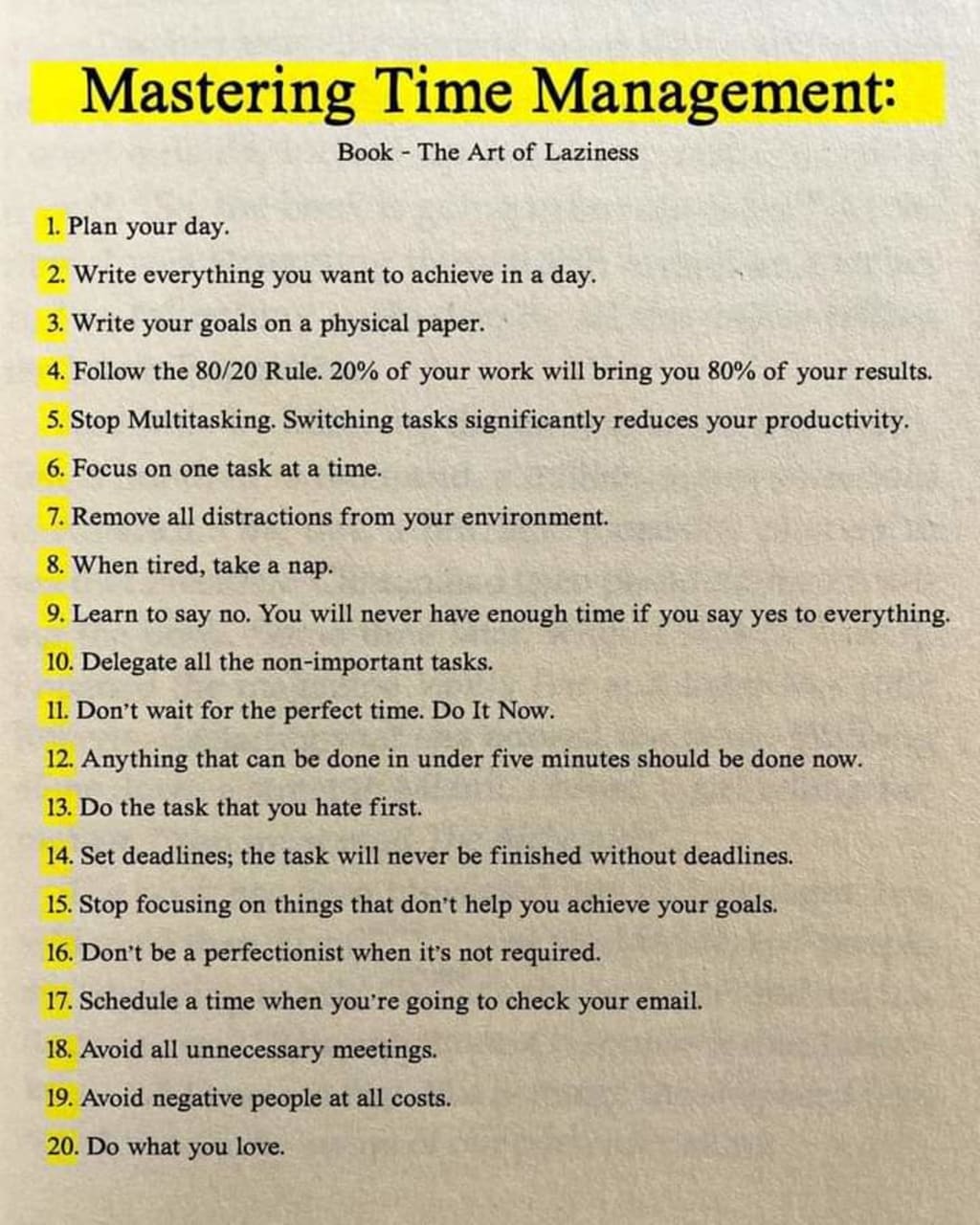
We live in a world obsessed with hustle. The glorification of "busyness" has led to burnout, chronic stress, and a pervasive sense of inadequacy. Yet, the 20 principles from The Art of Laziness challenge this narrative, advocating for a counterintuitive approach: working smarter, not harder. This philosophy—dubbed "strategic laziness"—isn’t about avoiding effort but channeling it intentionally. By prioritizing what truly matters, eliminating distractions, and embracing imperfection, we can reclaim our time, energy, and joy. Let’s explore how these principles dismantle toxic productivity myths and pave the way for sustainable success.
1. The 80/20 Rule: Doing Less to Achieve More
The Pareto Principle (80/20 rule) is the cornerstone of strategic laziness. It teaches that 80% of outcomes stem from 20% of efforts. Yet, most people waste time on low-impact tasks—endless emails, trivial meetings, or perfectionism—that drain energy without moving the needle.
Why It Works:
Clarity: Identifying high-impact tasks (e.g., client acquisition, creative projects) sharpens focus.
Resource Allocation: Redirect time from "busywork" to activities that align with long-term goals.
Reduced Overwhelm: Narrowing priorities minimizes decision fatigue.
Practical Application:
Audit your weekly tasks. Which 20% drive 80% of your progress? Eliminate or delegate the rest.
Use the “Two-Minute Rule”: Execute small tasks immediately to clear mental clutter.
2. The Myth of Multitasking and the Power of Single-Tasking
Multitasking is a lie. Research shows task-switching can slash productivity by 40%, as the brain expends energy “rebooting” focus each time. Strategic laziness demands deep work—immersing fully in one task until completion.
The Science of Focus:
Cognitive Bandwidth: The brain’s prefrontal cortex thrives on undivided attention.
Flow State: Single-tasking triggers flow, a state of heightened creativity and efficiency.
Practical Application:
Block time for priority tasks. Turn off notifications, close tabs.
Schedule “focus sprints”: 90-minute sessions followed by breaks.
3. Delegation and the Art of Saying No
Strategic laziness recognizes that time is finite. Saying “yes” to everything—whether trivial tasks or others’ demands—robs you of agency. Delegation and boundaries protect your most valuable resource: attention.
The Cost of People-Pleasing:
Energy Drain: Overcommitment fractures focus and breeds resentment.
Opportunity Loss: Time spent on low-value tasks steals from high-impact goals.
Practical Application:
Delegate ruthlessly. Ask: "Is this task essential for me to do personally?"
Politely decline non-critical requests and avoid unnecessary meetings.
4. Embracing Imperfection: The Perfectionism Trap
Perfectionism is procrastination in disguise. It paralyzes progress, as fear of failure outweighs the courage to act. Strategic laziness prioritizes done over perfect.
The Psychology of "Good Enough":
Momentum > Stagnation: Completing tasks builds confidence and momentum.
Iterative Improvement: Launch, gather feedback, refine.
Practical Application:
Set realistic deadlines. A finished project with flaws beats an unfinished “masterpiece.”
Ask: "Will polishing this further meaningfully improve outcomes?"
5. Aligning Work with Passion: Sustainable Productivity
Burnout often stems from misalignment between work and values. Strategic laziness isn’t just about efficiency—it’s about crafting a life where effort feels purposeful, not punitive.
The Joy-Efficiency Loop:
Intrinsic Motivation: Passion fuels perseverance.
Energy Renewal: Loving your work reduces reliance on willpower.
Practical Application:
Audit your goals. Are they tied to your values?
Gradually shift tasks toward activities that energize you.
Conclusion: Redefining Success Through Strategic Laziness
The principles of The Art of Laziness aren’t about apathy—they’re about liberation. By ruthlessly prioritizing, guarding focus, and embracing imperfection, we reclaim agency over our lives. Productivity becomes not a race, but a rhythm: intentional, sustainable, and aligned with purpose.
In a world that equates busyness with worth, strategic laziness is rebellion. It’s the quiet assertion that how we work matters far more than how much.
In a world that equates busyness with worth, strategic laziness is a radical act of self-respect. It’s a quiet, powerful rebellion that whispers:
"My time is sacred. My energy is not for sale. My value is not measured by how exhausted I am."
Let this be your new manifesto:
Work less. Live deeply. Create intentionally. Thrive unapologetically.
Let this be your new rhythm:
Work less. Live deeper. Create intentionally. Protect your peace. Honor your energy. Thrive without apology.
About the Creator
Keep reading
More stories from Medical Doctor 💊🏥 and writers in Poets and other communities.
The Art of Mindful Relationships: Cultivating Emotional Intelligence and Grace in a Chaotic World
Introduction: Rediscovering the Language of True Connection In a world overwhelmed by instant gratification, digital overstimulation, and fleeting social exchanges, the essence of human connection often slips through the cracks. The visual affirmations and reflections explored here—from gentle dialogue to reciprocity and inner worth—form a unified framework for building relationships that go deeper than the surface. At the heart of these teachings lie emotional intelligence, conscious intention, and grace, all vital for cultivating bonds that are as resilient as they are nurturing. This article dives into how these principles reshape not just our relationships, but our relationship with ourselves.
By Medical Doctor 💊🏥9 months ago in Motivation
Wild Card Weekend Recap: What Happens Now?
I think I figured out why I love Wild Card Weekend so much. It's because it's the first playoff anything of the calendar year. The NFL season starts in the fall, and once upon a time, the champion was crowned either on or slightly before New Year's. The evolution of the NFL schedule has resulted in the playoffs starting just into the New Year, and currently, the final week of the season falls on the first weekend of the New Year, with Wild Card Weekend coming a week after that. So yes, chronologically, the NFL's Wild Card Weekend serves as the first playoff anything of the calendar year.
By Clyde E. Dawkins7 days ago in Unbalanced



Comments
There are no comments for this story
Be the first to respond and start the conversation.