
The Anatomy of a Broken Promise
A poem dissecting heartbreak in raw imagery.
The Anatomy of a Broken Promise
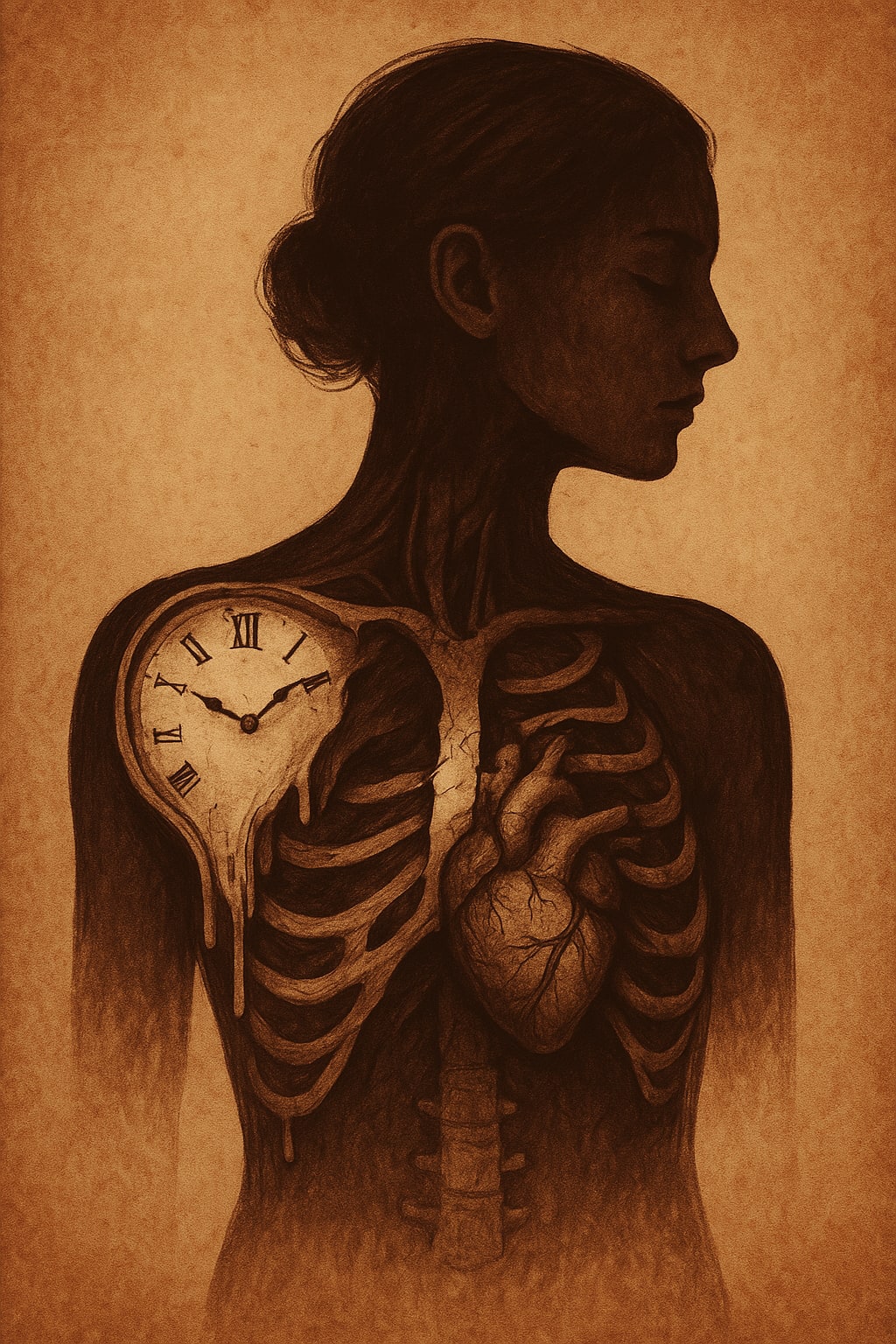
A broken promise is not just an absence of action; it is a body with bones, nerves, and scars. If you lay it on a table and dissect it carefully, you will find each organ still pulsing with betrayal, each vein still carrying the weight of words once spoken but never kept.
I. The Skeleton
Every promise begins with a spine.
It stands tall when spoken, vertebrae aligned in the rhythm of trust. “I will be there,” “I’ll never hurt you,” “This is forever.” These sentences form the skeleton, the upright structure you lean on when nights are heavy and the world feels unsteady.
But when the promise breaks, the spine collapses. Vertebrae scatter like dry twigs, brittle and sharp. You try to piece them back together, but the bones no longer fit; the words no longer hold their shape. What once carried weight becomes a pile of splinters, fragile as dust.
II. The Heart
If you cut deeper, you’ll find the heart of the promise beating faster than it should.
This heart is swollen with expectation. It remembers the warmth of someone’s voice, the gravity in their eyes when they said, “Trust me.” It beats to the rhythm of faith, pumping certainty into your veins.
But when the promise dies, the heart convulses. It spasms with doubt, arrhythmia in every chamber. It whispers: Was I a fool? Did I hear wrong? Did I believe too much? The heart tries to slow down, to mend, but the scar tissue grows uneven. And every future heartbeat carries the ache of hesitation, the fear of believing again.
III. The Skin
The skin of a promise is thin but deceptively strong.
It stretches over the body of hope, glowing with possibility. It feels soft when first touched—like silk woven from sincerity. When someone looks at you and says, “I’ll never leave,” the skin tingles, shivering under the touch of assurance.
But when the promise tears, the skin splits open. It leaves raw wounds, visible and tender. Strangers may not see the scars at first, but you feel them every time someone new brushes against you. You flinch, remembering the cut that never should have been there.
IV. The Mouth
The promise speaks through a mouth shaped like devotion.
It forms words carefully, syllables cradled in the lips like vows meant to last lifetimes. The mouth is the beginning—where hope is born, where sound takes shape and becomes trust.
But the mouth also betrays. It mutters apologies that taste like ash. It spills excuses, each one saltier than the last. “I meant to,” “I couldn’t,” “I’m sorry.” The tongue that once painted your future now twists into knots of evasion. The anatomy of the broken promise shows that the mouth never carries the weight—it simply escapes it.
V. The Eyes
The eyes of a promise are windows painted with conviction.
When someone swears something to you, you don’t just hear it—you see it. You study the way their pupils steady, the way their lashes tremble with earnestness. You tell yourself, Eyes don’t lie.
But later, those same eyes look away. They blur when you search them for answers. They avoid your gaze, hiding in shadows. And when you finally realize the promise is gone, the eyes are nothing but glass, reflecting your heartbreak back at you.
VI. The Hands
Hands make the promise real.
They sign letters, hold your face, lock fingers with yours as they say, “I’ll never let go.” Hands carry warmth; they prove intent.
But broken promises live in hands that slip away quietly, hands that no longer return calls, hands that let go when the storm comes. They are hands that once built a foundation with you and now scatter it like sand.
VII. The Silence
And then there is silence—the final organ of the broken promise.
It is not an absence but a presence, heavy and suffocating. Silence creeps in after the words are gone, filling the space where reassurance once lived. It becomes louder than anything else. It seeps into your chest and settles in your bones, making you believe that maybe you were never worth the keeping.
VIII. The Aftermath
Dissecting the anatomy of a broken promise does not heal it.
You can map every fracture, name every wound, chart every scar—but the body remains lifeless on the table. What you learn instead is this: broken promises never really die. They live in fragments. They haunt your dreams. They echo in your laughter, in the way you hesitate before trusting again.
And yet, in the rubble, something unexpected grows. The scar tissue hardens, making you resilient. The bones may never align as they once did, but they form a new shape, crooked but stronger. The skin learns to thicken, the eyes to see more clearly, the mouth to be cautious before swallowing new vows.
A broken promise is not just a betrayal—it is an autopsy of love, a dissection of hope. Its anatomy teaches you that words are fragile, that trust is mortal, and that the body of a promise, once broken, can never be stitched whole again.
But you, the surgeon of your own pain, walk away with knowledge: not every vow deserves a home inside your heart.
About the Creator
Keep reading
More stories from Aariz ullah and writers in Poets and other communities.
When Memories Expire
When Memories Expire In my world, memories come with an expiration date. They call it The Fading. On the day you’re born, a thin silver band is embedded in your wrist, glowing faintly with shifting numbers. Those numbers count down the days until each memory vanishes forever. Some memories last years. Others disappear in weeks. No one knows why the timers vary. You just learn to live with the quiet dread of forgetting.
By Aariz ullah6 months ago in Fiction



Comments
There are no comments for this story
Be the first to respond and start the conversation.