celebrities
No matter their age, some celebrities have old souls; poems written by celebrity poets and your favorite celebrities' favorite poems.
"Like the Dyer's Hand"
If you like poetry, want to know Chinese poems, or feel interesting in Chinese ancient culture, here is the movie "Like the Dyer's Hand" for you. ‘Like the Dyer's Hand’ is a documentary that was taken two years and released recently. It is the final chapter of ‘The Trilogy of Poems’ directed by Chen Chuanxing, which recorded the legendary life of contemporary poet Ye Jiaying (1924 - ).
By Golden Maple5 years ago in Poets
Book Review: "Selected Poems" by Joseph Brodsky
Joseph Brodsky’s poetry is an imaginative, beautiful piece of work about the way in which we can see magic and style, fluency and control flow through Russian Poetry even after the likes of Anna Akhmatova, Leo Tolstoy etc. are no longer around. Brodsky takes concepts such as love and war and interweaves them into the symbols of darkness, nature and many more symbols of emotions to do with death and loss. Brodsky’s poetry is a powerful blend of melancholy and hope, grief and regaining, timelessness and patience. It is simply beautiful to read and is that poetry that you have to read out loud or it just does not have the same ring to it.
By Annie Kapur5 years ago in Poets
An Open Letter to Thoreau
Henry David Thoreau. Prince of the Transcendentalists. The self-insinuated ringleader of an army of disobedients. A desirer to live deliberately and a hopeful bride to a life of nature, self-reliance, and self-sufficiency. I write directly to you with all the knowledge of my self-centeredness and self-seeking. I must make this about myself because I could not possibly attach these feelings onto the heart of another. For all that I am worth, and with all of my words that well up inside me, I must place on you a flowing river of thoughts that I have only saved for you. This is my gift and you are the sole receiver, you quiet man of Walden Pond.
By Joshua Grady5 years ago in Poets
"The Poems" by Propertius
The poet Propertius was an Latin Elegiac of the Augustan Period and his only surviving works are those of his four books of “Elegies”. This totals around 92 surviving poems and his more romantic side of poetry is dominated by a character named “Cynthia”. The romantic affair between Propertius and Cynthia takes wild turns and often turns either violent and turbulent or graphic and passionate. Common themes in the poems include: passion, romance, jealousy, violence, standards of love and courtship, lament, death and the afterlife, mythology, religion and ghosts. Propertius’s unconventional use of the Latin language have often made his texts and allusions within texts difficult to translate and edit. The surviving manuscripts of his poetry have led translators to often alter the texts and therefore corrupting them before the editing stage. Propertius’s boldness has often been said to exacerbate the problem of translation due to the way in which the syntax of the poetry is often incorrect. Be that as it may, themes, symbols and motifs are still clearly visible throughout the anthology. Propertius, being popular within his own lifetime but also a poet considered to be a scandal was also not really enjoyed by the other poets of his time and period. Horace had once stated a veiled attack on him and Callimachus as did Quintilian who states that the poet was not as popular as he made himself out to be.
By Annie Kapur5 years ago in Poets
"The Flowers of Evil" by Charles Baudelaire
Charles Baudelaire’s poetry is often considered one of the beginnings of ‘carcass writing’ and so, it is only obvious that the reader would notice the numerous different ways in which death and dying are discovered, written, analysed and iterated throughout the anthology. Dying is especially important because of the fact it can be attached to various different ideas such as: religion - the reader sees the Devil and God ready at the dead’s moment of new being, violence - the amount of violence required to inflict death may not be so great, but the graphic descriptions of the violent actions are numerous and often linked to the mangling of the human body through pain and suffering. After this, the reader encounters themes such as: images and symbols of death - the way in which images of death (coffins, corpses and graveyards) change the narrative or the atmosphere of the poem either make the poem darker and yet, in the darker poems, the reader often sees a peacefulness brought to the violence, suffering, pain or anguish through the inevitable act of death. This shows that death is not only used as a darkness or evil in which the narrator and characters often fear and hate the own thought of their demise or the demise of those they love, but it is also the tranquility after the storm-like narrative in which the narrator and characters experience something terrifying in life, or are being purposefully hindered from doing something, completing something or are experiencing intense amounts of pain, depression or are suffering upon earth in any extreme way. When investigating the theme of death within this anthology, there are so many different things that the reader has to take into account that the image of death often overtakes the idea at hand or, it adds to it. Whether it is of suffering and pain or of peace and tranquility, death often makes the poem seem bearable for either the narrator or the subject of the poem, in the fact that either it is the beginning and therefore the lesser of the sufferings, the most important section of the grieving process that makes the narrator’s thoughts beautiful and picturesque or the end of the suffering that the narrator or character has suffered for what seems like too long according to the poem. Blended with the themes of the poem, this leads the reader to believe certain ideas such as whether the narrator or character has a belief in God, or whether they have faith in the Devil, whether they are emotionally violent or whether they are emotionally detached - but all in all, the reader will realise that there is often more than one dimension to the characters and the narrators of Baudelaire’s poems.
By Annie Kapur6 years ago in Poets
Anna Akhmatova
Anna Akhmatova was one of the most well known poets in Russian History and is, to this day, one of the most respected poets of the 20th century. I read Akhmatova's poetry whilst I was in school via a tiny book I found called "The Everyman Poets: Anna Akhmatova". She uses so much incredible language with such raw emotion and the quotations about imprisonment and love have such a vivid image to them. Anna Akhmatova was the basis for reading all Russian Poetry of the difficult ages, the transition between Royalist Russia to Communist Russia. She was the borderline between those who were on the outside of the situation and those who were on the inside, and by inside, I mean prison.
By Annie Kapur6 years ago in Poets
The Best Works: Federico Garcia Lorca
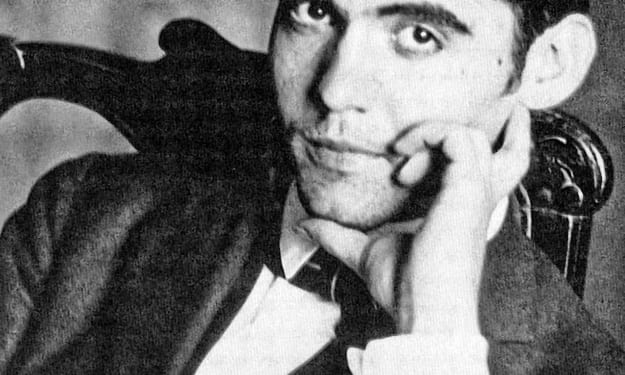
Federico Garcia Lorca is possibly one of the most recognised names in 20th Century poetry. During one of the greatest ages of European Modernism, Spain's 'Generation of '27' (referring to the year 1927) came to prominence with his works at the forefront. Not only a poet, but also a man of plays, Garcia Lorca is also famous for being a rival of Nationalists during the Spanish Civil War. He was killed by them in 1936 and his body has yet to be entirely located.
By Annie Kapur6 years ago in Poets
"Hold Your Own" she said...
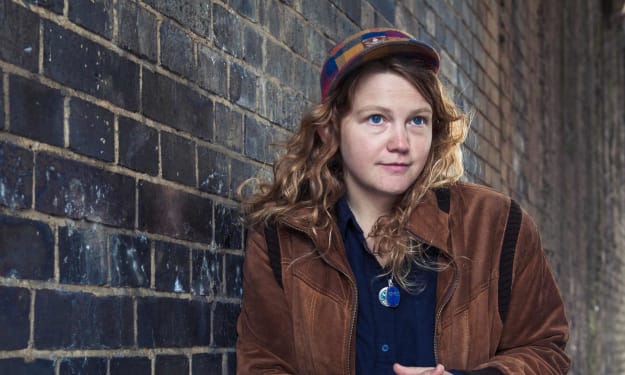
When I write poetry it is like an unconscious spiel of emotion, of thought, of... everything. Some writers have an endless list of other writers who inspire them. While I’m sure I do have this in my subconscious somewhere, I never really consciously acknowledge who they were or why they inspired me. Not really, not truly. I mean, of course there are the classics; Shakespeare, Bronte, Joyce, Austin; but nobody ever really spoke to me. Not until I first heard the poetry, the spoken word, of Kae Tempest.
By Celious Blanc6 years ago in Poets