
Symphony of Love: How Pulse Resonates in Our Dreams
A Tapestry of Joy, Connection, and Whimsical Self-Discovery

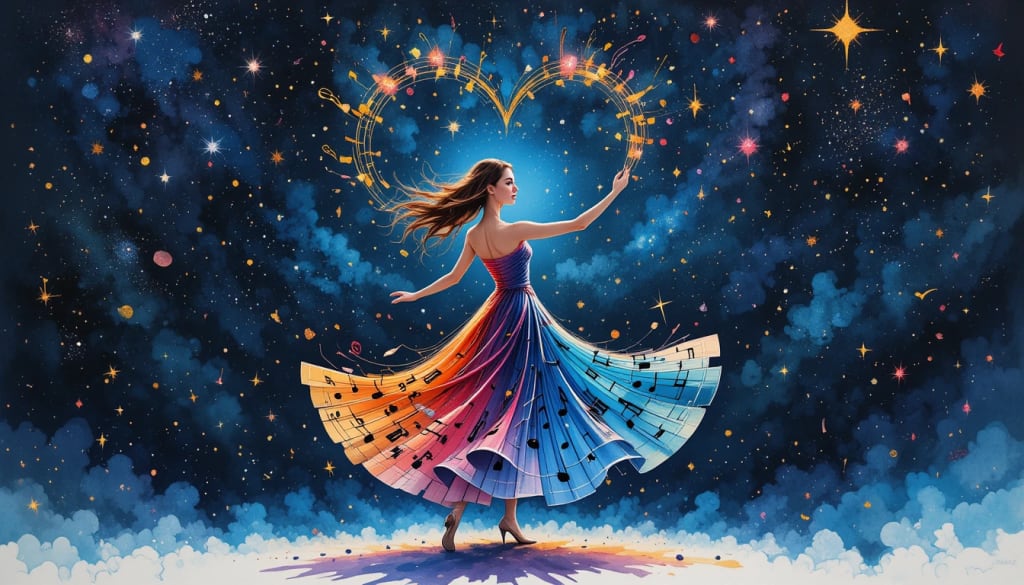
Love is a melody that hums through our lives, sometimes loud and triumphant, sometimes soft and fleeting, but always present in the rhythm of our dreams. For women navigating the complexities of identity, connection, and self-expression, love often takes on a playful, almost goofy form—a dance of quirks and laughter that defies convention. This is the story of how love, like a pulse, resonates through our dreams, weaving a symphony of joy, vulnerability, and unapologetic authenticity. Through the lens of one woman’s journey, we explore how goofiness becomes a radical act of love, a way to connect with others and embrace the self in a world that often demands seriousness.
The Pulse of a Dream
Clara Beaumont never imagined that her love story would begin with a rubber chicken. At 32, she was a graphic designer in Portland, Oregon, living a life that felt like a perfectly curated Instagram feed—polished, predictable, but somehow hollow. Her days were filled with deadlines and coffee runs, her nights with Netflix and a glass of pinot. Yet, beneath the surface, Clara craved something more—a spark, a pulse, a reason to laugh until her sides ached.
It was at a friend’s quirky open-mic night at a local bookstore that Clara’s world shifted. The event, dubbed “Silly Symphonies,” invited performers to share anything from poetry to stand-up, as long as it embraced the absurd. Clara, who had always been the “quiet creative” type, signed up on a whim, armed with nothing but a rubber chicken she’d found in a thrift store. Her act? A dramatic reading of a grocery list, punctuated by honks from the chicken. The crowd roared, and Clara felt a rush she hadn’t known she was missing. “It was like my heart woke up,” she later told a friend. “I didn’t just feel alive—I felt seen.”
That night, Clara met Lena, a violinist with a penchant for wearing mismatched socks and a laugh that sounded like wind chimes. Lena’s performance—a whimsical medley of classical music and cartoon sound effects—captured Clara’s heart before they even spoke. Their connection was immediate, built on shared giggles and a mutual love for the ridiculous. For Clara, this encounter marked the beginning of a journey where love and goofiness intertwined, resonating in her dreams like a symphony she was only just learning to play.
The Language of Goofiness
Goofiness, as Clara discovered, is more than silliness—it’s a language of vulnerability and trust. Psychologists like Dr. Barbara Fredrickson, who studies positive emotions, argue that playfulness fosters connection by lowering defenses and inviting authenticity. For women, whose lives are often shaped by societal expectations to be poised or perfect, embracing goofiness can be a radical act of self-love. Clara’s rubber chicken wasn’t just a prop; it was a declaration that she didn’t need to fit into a mold to be worthy of love.
Lena, with her boundless energy and knack for turning mundane moments into adventures, became Clara’s guide in this playful exploration. Their first date was a disaster by conventional standards: a picnic where ants invaded their sandwiches, followed by an impromptu dance in a sudden rainstorm. Yet, as they twirled under dripping trees, laughing until they could barely breathe, Clara realized that love didn’t need to be perfect—it just needed to be real. “Lena showed me that love is in the mess,” Clara says. “It’s in the way we laugh when everything goes wrong.”
Their relationship became a canvas for shared absurdities. They created a game called “Symphony of Nonsense,” where they’d take turns inventing ridiculous scenarios—like convincing strangers they were professional yodelers or staging fake arguments about whether clouds tasted like cotton candy or marshmallows. These moments weren’t just fun; they were a way of building intimacy, of saying, “I see your weirdness, and I love it.” As feminist scholar bell hooks writes in All About Love, “Love is an act of will—both an intention and an action.” For Clara and Lena, goofiness was their intention, their action, their love.
Dreams as a Playground
If love is a symphony, dreams are its rehearsal space. Clara’s dreams, once filled with mundane anxieties about deadlines or social faux pas, began to shift as her relationship with Lena deepened. She dreamt of fantastical worlds where she and Lena rode unicycles through fields of oversized daisies or conducted orchestras of giggling squirrels. These dreams weren’t just escapism; they were a reflection of how love was reshaping her inner world. “My dreams became this playground,” Clara says. “It’s like my brain was saying, ‘Hey, you’re allowed to be this free, this happy.’”
Dream researchers like Dr. Deirdre Barrett suggest that dreams often amplify our emotional experiences, serving as a space to process and integrate them. For Clara, her dreams were a mirror of the joy she found in Lena’s presence. One recurring dream featured a glowing pulse, like a heartbeat, radiating colors that matched the rhythm of their laughter. “It felt like love had its own sound,” she says, “like it was singing to me even when I was asleep.”
This interplay between love and dreams resonates with the work of poets like Rumi, who wrote, “The breeze at dawn has secrets to tell you. Don’t go back to sleep.” For Clara, staying awake to her dreams—both literal and metaphorical—meant embracing the pulse of love that Lena brought into her life. It meant daring to be goofy, to let go of the fear of looking foolish, and to trust that love would catch her.
The Social Symphony
Clara’s journey wasn’t just personal; it was part of a larger cultural shift. In Portland’s vibrant arts scene, where drag shows, comedy nights, and quirky festivals thrive, goofiness is a currency of connection. Events like the annual “Unipiper” parade—where a unicyclist in a Darth Vader mask plays flaming bagpipes—celebrate the absurd as a form of community. Clara and Lena became regulars at these events, their playful energy drawing others into their orbit.
Their story reflects a broader truth about women’s relationships, where humor often serves as a bridge across differences. Studies, like those from the Greater Good Science Center, show that shared laughter strengthens bonds, particularly in romantic partnerships. For queer women like Clara and Lena, whose identities are often marginalized, goofiness becomes a way to reclaim space, to say, “We’re here, and we’re joyful.” Their antics at community events—whether staging mock lightsaber battles or wearing inflatable dinosaur costumes—invited others to join in, creating a ripple effect of connection.
This communal aspect of goofiness echoes the ethos of chosen families, a cornerstone of queer culture. As Clara and Lena built their life together, they hosted “Silly Symphony” nights at their apartment, inviting friends to share stories, songs, or absurd skits. These gatherings became a sanctuary, a place where everyone could shed their inhibitions and revel in the joy of being themselves. “It’s like we’re all playing the same song,” Lena says, “even if we’re all a little off-key.”
Challenges and Resilience
Love, even one as vibrant as Clara and Lena’s, isn’t without its challenges. Clara struggled with self-doubt, a remnant of years spent trying to meet others’ expectations. “I worried I wasn’t enough,” she admits. “Not serious enough, not successful enough.” Lena’s unwavering support—often delivered through a well-timed silly face or an impromptu dance—helped Clara confront these insecurities. “She’d remind me that love isn’t about being perfect,” Clara says. “It’s about showing up, even when you’re scared.”
External pressures tested their bond too. When Clara’s conservative family questioned her relationship, Lena’s humor became their shield. During a tense family dinner, Lena defused an awkward moment by pretending to “translate” Clara’s words into pirate slang, leaving everyone in stitches. “It’s hard to stay mad when you’re laughing,” Clara says. This resilience, rooted in their shared goofiness, allowed them to navigate societal judgment with grace.
Their story aligns with research on humor’s role in relationships. Psychologist John Gottman’s studies show that couples who use humor to de-escalate conflict are more likely to stay together. For Clara and Lena, goofiness wasn’t just a personality trait; it was a survival strategy, a way to keep their love’s pulse strong amid life’s chaos.
The Symphony Continues
Two years into their relationship, Clara and Lena are planning a wedding that promises to be as unconventional as their love. They envision a ceremony filled with music, laughter, and, yes, a rubber chicken or two. “We want it to feel like us,” Clara says, “like a big, messy, joyful symphony.” Their dreams continue to evolve, now filled with visions of a future where they travel the world, spreading their gospel of goofiness through art and music.
Clara’s journey reflects a universal truth: love, at its best, is a celebration of our truest selves. For women, whose lives are often shaped by external pressures, embracing goofiness is a way to reclaim agency, to say, “This is who I am, and I am enough.” Clara’s story, set against the backdrop of Portland’s vibrant community, shows how love’s pulse resonates not just in our waking lives but in the dreams that carry us forward.
As Rumi wrote, “Beyond ideas of wrongdoing and rightdoing, there is a field. I’ll meet you there.” For Clara and Lena, that field is a dance floor, a stage, a dreamscape where love sings through laughter, and goofiness is the sweetest note of all.
About the Creator
Shohel Rana
As a professional article writer for Vocal Media, I craft engaging, high-quality content tailored to diverse audiences. My expertise ensures well-researched, compelling articles that inform, inspire, and captivate readers effectively.
Keep reading
More stories from Shohel Rana and writers in Poets and other communities.
A Heartfelt Tale of Laughter and Connection
Love is a many-splendored thing, or so the old song goes. But what happens when that love is wrapped in a layer of goofiness? For many, the idea of romance conjures images of candlelit dinners, poetic declarations, and stolen glances under the moonlight. Yet, for one woman—let’s call her Emma—the truest expression of love has always been found in the silliest, most unexpected moments. This is her journey, a testament to how humor and playfulness can forge bonds that last a lifetime.
By Shohel Rana8 months ago in Poets
A Dart at Dusk
Seconds ago, the sullen sun set on the two of us… my exuberant furry companion and me. A fresh breeze embraces us, delivering welcome relief from the day’s oppressive heat. His typical stumbling and staggering along — apace with a sloth — has turned into trip-trapping, high-stepping, almost skipping along.
By Angie the Archivist 📚🪶8 days ago in Petlife


Comments (1)
This story is so charming. It makes me think about how unexpected love can be. Like Clara, we often go through the motions in life, but then something silly comes along and changes everything. Have you ever had a moment like that, where a random encounter led to a connection you never saw coming? And how do you think goofiness can really be a powerful form of love?